
Bulbuls
Pycnonotus
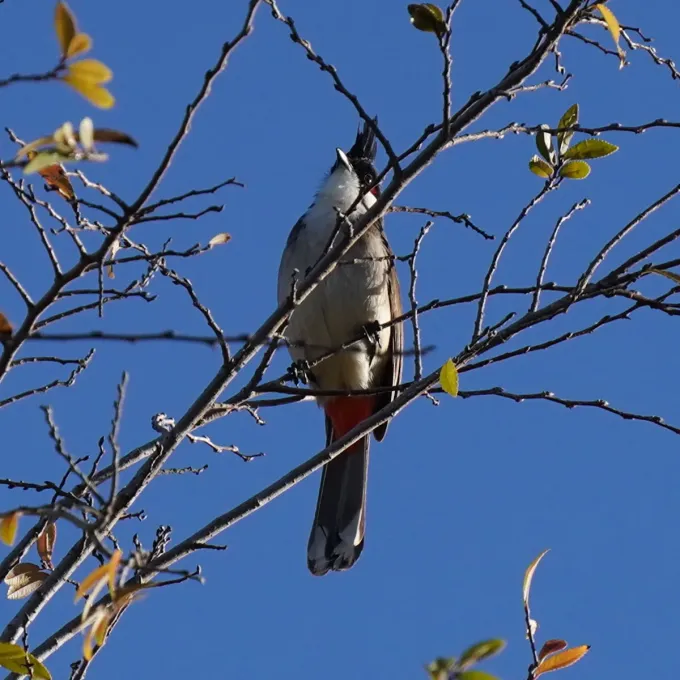
Description
How to identify
Bulbuls (family Pycnonotidae) are medium-sized passerine birds known for their distinct crests, active behavior, and potential to impact agricultural production in various regions.
Typically measuring between 15 to 25 centimeters, these birds have evolved to thrive in diverse environments, ranging from dense forests to cultivated orchards and urban gardens.
Their plumage usually consists of muted earth tones like brown, grey, or olive, often complemented by striking colorful patches on the face or undertail coverts.
Highly social by nature, bulbuls often travel in small flocks, which allows them to efficiently locate and exploit abundant food sources across horticultural areas.
Their adaptability and inquisitive behavior make them quick to identify and occupy new feeding sites, often leading to rapid colonization of fruit-bearing trees.
What it damages
Bulbuls cause significant economic damage by targeting various fruit and berry crops during the critical ripening stages of development.
Their diet includes a wide array of cultivated fruits such as papayas, guavas, grapes, figs, and numerous stone fruits, causing extensive losses for farmers.
Beyond the direct consumption of fruit flesh, their sharp beaks create deep puncture wounds, which compromise the integrity of the produce.
These mechanical injuries serve as primary entry points for secondary pathogens, leading to fungal infections and rot that can destroy entire harvests.
Additionally, they have been known to feed on delicate flower buds and new shoots, potentially hindering tree growth and reducing total yield potential.
When it appears
Bird damage is most intense during the harvest season when fruit sugar levels are highest and trees are laden with mature, juicy produce.
In tropical and subtropical regions, the presence of these birds and the resulting damage can persist year-round due to staggered crop production cycles.
Breeding seasons often align with the appearance of young fruit, as parents require significant energy to raise their offspring, increasing foraging pressure.
Daily activity cycles typically show intense feeding behavior during early morning and late afternoon, when the birds are most active in the field.
Flocks move between orchard blocks based on fruit availability, often decimating the yield of one variety before transitioning to the next ripening crop.
Signs of infestation
Key indicators of bulbul presence include partially eaten fruit left on the tree, characterized by jagged, uneven edges created by their bills.
The accumulation of bird droppings on branches and surrounding ground foliage is a clear sign that a flock has been feeding in the area.
Broken thin twigs and dislodged foliage underneath the canopy often result from the birds' activity while they maneuver through the trees.
Constant, rhythmic vocalizations and territorial calls are frequently heard when flocks are present within the orchard canopy.
The premature drop of fruit and damaged buds scattered under the trees are significant indicators of ongoing feeding activity by these pests.
Control measures
Installing fine-mesh exclusion netting over fruit trees is widely considered the most effective physical barrier against bird-related damage.
Integrated pest management strategies often involve the use of acoustic deterrents, such as distress signals or sonic alarms, to keep flocks away.
Visual repellents, including reflective ribbons and rotating holographic discs, can create an environment that the birds find unsettling or unsafe.
Adopting an aggressive harvesting schedule ensures that ripe fruit is removed before it becomes an easy target for hungry avian populations.
Promoting a balanced ecosystem by encouraging local predators can help maintain bulbul numbers at manageable levels without chemical intervention.
Taxonomy
- Latin name
- Pycnonotus
- Family
- Pycnonotidae
- EPPO code
- PYKNSP
Discussion
No discussions yet — be the first.