
Asparagus miner
Ptochomyza asparagi
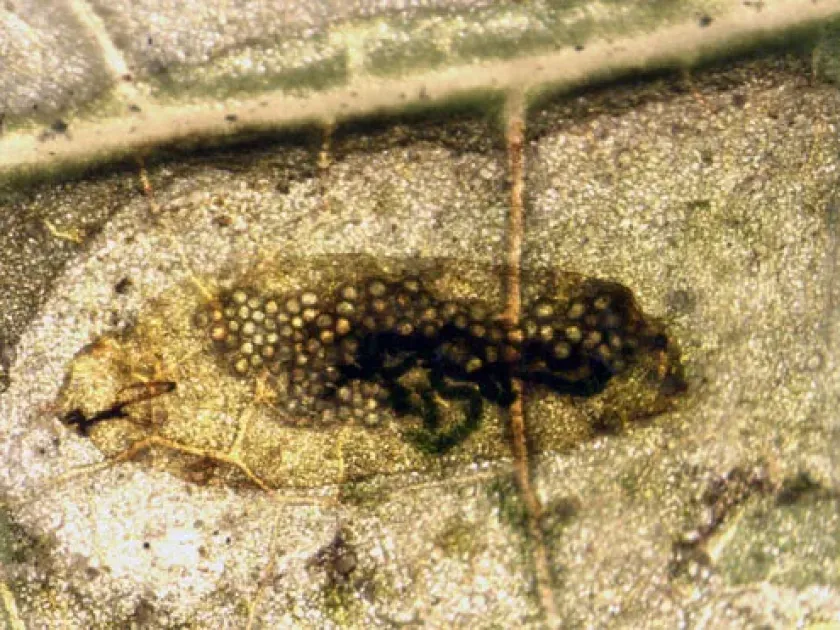
Description
How to identify
The asparagus miner (Ptochomyza asparagi) is a small fly belonging to the Agromyzidae family, order Diptera. Adult flies are approximately 2–3 mm long and are usually dark-colored, making them difficult to spot in the field.
The larvae are small, legless, and yellowish-white in color. They spend their entire developmental period hidden within the stems of the asparagus plant, making them difficult to detect until damage becomes visible.
The life cycle consists of the egg, larval, pupal, and adult stages. The flies emerge in the spring, coinciding with the growth of new asparagus spears, which provides an ideal environment for egg-laying.
Pupation typically occurs inside the tunnels created by the larvae or just beneath the plant epidermis. The insect can have multiple generations per season depending on the climate.
Overwintering occurs primarily as pupae within plant debris or stems left in the field, which is why proper post-harvest sanitation is essential for managing the population.
What it damages
The asparagus miner is highly host-specific, feeding almost exclusively on Asparagus officinalis. The damage is primarily caused by the larvae mining the stems.
As the larvae feed, they tunnel into the stem, creating meandering mines. These tunnels disrupt the plant's vascular system, hindering the transport of water and nutrients.
Damaged stems often show stunted growth, reduced vigor, and are structurally weakened. In severe cases, this leads to premature yellowing and death of the stems.
Beyond direct feeding damage, the tunnels serve as entry points for various fungal and bacterial pathogens, leading to secondary infections and rot within the stalks.
For commercial growers, this pest significantly reduces the yield and quality of the crop, and in young plantings, it can potentially lead to the loss of entire plants if not managed.
Signs of infestation
The most distinctive symptom of an asparagus miner infestation is the presence of long, serpentine-like silver or white trails on the surface of the stems.
Heavily infested plants may turn yellow and wither prematurely. This discoloration is a result of the disruption in the plant's ability to maintain its nutritional needs.
Small holes may appear on the stem surface, which indicate the exit points where adult flies emerged after completing their development within the tissue.
A noticeable thinning of the plant's foliage occurs as the damaged stems lose their integrity and eventually drop their needle-like branches (cladodes).
Internal tissue inspection reveals hollowed-out areas or tunnels where larvae have been active, which often appear darkened if secondary rot has set in.
Control measures
Effective management begins with strict sanitation. Removing and destroying infested plant material at the end of the season is the most effective way to eliminate overwintering pupae.
Monitoring the population using yellow sticky traps is recommended. This helps identify the presence of adults and allows growers to time insecticide applications accurately.
Since larvae are protected inside the stems, systemic insecticides are generally more effective than contact-only sprays, as they allow the chemical to reach the feeding larvae.
Maintaining vigorous plant growth through proper irrigation and fertilization helps the asparagus plants better withstand and recover from minor infestations.
- Tilling the soil in late autumn to bury pupae.
- Isolating new fields from old, potentially infested ones.
- Encouraging natural predators and using biological control agents where applicable.
Taxonomy
- Latin name
- Ptochomyza asparagi
- Order
- Diptera (flies)
- Family
- Agromyzidae
- EPPO code
- PTOCAS
Discussion
No discussions yet — be the first.