
Ptochomyza
Ptochomyza
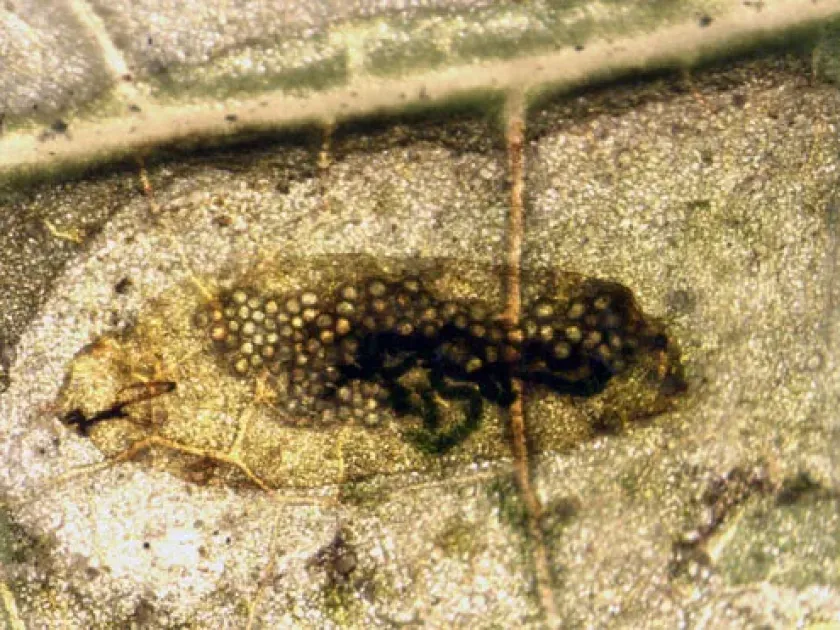
Description
How to identify
Ptochomyza is a genus of insects belonging to the family Agromyzidae, commonly known as leaf miner flies. They are small, often inconspicuous, yet potentially significant pests in agriculture.
The adult flies are small and usually dark-colored, often blending into their environment. They have specialized mouthparts used for piercing leaf surfaces to feed or lay eggs.
The larvae are the primary stage causing damage. They are legless, maggot-like, and have evolved to feed specifically between the upper and lower layers of a leaf.
The life cycle typically consists of four stages: egg, larva, pupa, and adult. The duration of each stage is highly dependent on ambient temperature and host availability.
Pupation frequently occurs within the leaf mine itself or in the soil surface, where they can survive adverse conditions and overwinter effectively.
What it damages
Ptochomyza larvae feed on the mesophyll tissue of leaves, creating serpentine or blotch-shaped mines that are visible on the foliage surface.
This internal feeding significantly reduces the photosynthetic capacity of the plant, leading to stunted growth, reduced vigor, and potential yield loss.
In severe infestations, the leaves may dry out prematurely, lose their structural integrity, and drop from the plant, which is particularly detrimental to leafy crops.
The physical damage caused by the larvae also provides entry points for various bacterial and fungal pathogens, complicating the overall health of the crop.
Economically, infestations can lead to decreased product quality and marketability, especially in crops where the appearance of foliage is essential for the consumer.
Signs of infestation
The most distinct symptom of a Ptochomyza infestation is the presence of winding, pale, or necrotic tunnels (mines) appearing on the leaf blades.
Small, dark, granular frass deposits are often visible inside these mines, which helps distinguish leaf miner damage from other types of plant stress.
Affected leaves may show signs of chlorosis or yellowing as the plant attempts to react to the destruction of its photosynthetic tissues by the larvae.
In advanced stages, mines may coalesce, causing the leaf tissue to curl, wither, and eventually fall off the plant entirely.
Field scouting should focus on the presence of these distinctive patterns, as early detection is key to preventing the spread of the pest across the field.
Control measures
Integrated pest management (IPM) is crucial, starting with crop rotation to disrupt the life cycle of the flies and prevent population buildup in the soil.
Sanitation practices, such as the removal of weeds and crop residues, help to eliminate alternative hosts and overwintering sites for the larvae and pupae.
Deep plowing after harvest is an effective mechanical method to bury pupae, preventing the adult flies from emerging during the following season.
When necessary, systemic insecticides may be applied to penetrate the leaf tissue and control the larvae hiding inside the tunnels.
Biological control, utilizing parasitic wasps (hymenopteran parasitoids), can be highly effective in maintaining the pest population below economic thresholds.
Taxonomy
- Latin name
- Ptochomyza
- Order
- Diptera (flies)
- Family
- Agromyzidae
- EPPO code
- PTOCSP
Discussion
No discussions yet — be the first.