
Darling Downs darkling beetle
Pterohelaeus darlingensis
Description
How to identify
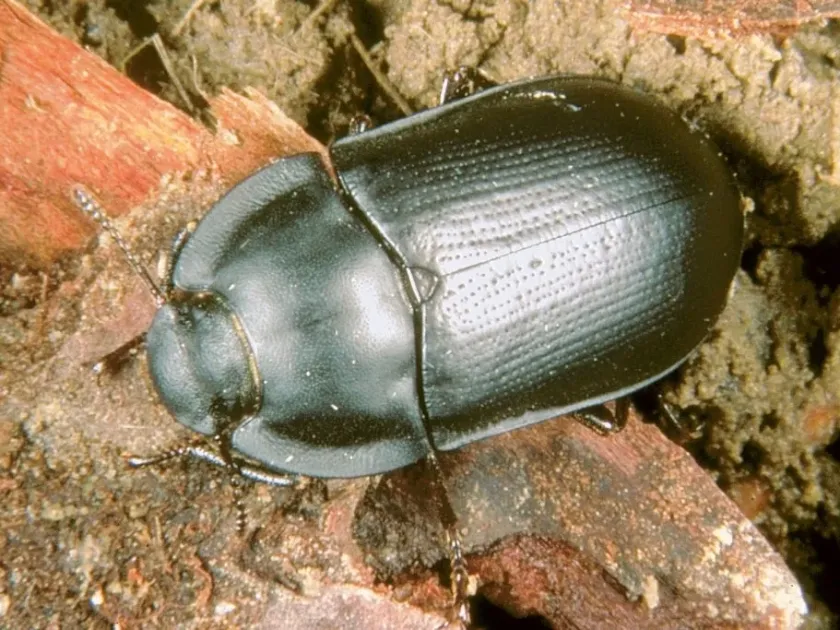
The Darling Downs darkling beetle (Pterohelaeus darlingensis) is a member of the Tenebrionidae family within the order Coleoptera. These beetles are characterized by their dark, tough chitinous exoskeletons, which are perfectly adapted for survival in arid environments.
Adult beetles have an oval shape, measuring between 15 to 20 mm in length. They are nocturnal insects, typically remaining hidden in the soil or under organic debris during the daylight hours to conserve moisture.
The larvae are commonly referred to as "false wireworms." They possess a cylindrical, yellowish-brown body with a firm, sclerotized shell, showing distinct segmentation that makes them look very similar to click beetle larvae.
The entire life cycle occurs within the soil profile. Females deposit eggs in the earth, and the larvae undergo several developmental stages while feeding on organic matter and plant roots before pupating.
Due to their nocturnal behavior and soil-dwelling nature, these beetles are often overlooked until significant crop damage becomes apparent in the field.
What it damages
The larvae are the primary cause of agricultural damage. They reside in the upper soil layers and feed aggressively on the root systems and subterranean stems of young cereal crops.
The pest targets a variety of crops, including wheat, barley, and sorghum. During periods of drought, when alternative food sources are scarce, larvae may cause total crop failure by severing stems at the base.
Damaged plants exhibit signs of nutrient and water stress, quickly wilting and dying. This can lead to significant thinning of crop stands, which negatively impacts final yields.
Adult beetles can also contribute to damage by feeding on emerging seedlings, although their overall impact is usually less severe than that of the root-feeding larvae.
The risk of infestation is notably higher in fields managed with reduced tillage practices, as the accumulation of plant stubble provides an ideal habitat for beetle reproduction.
Signs of infestation
The most common sign of infestation is the sudden appearance of bare patches within a field. Seedlings may appear yellowed or stunted, often dying shortly after emergence due to root system destruction.
If you suspect an infestation, inspecting the soil around the base of the dying plants will often reveal the presence of false wireworm larvae near the remaining root structures.
The presence of adult beetles on the soil surface at night can be a key indicator of high population density. Utilizing light traps or simple pitfall traps can help confirm their activity.
Seedlings severed at the soil line are a classic indicator of darkling beetle damage. If patches of the crop seem to collapse overnight, it is essential to conduct an immediate subterranean inspection.
Increased bird activity, specifically magpies or other ground-foraging birds congregating in the field during soil disturbance, can also signal a high concentration of larvae in the soil.
Control measures
The primary control method involves deep tillage, which disrupts the soil profile, kills larvae mechanically, and exposes them to environmental stressors and natural predators.
Strategic crop rotation is highly effective in breaking the life cycle of the beetle. Avoiding susceptible crops in succession is a fundamental step in minimizing field populations.
Seed treatments using systemic insecticides provide crucial protection for young seedlings during the critical germination phase, significantly reducing the success rate of larval attacks.
Monitoring programs using bait traps (such as germinating seeds) buried in the soil can help estimate population levels before planting, allowing for informed decisions regarding pesticide application.
Effective management of crop residue is vital. Clearing or burying stubble helps eliminate the surface refuge and food supply that these beetles rely on, forcing a population decline in the following season.
Taxonomy
- Latin name
- Pterohelaeus darlingensis
- Order
- Coleoptera (beetles)
- Family
- Tenebrionidae
- EPPO code
- PTEHDA
Discussion
No discussions yet — be the first.