
Pterodontia
Pterodontia
Description
How to identify
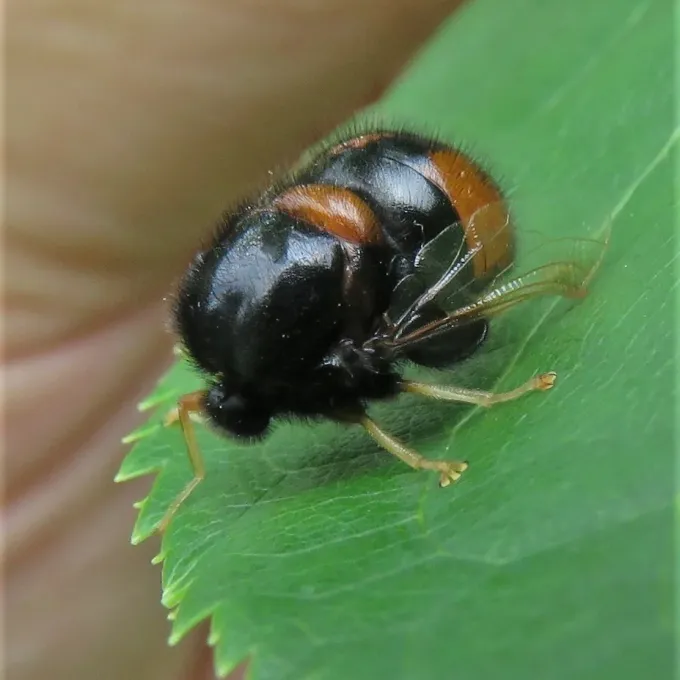
Pterodontia is a genus of flies belonging to the family Acroceridae, commonly known as small-headed flies. They are characterized by an extremely small head in relation to a large, globose abdomen, giving them a unique appearance.
The body is often densely covered with fine hairs. Their wing venation is a key taxonomic feature used by entomologists to distinguish them from other dipteran families.
As members of the order Diptera, they exhibit a specialized life cycle. The larvae are endoparasitoids, specifically targeting spiders as their primary host for development.
Adult flies are often found in areas with high spider activity, as they must locate a suitable host to deposit their eggs. Their morphological adaptations are perfectly suited for this lifestyle.
While the genus is widespread, individual species are often highly specific to certain types of spider hosts, making them sensitive indicators of ecological balance.
What it damages
Pterodontia is not considered an agricultural pest. They do not consume or damage crops, such as wheat, corn, vegetables, or fruits. Consequently, they do not cause any direct financial loss to farmers.
Their impact is ecological, as they parasitize spiders. Since spiders often act as biological control agents for aphids and other pests, the presence of Pterodontia can influence the overall dynamics of pest management.
However, the reduction of spider populations by such parasitoids is a natural phenomenon. In most agricultural settings, this effect is negligible compared to the pressure from actual crop-destroying pests.
The role of Pterodontia should be understood as part of a complex food web. They occupy a niche as parasitoids, maintaining the population balance of arachnids in natural and semi-natural environments.
No economic damage thresholds exist for this species, and they are generally excluded from pest management programs aimed at safeguarding crop production.
When it appears
Adult Pterodontia flies are most active during the summer months when temperatures are conducive to flight and mating. Their seasonal emergence is typically synchronized with the lifecycle of their spider hosts.
Warm and humid weather conditions often accelerate the development of the larvae. The flies spend the majority of their life cycle in the larval stage, feeding inside the host spider.
Overwintering occurs in the larval stage, often within the body of the host or in protective debris. This allows them to survive the cold season and re-emerge when host activity resumes in the spring.
The duration of their life cycle is highly dependent on environmental variables, which vary between different species and geographical regions.
Monitoring their seasonal appearance is primarily of scientific interest for ecologists studying predator-prey dynamics rather than for agricultural production monitoring.
Signs of infestation
Signs of Pterodontia presence are not found on the crops themselves, as there is no herbivory. Instead, signs are limited to a reduction in the abundance of spider populations in the habitat.
Adult flies can occasionally be observed feeding on nectar from flowers near agricultural fields. Their elusive behavior makes them difficult to spot without targeted entomological sampling.
There are no lesions, discoloration, or structural changes to plants that could indicate the presence of this insect. If a farmer observes plant damage, it is almost certainly caused by another organism.
Entomologists identify these flies through specialized collection methods, such as malaise traps or sweep netting in areas populated by spiders.
The lack of crop injury is the most reliable sign that this insect is not the target of any pest control operation on the farm.
Control measures
No control measures are needed or recommended for Pterodontia. They are non-pests and act as natural components of the ecosystem. Efforts to control them would be counterproductive.
Integrated Pest Management (IPM) practices encourage the conservation of natural habitats, which inherently includes the presence of both spiders and their natural enemies like Pterodontia.
Avoiding unnecessary insecticide use ensures that the balance between spiders and their parasitoids remains intact, which is beneficial for the long-term health of the agricultural landscape.
If managing pests on a farm, focus should be on identifying true herbivores and implementing control strategies that are specific to those pests to preserve biodiversity.
Promoting sustainable agricultural practices, such as maintaining hedgerows and wildflower borders, helps maintain healthy ecosystems where complex species interactions can thrive naturally.
Taxonomy
- Latin name
- Pterodontia
- Order
- Diptera (flies)
- Family
- Acroceridae
- EPPO code
- PTDTSP
Discussion
No discussions yet — be the first.