
Small-headed fly
Ogcodes
Description
How to identify
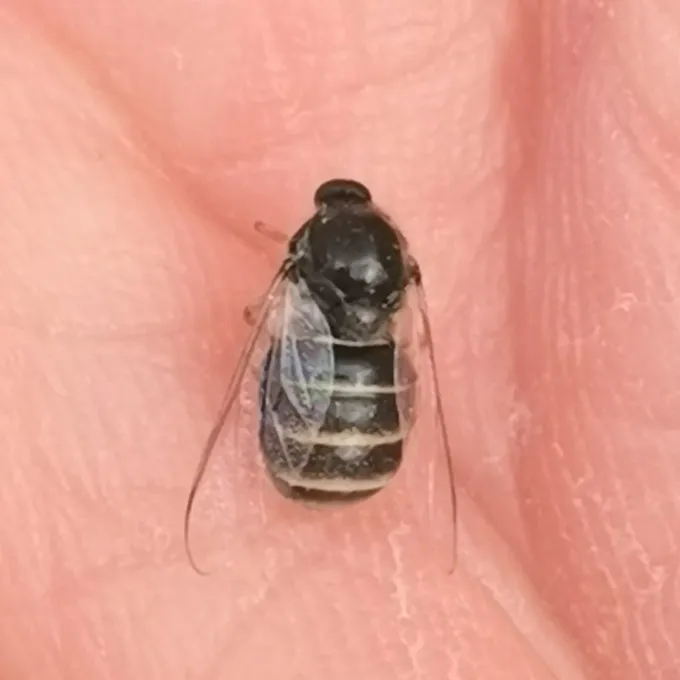
The small-headed fly, belonging to the family Acroceridae, is known for its highly arched thorax and small head, giving it a distinctive hunchbacked, spherical appearance.
Their mouthparts are often vestigial, meaning that adult flies do not feed on plant matter or nectar, focusing entirely on reproduction after emerging from the pupa.
The antennae are either very small or completely absent in some species, and the eyes are disproportionately large, covering most of the head capsule.
The wing venation is typically reduced or modified, which is a key identification feature for entomologists when distinguishing them from other Diptera.
They exhibit varying levels of mimicry, often resembling bees or other Hymenoptera, which provides them with a level of protection from avian predators.
What it damages
Small-headed flies are not considered agricultural pests. They do not consume leaves, stems, or fruits of any crops, nor do they carry viral or bacterial pathogens.
Their ecological role is that of a specialized parasitoid, specifically targeting various species of spiders, which serves as a natural population control mechanism.
Because they do not cause direct harm to plants, there is no economic threshold associated with these insects in commercial agriculture or horticulture.
Their presence on farmland is completely neutral for crop production and does not impact yield quality or quantity.
In the context of integrated pest management (IPM), they are viewed as interesting, non-harmful components of the local biodiversity.
When it appears
Adult activity typically peaks during late spring and summer months when spider hosts are actively foraging and building webs in fields and gardens.
The reproduction cycle starts when the female deposits numerous eggs on twigs or leaves, often in areas known to be frequented by spider populations.
The first-instar larvae, often called triungulins, are highly motile and actively search for a suitable spider host to initiate the parasitic process.
Once a host is found, the larva enters the spider's body through the soft tissues and remains inside for an extended period, developing at the host's expense.
The life cycle often includes overwintering, where the fly remains in a dormant state inside the host's body until environmental conditions are ideal for emergence.
Control measures
As small-headed flies are not pests, no chemical or physical control measures are necessary, nor are they recommended by agricultural extension services.
Managing for these flies is unnecessary, as they provide an ecological service by regulating local spider populations without damaging cultivated plants.
The best practice is to maintain a natural habitat that supports diverse populations of beneficial insects and their natural host complexes.
Reducing the reliance on broad-spectrum pesticides helps ensure that beneficial parasitoids can continue to exist within the farm landscape.
Farmers and gardeners should recognize these flies as harmless inhabitants of the ecosystem that do not require any form of intervention or eradication.
Taxonomy
- Latin name
- Ogcodes
- Order
- Diptera (flies)
- Family
- Acroceridae
- EPPO code
- OGCOSP
Discussion
No discussions yet — be the first.