
Ogcodes pallipes
Ogcodes pallipes
Description
How to identify
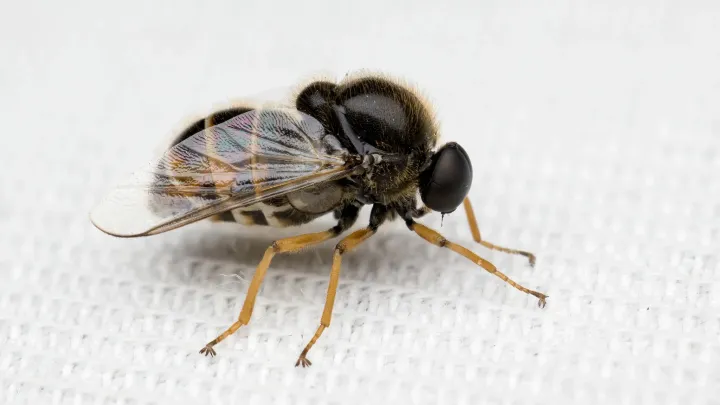
Ogcodes pallipes is a species belonging to the spider fly family (Acroceridae) within the order Diptera. These insects are characterized by a hunched, humpbacked profile and a small head dominated by large, compound eyes.
Adults typically feature a rounded, bulbous abdomen that appears disproportionately large compared to the rest of the body. The specific name pallipes reflects the pale coloration of their legs, which is a common diagnostic feature.
The biology of these flies is highly specialized, as their larvae are obligate endoparasitoids of spiders. Unlike typical agricultural pests, adult Ogcodes pallipes do not feed on plant tissues.
The life cycle encompasses the egg, larval, pupal, and adult stages. Females lay numerous small eggs on vegetation or substrates where they anticipate the presence of spider hosts.
Within agricultural environments, this species is essentially an entomophage that interacts with spider populations, acting as a natural regulator within the local trophic web.
What it damages
Ogcodes pallipes causes no direct damage to crops. Adults subsist on nectar or do not feed, while the larvae develop strictly inside the bodies of spiders.
The indirect impact on agriculture is related to the population dynamics of spiders. By parasitizing spiders, these flies can reduce the number of arachnids that would otherwise prey on crop-damaging insects.
In certain scenarios, a significant reduction in predator density due to high fly activity could potentially lead to an increase in aphid or mite populations, though this is rare in managed fields.
There are no recorded instances of these flies damaging leaves, stems, or fruits, making them benign to the plant itself.
Given the lack of direct agricultural destruction, this species is not categorized as a harmful pest and carries no economic damage threshold.
Control measures
No specific management strategies are designed for Ogcodes pallipes as they do not constitute a direct threat to commercial crops or farming yields.
General broad-spectrum insecticide applications intended for other pests will indirectly reduce the number of these flies, as they are susceptible to common agricultural toxins.
Integrated Pest Management (IPM) practices, which prioritize ecological balance and minimize chemical use, are recommended to maintain natural levels of beneficial insects.
Conservation of natural habitats and surrounding field margins helps support diverse insect communities, ensuring that predator-prey relationships remain stable.
No agricultural interventions, such as traps or specific chemical sprays, are required to control this species in any cultivation system.
Taxonomy
- Latin name
- Ogcodes pallipes
- Order
- Diptera (flies)
- Family
- Acroceridae
- EPPO code
- OGCOPA
Discussion
No discussions yet — be the first.