
Poplar aphid
Pterocomma populeum
Description
How to identify
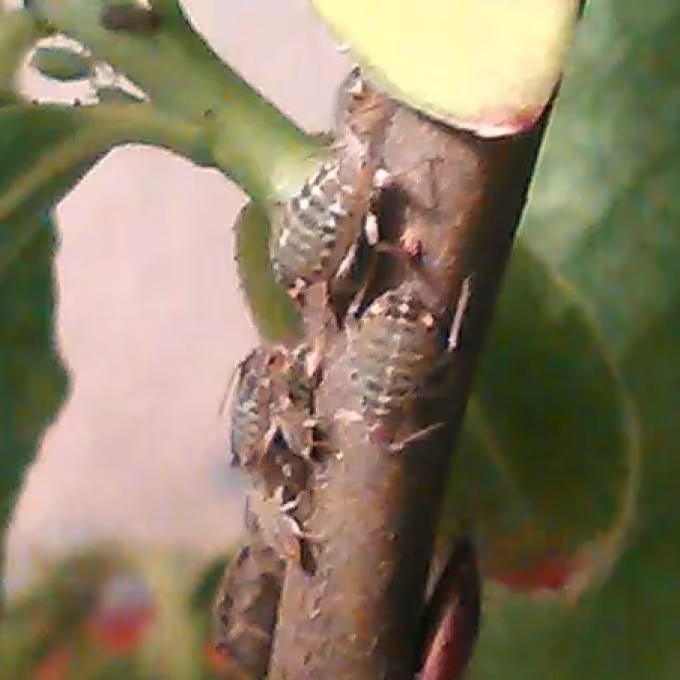
The poplar aphid (Pterocomma populeum) belongs to the family Aphididae. It is a relatively large aphid species, with adults reaching 3–4 mm in length, typically displaying a dark brown to black, shiny body.
The aphids possess long legs and prominent cornicles, which facilitate rapid movement across the bark of host trees. The colony typically consists of both winged and wingless individuals.
They overwinter as eggs, which are deposited by females in the crevices of the bark or around the forks of younger branches. These eggs are shiny black and highly resistant to cold weather.
Development begins in early spring, as temperatures rise, allowing larvae to hatch and immediately start feeding on the sap of the host tree.
A notable feature of this species is its mutualistic relationship with ants, which protect the aphid colonies from predators in exchange for honeydew, a sugary substance excreted by the aphids.
What it damages
The primary hosts for this pest include various poplar species, such as Lombardy, balsamic, and Canadian poplars. Occasionally, the aphid may infest nearby willows.
Damage is caused by the aphids piercing the bark with their mouthparts to extract sap from the cambium and phloem layers, which drains the tree of vital nutrients.
The feeding sites on the bark can become entry points for various fungal and bacterial infections, leading to localized tissue necrosis and potential branch dieback.
The excessive production of honeydew promotes the growth of sooty mold, a black fungus that covers the leaves and bark, blocking sunlight and hindering photosynthesis.
Heavy infestations can lead to premature leaf drop, stunted growth of young shoots, and a significant decrease in the overall health and decorative value of the tree.
When it appears
Larval emergence typically occurs in early spring, synchronized with the bud-break of the poplar tree, providing the aphids with a fresh food source immediately.
Peak population densities are usually observed during May and June, when the aphids form large, dense colonies along the twigs and branches of the tree.
While activity might decline slightly during the hottest and driest summer months, the pest remains a threat and can continue to colonize new parts of the tree canopy.
During late summer and autumn, the aphids produce eggs that are laid on the bark to survive the winter, ensuring the population persists until the following season.
Multiple generations can occur within a single growing season, allowing for a rapid increase in population numbers if environmental conditions are favorable.
Signs of infestation
The most obvious sign of an infestation is the presence of large, dense colonies of dark aphids clustering on the young branches, often resembling thick patches on the bark.
Increased ant activity on the tree trunk is a reliable indicator that an aphid colony is present and is being actively protected by ants.
The presence of a sticky honeydew substance on leaves and branches, often accompanied by a black sooty mold coating, is a common symptom of a heavy infestation.
Deformed or curling young shoots, yellowing of leaves, and reduced overall growth are characteristic symptoms caused by the aphid's feeding habits.
During the dormant season, inspection of the tree bark can reveal the presence of tiny, shiny black overwintering eggs clustered in branch forks or bark crevices.
Control measures
Good horticultural practices, such as maintaining proper tree vigor, timely pruning of dead wood, and adequate irrigation, help trees withstand aphid stress.
Biological control can be enhanced by attracting natural predators like ladybugs, lacewings, and hoverflies by planting nectar-rich flowers in the vicinity.
Systemic insecticides are effective when applied during the active growing season, as the chemicals are absorbed by the tree and poison the aphids as they feed.
Applying sticky bands around the tree trunk can effectively prevent ants from reaching the aphids, leaving the colonies vulnerable to natural predators.
In cases of severe infestation, targeted insecticide applications should be performed early in the season, before leaves curl and offer the aphids physical protection.
Taxonomy
- Latin name
- Pterocomma populeum
- Order
- Hemiptera (bugs, aphids, leafhoppers)
- Family
- Aphididae
- EPPO code
- PTEOPO
Discussion
No discussions yet — be the first.