
Willow aphid
Pterocomma
Description
How to identify
The willow aphid, belonging to the genus Pterocomma, is a common pest found on various willow and poplar species within the family Aphididae.
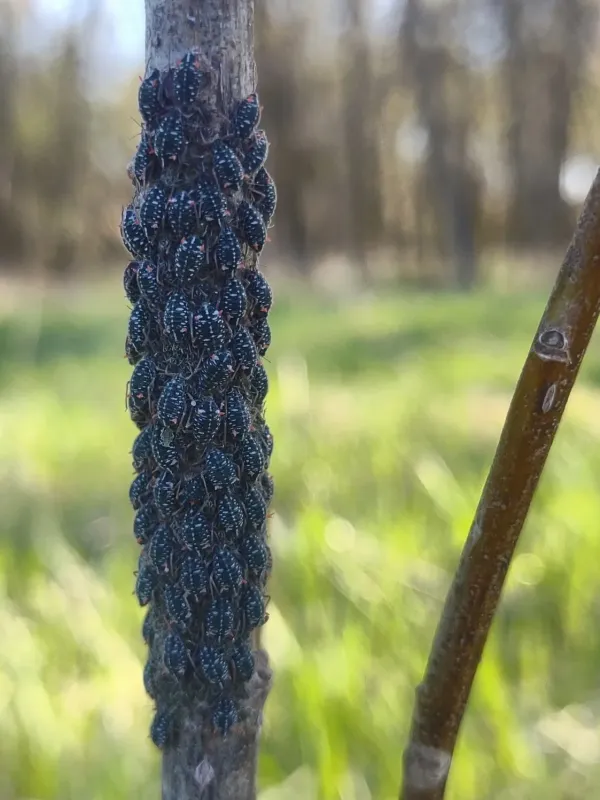
These aphids are relatively large, typically measuring between 3 and 4 mm in length, and are easily visible when clustered on branches.
Their bodies are usually dark brown or black with a shiny appearance, and they are characterized by their relatively short, swollen siphunculi.
They live in dense colonies on woody stems and shoots, often attended by ants that feed on the honeydew secreted by the aphids.
The life cycle involves overwintering as eggs, which are deposited in bark crevices, ensuring survival through harsh winter conditions.
What it damages
Pterocomma species primarily target plants in the Salicaceae family, specifically willows (Salix) and poplars (Populus).
By feeding on the sap of young shoots and stems, these aphids cause significant physiological stress to the host tree, leading to stunted growth.
Heavy infestations can result in the deformation of leaves, premature leaf drop, and the drying out of terminal shoots in young or vulnerable trees.
The constant sap extraction weakens the tree's immune system, making it more susceptible to environmental stress and secondary pathogen infections.
Furthermore, the accumulation of honeydew promotes the growth of sooty mold, which blocks sunlight and hinders the photosynthesis process.
When it appears
The activity cycle begins in early spring when eggs hatch and the first generations of aphids start feeding on expanding buds and young shoots.
Population levels typically peak during the late spring and early summer months, taking advantage of the warm weather and tender new plant growth.
As the season progresses, multiple generations are produced, allowing the colony to spread across the tree's canopy if left unchecked.
Towards the end of the season, sexual reproduction occurs, leading to the production of winter-hardy eggs that will sustain the population until next year.
Signs of infestation
Key indicators of an infestation include the curling and yellowing of foliage and the presence of sticky honeydew on the leaves and branches.
A strong presence of ants climbing up and down the trunk is a reliable sign that an aphid colony is established and active on the tree.
Direct observation of branches often reveals large, dark, clustered masses of aphids feeding on the bark of young twigs or shoots.
The development of a black, soot-like substance on the foliage is a secondary sign that indicates significant honeydew accumulation and mold growth.
Affected trees may show noticeable wilting, slow development, and branch dieback due to the intensive sap-sucking activity of the colony.
Control measures
Managing willow aphids involves an integrated approach combining good horticultural practices with targeted biological or chemical interventions.
Regular pruning of heavily infested shoots is an effective physical way to reduce the immediate population size and prevent further spread.
Encouraging natural predators such as ladybugs, lacewings, and hoverflies can help keep aphid populations below the economic injury level.
For more severe cases, the application of systemic or contact insecticides may be necessary to protect the health of valuable ornamental trees.
- Apply systemic insecticides during the active growth period.
- Control ant colonies to prevent them from protecting the aphids from predators.
- Ensure adequate tree hydration and fertilization to promote overall plant vigor.
Taxonomy
- Latin name
- Pterocomma
- Order
- Hemiptera (bugs, aphids, leafhoppers)
- Family
- Aphididae
- EPPO code
- PTEOSP
Discussion
No discussions yet — be the first.