
Peach bark aphid
Pterochloroides
Description
How to identify
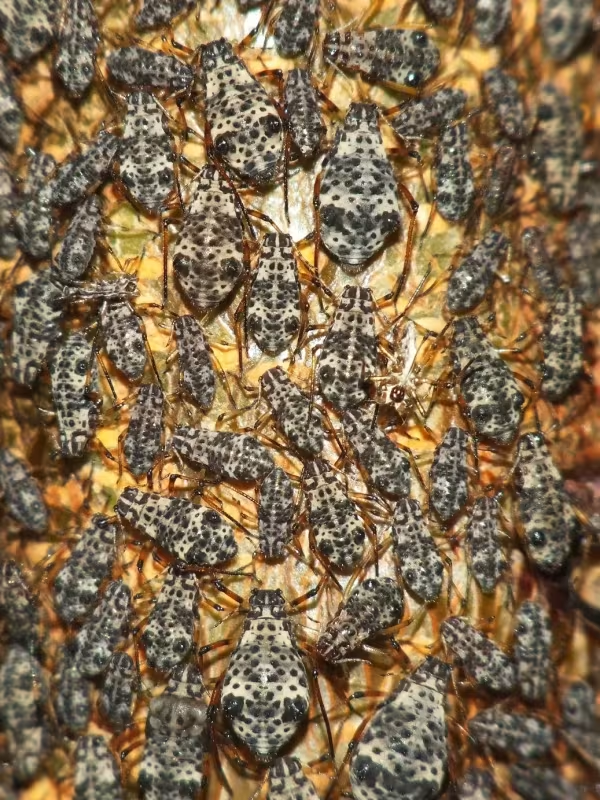
The peach bark aphid (Pterochloroides persicae) is a large aphid species belonging to the family Aphididae. Adults typically measure 4–5 mm in length, with a dark brown to black coloration that helps them blend into the bark of host trees.
Unlike most common aphids found on leaves, this species prefers the bark of woody stems, trunks, and main branches. They often form dense, sedentary colonies that can cover significant sections of the bark surface.
Adult females are convex and slightly hairy, giving them a velvety appearance. Winged individuals possess transparent wings with distinctive dark spots, which serve as a primary identifying characteristic in the field.
These insects are often overlooked because they resemble bark texture. However, upon close inspection, one can see the massive accumulation of dark bodies, often tightly packed together in clusters.
The species reproduces via parthenogenesis, allowing populations to expand rapidly during favorable conditions. This high reproductive rate makes them a significant threat if not monitored properly early in the season.
What it damages
The peach bark aphid primarily attacks stone fruit trees, including peach, nectarine, almond, plum, and apricot. They feed by piercing the bark and extracting phloem sap directly from the cambium layer.
This persistent feeding weakens the tree, resulting in reduced nutrient transport and loss of vigor. Over time, the tree becomes stressed, leading to poor growth, stunted shoots, and reduced fruit size.
Feeding wounds create openings for secondary pathogens. This often leads to the development of bark necrosis and gummosis, where the tree exudes gum to seal the wounds, further weakening its structure.
The honeydew produced by the aphids encourages the growth of sooty mold. This black fungal coating covers the bark and leaves, inhibiting photosynthesis and gas exchange, which can exacerbate the tree's poor health.
In severe infestations, especially on young trees, the continuous sap loss and secondary infections can lead to branch dieback or the total death of the tree if left untreated.
When it appears
The pest spends the winter in the egg stage or as adult females hidden within bark crevices. Activity begins early in the spring, synchronized with the onset of sap flow in the trees.
Populations tend to peak during late spring and early summer when temperatures are optimal for rapid development. During extremely hot summer months, their activity may slightly decrease due to heat stress.
In the autumn, populations often increase again, preparing for the dormant season. The aphids migrate toward the lower parts of the trunk and thicker branches to deposit overwintering eggs.
The cycle is highly dependent on environmental temperature. A mild, warm autumn allows the aphids to continue feeding longer, which negatively impacts the tree's ability to harden off before winter.
Ant activity is a key indicator of seasonal presence. Since ants feed on the honeydew, their constant movement on trunks often matches the aphid population cycle throughout the growing season.
Signs of infestation
The most noticeable sign is the presence of sticky honeydew on the bark, which quickly turns black due to the growth of sooty mold. This gives the trunk a dirty, soot-covered appearance.
A constant, heavy traffic of ants on the tree trunk is a strong indicator of an aphid colony. The ants actively protect the aphids from predators, making the aphid population harder to suppress.
Closer examination reveals clusters of dark, pear-shaped insects huddled against the bark. They are often motionless and may appear as dark patches on the tree trunk or branches.
Gummosis, characterized by sticky sap oozing from the bark, is a clear sign of intense feeding damage and subsequent tree tissue irritation caused by the aphids.
General signs of tree distress, such as leaf yellowing, chlorosis, and premature leaf drop during the peak summer months, often point toward a severe infestation of bark aphids.
Control measures
Early season control is crucial. Dormant oil sprays applied before bud break are highly effective at destroying overwintering eggs and adult aphids hiding in bark cracks.
During the growing season, systemic insecticides are generally required to reach the aphids feeding on the bark. Coverage must be thorough, specifically targeting the trunks and major scaffolds.
Implementing mechanical controls like sticky trunk bands is vital. By preventing ants from reaching the aphids, you remove the protective shield, making the aphid colony vulnerable to natural predators.
Cultural practices should include cleaning the bark of dead scales or loose debris, which often hides aphid colonies. Pruning and destroying heavily infested branches is also recommended to reduce the source of infection.
- Encouraging natural enemies like lady beetles and lacewings.
- Using horticultural oils to smother the pests on the bark surface.
- Monitoring trees regularly, especially in the lower canopy.
- Balancing nitrogen fertilization to prevent overly succulent growth.
- Applying specific entomopathogenic fungi as a biological control method.
Taxonomy
- Latin name
- Pterochloroides
- Order
- Hemiptera (bugs, aphids, leafhoppers)
- Family
- Aphididae
- EPPO code
- PTECSP
Discussion
No discussions yet — be the first.