
Psyllopsis
Psyllopsis
Description
How to identify
Psyllopsis is a genus of insects belonging to the family Psyllidae, commonly known as jumping plant lice, which are highly specialized sap-feeding pests.
These insects are characterized by their small size, typically measuring 3 to 4 millimeters, and their ability to perform quick jumps when disturbed.
The adult form is often greenish or yellowish, providing excellent camouflage against the foliage of their host plants, making them difficult to detect.
Nymphs of the species are generally sedentary, remaining attached to plant tissues and often secreting waxy protective layers to prevent dehydration and predation.
Taxonomically, they are closely related to other members of the Psyllidae family and show distinct host preferences, particularly for leguminous trees and shrubs.
What it damages
Psyllopsis primarily attacks species within the Fabaceae family, with the Siberian pea shrub (Caragana) being one of the most frequently infested hosts.
By piercing the epidermis of leaves and stems, these insects extract vital nutrients, which leads to metabolic stress and the withdrawal of plant energy.
The feeding process often introduces harmful saliva containing enzymes that cause systemic damage and morphological changes to the plant's growth pattern.
Heavy infestations lead to significant loss of plant vigor, characterized by stunted shoot development and a general reduction in the ornamental value of the host.
In addition to direct physiological damage, the punctures created by the pest serve as entry points for various bacterial and fungal pathogens.
When it appears
The life cycle of Psyllopsis is tightly synchronized with the host plant's phenology, with eggs typically overwintering in protected bark crevices.
Nymph emergence occurs early in the spring, coinciding precisely with the bud burst and the development of fresh, succulent leaves required for early growth.
During the summer months, multiple generations can occur, with development speed determined largely by temperature fluctuations and overall humidity levels.
The adult population peaks in mid-to-late summer, exhibiting high levels of mobility as they spread to colonize new plant sections or adjacent trees.
As temperatures begin to drop, the cycle concludes with the oviposition of overwintering eggs, ensuring the species survives until the following spring.
Signs of infestation
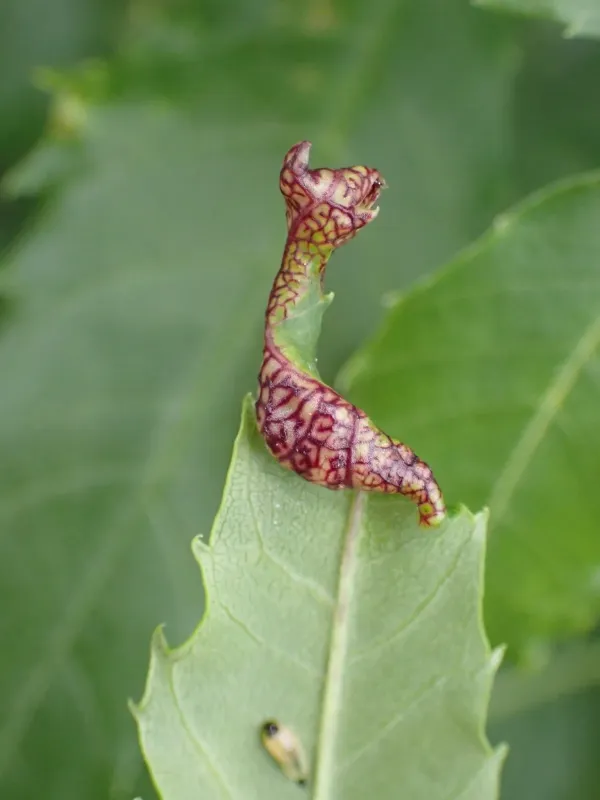
The most prominent sign of infestation is the severe curling and distortion of leaf blades, which often take on a galled or blistered appearance.
- Yellowing or discoloration of leaves at feeding sites.
- Presence of honeydew, a sticky substance secreted by the insects onto the stems.
- Growth of sooty mold fungus on the surface covered by honeydew.
- Premature leaf drop in heavily infested branches.
Inspecting the underside of the leaves usually reveals the nymphs themselves, often accompanied by white, thread-like waxy debris or secretions.
Control measures
Controlling Psyllopsis requires an integrated pest management approach that combines cultural practices with targeted chemical applications.
Systemic insecticides are the most effective control measure, as they are absorbed by the plant and neutralize the pests during their sap-feeding process.
Early spring treatments targeting the overwintering egg stage are crucial for preventing the initial buildup of the population before extensive damage occurs.
Pruning and physically removing heavily infested branches helps to mechanically reduce the pest density within the garden or park environment.
Encouraging natural predators such as lacewings and ladybirds can provide long-term biological control, reducing the reliance on repeated chemical sprays.
Taxonomy
- Latin name
- Psyllopsis
- Order
- Hemiptera (bugs, aphids, leafhoppers)
- Family
- Liviidae
- EPPO code
- PSYPSP
Discussion
No discussions yet — be the first.