
Olive psyllid
Euphyllura olivina
Description
How to identify
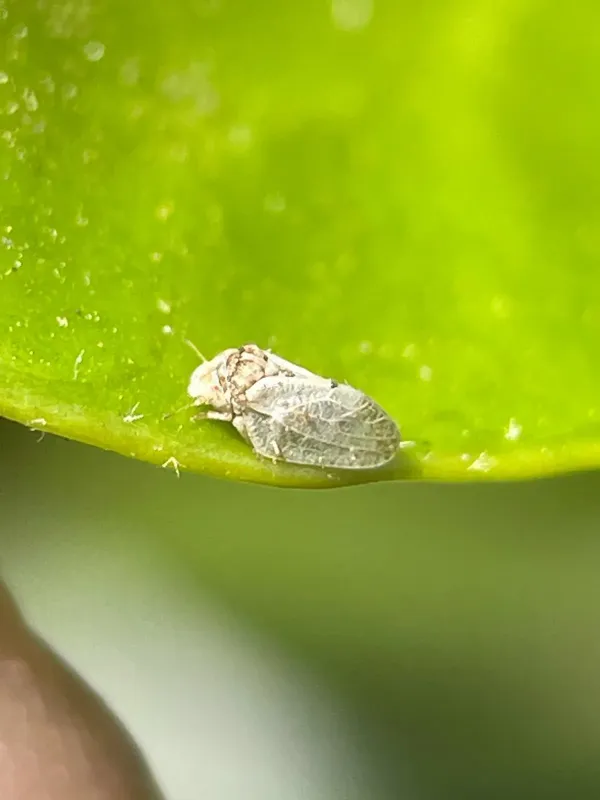
The olive psyllid (Euphyllura olivina) is a tiny sucking insect belonging to the family Psyllidae. Adults typically measure about 2–3 mm in length and possess a greenish-brown coloration that acts as camouflage within the olive canopy.
The most distinctive characteristic of this pest is the secretion produced by the nymphs. This white, waxy substance resembles cotton wool or lint, which protects the nymphs from predators and environmental stress while they feed.
Taxonomically, it falls under the order Hemiptera. These insects are highly specialized, meaning their entire life cycle is synchronized with the phenological stages of the olive tree, specifically targeting new growth.
Adult psyllids are mobile and capable of jumping when disturbed, making them difficult to spot during casual inspection. Their mouthparts are specifically adapted for piercing plant tissues and extracting nutrient-rich sap.
While natural predators like lacewings and ladybirds often keep populations in check, the olive psyllid can reach damaging levels if ecological balance is disrupted or during favorable climatic conditions.
What it damages
The olive tree (Olea europaea) is the sole host for this pest. The psyllids primarily colonize tender young shoots, buds, and inflorescences, where the plant tissues are softest and most accessible for sucking.
Heavy feeding causes the olive tree to become weakened and stressed. When the psyllids attack the flower buds, it results in stunted development, deformation, and significant flower drop, which directly translates to reduced fruit yield.
A major indirect impact of the infestation is the production of honeydew. This sticky, sugary substance coats the leaves and stems, serving as an ideal substrate for sooty mold fungi, which turn the foliage black and inhibit photosynthesis.
In addition to yield loss, persistent infestations stunt the growth of young trees and affect the development of new branches. This cumulative effect leaves the olive tree susceptible to other biotic and abiotic stressors.
The severity of the damage is usually correlated with the density of the psyllid population during the crucial spring budding period, making timely observation and intervention critical for orchard health.
When it appears
Olive psyllids overwinter as adults, finding shelter in bark crevices, leaf axils, or other protected areas on the tree. As temperatures rise in early spring, they resume feeding and start the reproductive cycle.
The first generation of nymphs emerges in spring, coinciding with the development of flower buds. This timing is particularly dangerous, as the nymphs directly impact the tree's reproductive potential for that season.
Multiple generations occur throughout the year. Population dynamics are heavily influenced by temperature and humidity; hot, dry summers generally decrease the survival rate of the nymphs.
An increase in activity is often observed in the autumn as conditions become more temperate. This is a critical time for orchard managers to assess the population levels before the onset of winter dormancy.
Effective monitoring begins with the first signs of spring growth. Early detection allows for more sustainable management practices before the infestation becomes widespread and difficult to treat.
Signs of infestation
The most immediate sign of an olive psyllid infestation is the presence of white, cotton-like waxy secretions on the tips of the branches. These fluffy tufts are clearly visible to the naked eye during inspection.
Deformed and stunted inflorescences are typical markers of damage. Affected flower clusters often appear tangled or clumped together due to the accumulation of sticky honeydew secreted by the nymphs.
The presence of sooty mold—a dark, dusty layer on the leaf surface—is a secondary sign that indicates an established infestation. Leaves covered in sooty mold will feel sticky due to the honeydew underneath.
Young shoots may show signs of inhibited growth and curling. When an olive tree is heavily infested, it often appears dull and neglected due to the accumulation of waxy residues and mold.
- White, cottony waxy fluff on buds and shoots.
- Sticky leaves and branches covered in honeydew.
- Dark sooty mold patches on the foliage.
- Deformed or stunted flower clusters.
- Premature flower bud drop.
Control measures
Effective control starts with proper orchard management. Pruning to maintain an open canopy promotes airflow and light penetration, which naturally creates a less favorable environment for psyllid colonization.
Biological control relies on conserving natural enemies, such as lacewings, ladybirds, and parasitoid wasps. Reducing the use of broad-spectrum insecticides helps maintain these beneficial predator populations.
For chemical interventions, potassium soap or horticultural oils are often used. These agents work by physical contact, washing away the protective waxy layer and causing the nymphs to desiccate and perish.
Systemic insecticides should only be used as a last resort in cases of severe infestation, always strictly adhering to pre-harvest intervals to ensure that no residues remain in the olive oil or table olives.
Sticky yellow traps can be deployed to monitor adult psyllid activity. By tracking the population peaks, growers can precisely time any necessary treatments, minimizing the total volume of product applied.
Taxonomy
- Latin name
- Euphyllura olivina
- Order
- Hemiptera (bugs, aphids, leafhoppers)
- Family
- Liviidae
- EPPO code
- EUPHOL
Discussion
No discussions yet — be the first.