
Arbutus psyllid
Euphyllura arbuti
Description
How to identify
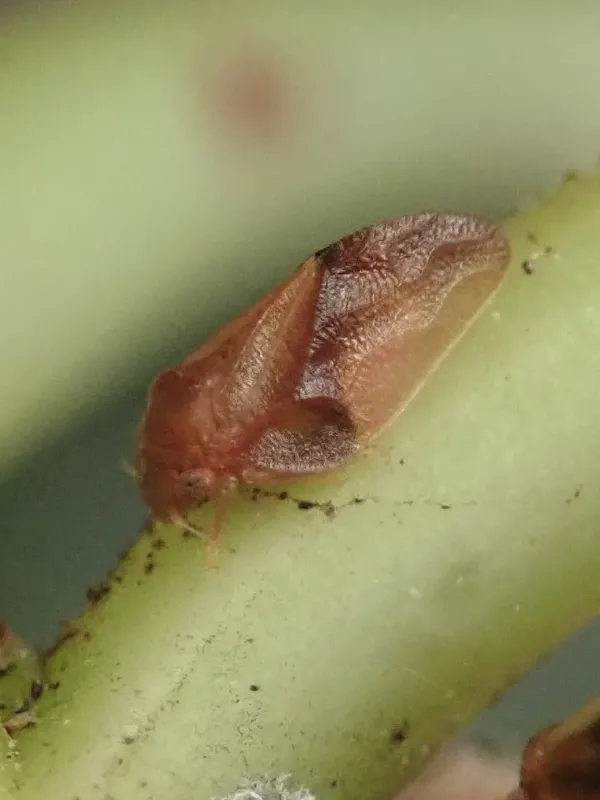
The Arbutus psyllid (Euphyllura arbuti) belongs to the order Hemiptera and the family Psyllidae. This small insect is often overlooked in early stages due to its minute size and camouflaging behavior on host plants.
Adult psyllids possess functional wings and exhibit jumping behavior, facilitating their spread within garden environments. Nymphs, or immature stages, are typically sedentary and are covered in a protective waxy substance.
These insects are secretive by nature, often choosing to inhabit the undersides of young leaves or sheltered leaf axils. This habitat choice makes early detection difficult without a thorough inspection of the plant canopy.
The biological development of this species is synchronized with the vegetative phases of its host plants. Under favorable conditions, the pest can complete several generations within a single season, leading to rapid population spikes.
Field identification requires the use of a hand lens to inspect growing tips and leaf junctions, where the insects cluster and secrete their characteristic protective white wax.
What it damages
The primary host for the Arbutus psyllid is the strawberry tree (Arbutus unedo). The insect feeds by sucking sap from tender new shoots, significantly weakening the plant's physiological condition.
Continued feeding disrupts the plant's photosynthesis process, resulting in stunted growth and a reduced capacity to recover from environmental stress. This physiological imbalance makes the tree more susceptible to secondary pathogens.
Severe infestations cause leaf curling, yellowing, and premature senescence. The aesthetic degradation of the plant is particularly notable as shoot tips begin to die back and the overall form is compromised.
Furthermore, psyllids can act as vectors for phytoplasmas and viruses, spreading diseases through their feeding activities. Their saliva contains enzymes that may induce necrosis at the site of puncture.
Nursery stock is particularly vulnerable; damage to the terminal buds can lead to irreversible growth deformities, rendering the young plants unsuitable for ornamental use.
When it appears
The activity cycle of the Arbutus psyllid initiates in early spring, synchronized with the onset of plant sap flow and the emergence of new vegetative buds.
Population density typically peaks during periods of vigorous shoot development. As plant tissues harden over the summer, the intensity of feeding may temporarily decrease before resuming with subsequent growth flushes.
In regions with mild, frost-free climates, the pest can maintain an overlapping generation cycle throughout the year, necessitating year-round monitoring protocols.
Environmental factors like sustained warmth and limited rainfall are conducive to rapid population expansion, which can lead to localized outbreaks if left unchecked by natural predators.
Agricultural monitoring should be intensified during the spring flush to detect the presence of overwintered adults and intervene before egg-laying significantly increases the nymphal population.
Signs of infestation
The most distinctive early sign of infestation is the appearance of white, cottony wax secretions on new growth and leaf petioles, which serve as protection for the developing nymphs.
The accumulation of honeydew on the leaf surfaces promotes the growth of sooty mold, which manifests as a dark, charcoal-like coating that further impairs the plant's ability to absorb light.
Visual symptoms include leaf deformation, curling, and a general loss of vigor. The loss of flower buds may occur if the infestation coincides with the plant's reproductive cycle.
The presence of ants is a reliable secondary indicator, as they are attracted to the sugary honeydew excreted by the psyllids and will actively protect the pests from predators.
A sudden disturbance or shaking of the branches during the active season will reveal the flight of adult psyllids, confirming their establishment on the host plant.
Control measures
Effective management of the Arbutus psyllid requires an integrated approach that combines cultural practices with targeted chemical applications to minimize damage.
Sanitation is a vital component; pruning and disposing of heavily infested terminal shoots can significantly reduce the pest load during the initial stages of an outbreak.
- Application of systemic insecticides to target nymphs within the plant tissue.
- Use of horticultural oils to physically suffocate eggs and immature stages.
- Encouraging natural biological control agents like ladybird beetles and lacewings.
- Maintaining optimal plant nutrition to support recovery without encouraging succulent, pest-attractive growth.
When chemical control is necessary, applications should be thorough, ensuring that the underside of the foliage is covered, where the pests predominantly reside.
Monitoring with sticky traps is recommended for large garden areas to track adult emergence cycles and ensure that control measures are applied at the most vulnerable stage of the pest's life cycle.
Taxonomy
- Latin name
- Euphyllura arbuti
- Order
- Hemiptera (bugs, aphids, leafhoppers)
- Family
- Liviidae
- EPPO code
- EUPHAR
Discussion
No discussions yet — be the first.