

Pest · Coleoptera (beetles) · affects Maize, Common sunflower
Grey beet weevil
Pseudocleonus cinereus
Description
How to identify
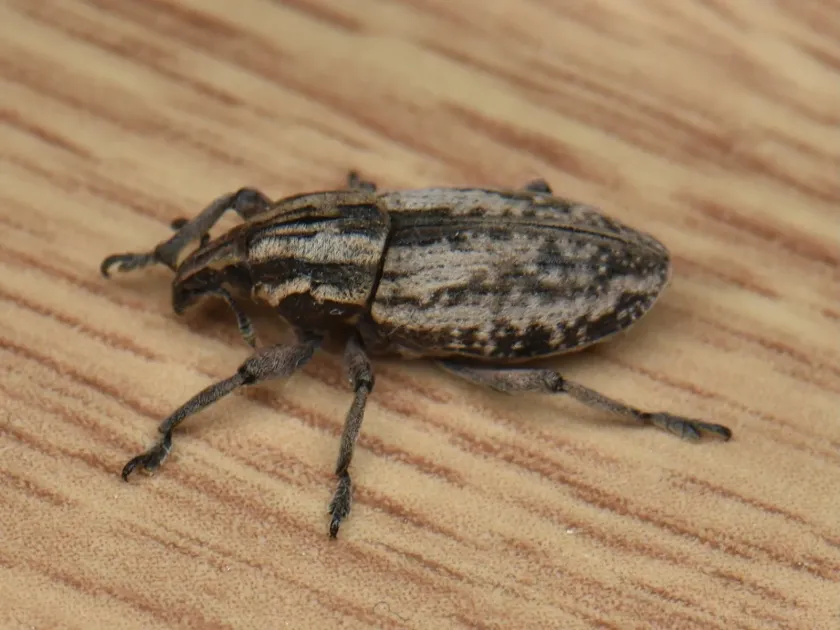
The grey beet weevil (Pseudocleonus cinereus) is a beetle of the Curculionidae family. Adults reach 12–18 mm in length and have a greyish appearance due to dense scales on their body.
Key morphological features include a robust, short rostrum and dark, irregular patterns on the elytra, which serve as excellent camouflage against soil backgrounds.
The larvae are typically legless, creamy white, and curved, with a brown head capsule. They are soil-dwelling and can reach up to 20 mm in size during development.
These weevils are highly resilient and capable of overwintering deep in the soil, emerging when temperatures become favorable in the spring.
Identification in the field often requires inspecting plants at dawn or dusk, as adults are typically more active during these cooler periods.
What it damages
The primary hosts of this species are members of the Amaranthaceae family, most notably sugar, fodder, and table beets.
They also utilize various weeds like lambsquarters and pigweed, which act as a reservoir for the pest before and after the beet growing season.
Adult weevils are particularly destructive to seedling stages, as they gnaw on the edges of cotyledons and stems, often severing the plant completely.
Larval feeding on roots inhibits nutrient uptake, leading to stunted plant growth, yellowing of leaves, and, in severe cases, the death of the sugar beet plant.
Large infestations can result in significant yield losses, potentially requiring farmers to re-sow the affected sections of the field.
When it appears
Adults emerge from overwintering sites in the spring when soil temperatures reach roughly 10–12 degrees Celsius.
The peak feeding period occurs when beet crops are in the cotyledon or first-true-leaf stage, making it the most critical time for crop scouting.
Egg-laying begins shortly after emergence, with females placing eggs in the soil near the root zone of host plants.
Larval development happens throughout the summer months, leading to pupation and the emergence of the new adult generation by autumn.
The new generation of adults then prepares for hibernation by burying themselves deep into the soil to survive the winter frost.
Signs of infestation
Characteristic notches on the edges of the first leaves are a clear sign of adult weevil feeding activity on the sugar beet crop.
Sudden wilting of individual plants, despite sufficient soil moisture, suggests that larvae are attacking the root system below the soil surface.
Missing plants or destroyed seedlings in a row are classic indicators of early-season pressure from this pest.
The presence of weeds like Chenopodium within or around the field edges often correlates with a higher risk of infestation.
Observing the beetles during manual field checks is the most reliable way to confirm the presence of this specific pest before damage levels peak.
Control measures
Effective management begins with cultural practices, such as deep autumn ploughing, which disrupts the life cycle of overwintering larvae and pupae.
Crop rotation is essential; avoiding planting beets in the same field consecutively helps reduce local pest populations significantly.
Maintaining clean field borders and managing weeds are critical steps to prevent the weevils from utilizing alternative hosts before the crop emerges.
Seed treatments with systemic insecticides provide a crucial buffer during the most vulnerable seedling stages of the crop.
- Monitor fields closely when seedlings emerge to determine the economic threshold.
- Apply contact or systemic insecticides if pest pressure exceeds acceptable levels.
- Promote rapid early growth through balanced fertilization to help plants outgrow the damage.
Content graph
Connections · Grey beet weevil
Most often together:
Marketplace
Products · 2
Biology
Taxonomy
- Latin name
- Pseudocleonus cinereus
- Order
- Coleoptera (beetles)
- Family
- Curculionidae
- EPPO code
- PSCLCI
Community
Discussion
No discussions yet — be the first.