
Root buttercup aphid
Protrama ranunculi
Description
How to identify
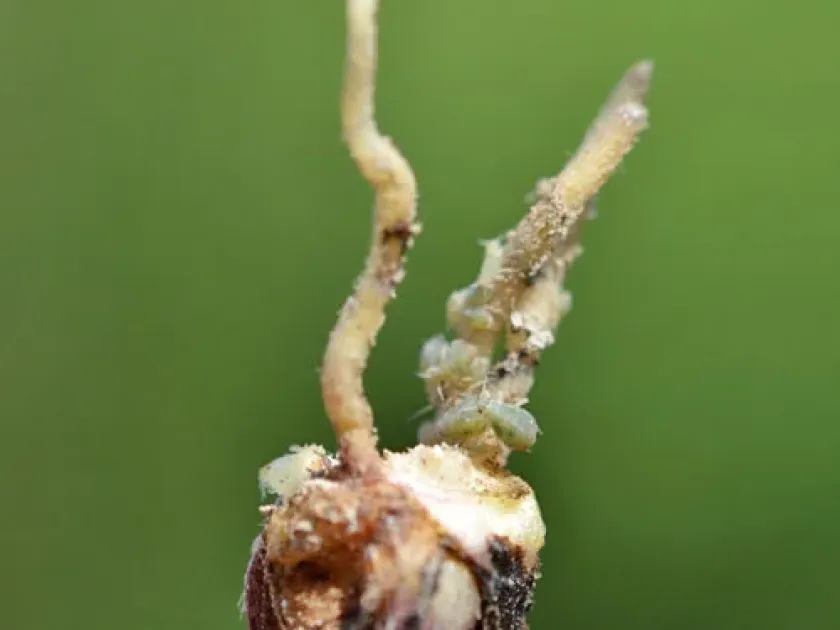
The root buttercup aphid (Latin Protrama ranunculi) is a specialized insect species belonging to the family Lachnidae within the order Hemiptera. Unlike typical aphids, this species spends its entire life cycle underground, feeding on the root systems of specific plant hosts.
The insects are adapted to the subterranean environment, possessing bodies that can navigate soil pores. They are equipped with long, strong stylets used for piercing root tissues to feed on plant sap, remaining hidden from direct sunlight and environmental hazards.
A distinctive feature of Protrama ranunculi is its obligate or facultative relationship with ants. Ants often foster these aphids, protecting them from predators and facilitating their movement across the root zone in exchange for honeydew, a sugary secretion produced by the aphids.
The reproduction cycle is primarily parthenogenetic, allowing for rapid population growth during favorable environmental conditions. This capacity to multiply quickly makes them a significant challenge when they successfully colonize a patch of susceptible plants.
Biology of this aphid is deeply intertwined with its host plants, predominantly from the Ranunculaceae family. Understanding this host specificity is crucial for effective monitoring and early detection of the pest in garden or nursery settings.
What it damages
The primary hosts for this aphid are plants in the Ranunculaceae family. This includes various wild species as well as prized garden ornamentals, which can suffer significantly under heavy infestation.
The aphids cluster on the root system, extracting essential nutrients and sap from the plant. This feeding activity disrupts the plant's nutrient uptake, causing physiological stress that manifests in the above-ground parts of the plant.
Continuous damage to the roots weakens the plant, making it stunted and prone to wilting. If left untreated, severe infestations can result in the complete collapse and eventual death of the affected individual plants.
Furthermore, the physical damage caused by the aphid stylets creates entry points for soil-borne pathogens. These secondary infections, such as root rot fungi, often cause more damage than the aphids themselves, complicating diagnosis and recovery.
Economic damage is observed through the loss of vigor in decorative plantings and the potential destruction of valuable perennial collections. Monitoring is essential to mitigate these risks before irreversible damage occurs.
When it appears
Activity of Protrama ranunculi typically commences in the spring as soil temperatures rise, triggering both root growth in host plants and the reactivation of the aphid population from their overwintering state.
The peak of aphid activity occurs during the mid-summer months when environmental conditions are optimal for rapid reproduction. During this time, colonies can expand significantly if not managed appropriately.
As autumn approaches and soil temperatures drop, the aphid population gradually declines. They move to deeper soil layers or concentrate near the root collar to survive the winter in a state of suspended activity or as eggs, depending on environmental cues.
Migration of the aphids is facilitated by ant activity and the interconnectedness of root systems in garden beds. They can also be introduced to new areas via the transplanting of infected nursery stock or contaminated soil.
In greenhouses or during unusually mild winters, the biological cycle of the aphid may be continuous, posing a persistent threat to indoor or protected plant collections throughout the year.
Signs of infestation
Detecting root-dwelling aphids is notoriously difficult because the main damage is hidden underground. However, careful observation of the plant's overall health can provide early clues to an ongoing infestation.
- General lack of vigor or stunted growth in otherwise well-cared-for plants.
- Persistent ant activity near the base of the plant stem.
- Yellowing of leaves and premature wilting that does not respond to regular irrigation.
- Accumulation of aphid-associated debris or honeydew at the soil surface near the crown.
- Direct visualization of small, whitish, or greyish insects upon careful root examination.
If a plant seems unstable or can be lifted easily from the soil, it indicates a severe compromise of the root system, likely due to a long-standing aphid colony weakening the structure.
Gardeners should perform periodic spot checks by gently clearing soil away from the crown area of susceptible plants. Spotting the colonies early allows for a much higher chance of successful plant recovery.
Always investigate the presence of ants, as they often serve as the first visible indicator of underground sucking pest activity in a garden bed.
Control measures
Managing the root buttercup aphid requires a multi-pronged strategy that targets both the aphids themselves and their symbiotic partners, the ants. Contact insecticides are rarely effective against soil-dwelling pests.
Ant control is a critical first step. By reducing the local ant population, you remove the primary protection and transportation service that the aphids rely on to thrive and spread within the garden.
The most effective chemical approach involves the use of systemic insecticides that are applied to the soil. These chemicals are taken up by the roots, making the plant tissues toxic to the aphids feeding on them.
Aromatic and mechanical soil cultivation can disrupt the galleries created by ants and aphids, making the environment less hospitable for the colonies to establish themselves firmly around the roots.
Preventative measures include inspecting any new additions to the garden for signs of root pests before planting. Ensuring optimal soil health and drainage also helps plants remain resilient against the feeding pressure caused by Protrama ranunculi.
Taxonomy
- Latin name
- Protrama ranunculi
- Order
- Hemiptera (bugs, aphids, leafhoppers)
- Family
- Aphididae
- EPPO code
- PRORRN
Discussion
No discussions yet — be the first.