
Cereal root aphid
Protrama radicis
Description
How to identify
The cereal root aphid (Protrama radicis) belongs to the Hemiptera order and Aphididae family. It is a specialized pest that lives exclusively in the soil, attached to the root systems of host plants.
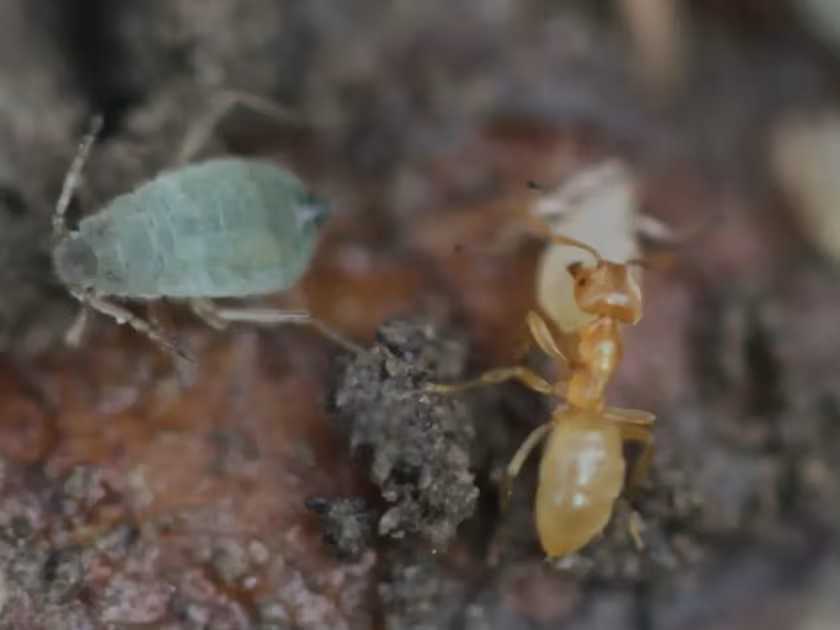
Adult aphids are relatively large, covered with a waxy secretion, and have a greyish-green color. Their long legs are adapted for moving through soil crevices and tunnels created by ants.
This species maintains a mutualistic relationship with ants, which protect the aphids from predators and assist in their dispersal across the field to new host plants.
Reproduction is parthenogenetic, meaning females give birth to live young without mating. This allows the population to grow very rapidly under favorable conditions.
They overwinter as eggs or adults in the soil, often utilizing the nests of ants or the rhizomes of perennial grasses to survive the cold season.
What it damages
This aphid primarily targets various cereal crops, including wheat, barley, and rye. It also frequently infests wild grasses like couch grass, which act as secondary hosts.
By piercing the roots with their mouthparts, these insects drain essential plant sap, which severely hampers the plant's ability to uptake water and nutrients.
The damage is most severe during dry spells, as the impaired root system cannot compensate for the lack of moisture, leading to stunted growth and wilting.
The feeding sites create entry points for soil-borne pathogens, including various fungal infections that cause root rot and stem base decay in young cereals.
Economic impact is seen in the form of yield loss, reduced grain weight, and in severe infestations, patches of completely withered and dead crop across the field.
Signs of infestation
One of the earliest symptoms is the patchiness of the crop, where plants in certain areas show stunted growth and premature yellowing compared to healthy zones.
Plants lose their turgidity and show signs of water stress despite adequate soil moisture, indicating that the root system is no longer functioning correctly.
High ant activity around the base of the plant stems often indicates the presence of a subterranean aphid colony, as ants cultivate these insects.
When digging up affected plants, one can observe clusters of greyish or green insects covered in white waxy fluff attached to the roots.
Affected root systems typically show signs of decline, necrosis, or secondary rot, which makes the plant easily pullable from the ground due to root loss.
Control measures
The most important control measure is the effective management of weeds, particularly perennial grasses, which serve as reservoirs for the aphid population.
Proper tillage, including deep plowing, helps destroy ant colonies and disturbs the aphid habitat in the soil, significantly reducing their numbers before planting.
Implementing a diverse crop rotation is crucial to disrupt the pest cycle, as the cereal root aphid requires specific grass hosts to thrive.
Using systemic insecticidal seed treatments can provide early-season protection, safeguarding the roots while the plant is establishing its root system.
- Monitoring ant populations within the fields.
- Ensuring optimal soil health and fertility for vigorous root growth.
- Avoid continuous cropping of cereals in highly infested fields.
Taxonomy
- Latin name
- Protrama radicis
- Order
- Hemiptera (bugs, aphids, leafhoppers)
- Family
- Aphididae
- EPPO code
- PRORRA
Discussion
No discussions yet — be the first.