
Protrama
Protrama
Description
How to identify
The genus Protrama belongs to the family Aphididae, specifically the subfamily Lachninae. These aphids are distinct due to their subterranean habitat.
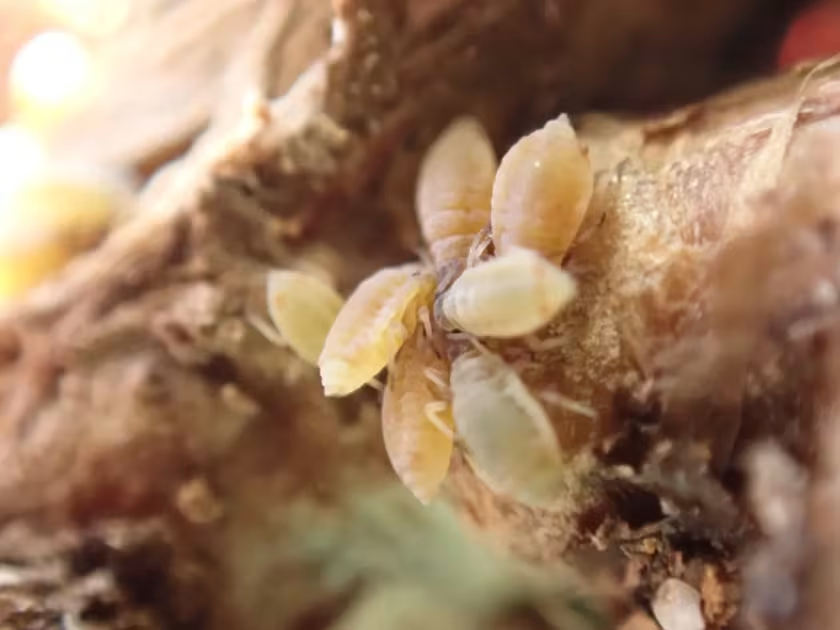
They are characterized by a robust, oval-shaped body often covered with a waxy secretion that protects them from soil humidity and predators.
These insects have evolved specialized, shorter limbs and antennae, which are ideal for maneuvering through the intricate tunnel systems maintained by their ant partners.
They maintain an obligatory mutualistic relationship with ants, which provide shelter and protection in exchange for the honeydew produced by the aphids.
Identification of specific species within the genus Protrama is complex and usually requires microscopic examination of structural morphological features.
What it damages
Protrama aphids primarily infest the root systems of herbaceous plants, specifically those in the Asteraceae family, acting as sap-sucking pests.
By feeding on the roots, they deprive the plant of water and vital nutrients, causing severe developmental delays and growth retardation.
Young seedlings are particularly vulnerable, as their root systems are not yet developed enough to withstand significant sap loss or the resulting stress.
The feeding activity creates micro-wounds on the root surface, which frequently serve as entry points for various soil-borne pathogens and fungal infections.
Chronic infestation often leads to reduced plant vigor, leading to yellowing of the foliage and, in severe cases, the death of the crop.
When it appears
The life cycle of Protrama is closely tied to the seasonal activity of their host ant colonies, which serve as their primary protectors.
During the spring, as soil temperatures rise, the aphids become active, migrating along the roots to establish new colonies on developing plant tissue.
Peak populations are typically reached in mid-summer when the plants are growing vigorously and the nutrient flow in the roots is at its maximum.
They overwinter as eggs, which are carefully curated by ants within deep subterranean chambers to ensure survival during the colder months.
Environmental factors such as soil moisture levels and temperature fluctuations significantly impact the speed of population expansion throughout the season.
Signs of infestation
The earliest sign of Protrama infestation is often the premature wilting of plants, which occurs despite adequate soil moisture levels.
The presence of increased ant activity around the base of the plant stem is a strong indicator of underground symbiotic relationships and aphid colonization.
Careful excavation of the soil around the root zone may reveal clusters of gray or brownish aphids attached to the root tissues.
Plants affected by these aphids will exhibit symptoms of nutrient deficiency, such as stunted growth and chlorotic leaves, even if fertilizers are applied.
The decline is often slow and cumulative, making it difficult to detect the damage until significant structural root loss has already occurred.
Control measures
Successful management of Protrama requires targeting the ants that facilitate their survival, as they are the key to the aphid's distribution.
Systemic insecticides applied as a soil drench are effective in controlling aphid populations within the root zone of the crop.
Cultural practices, such as deep tillage, can disrupt ant tunnels and colonies, significantly reducing the habitat available for the aphids to persist.
Implementing a rigorous crop rotation strategy helps break the lifecycle of these specialized pests by removing their preferred host plants.
- Use of soil-applied systemic pesticides at the time of sowing or planting.
- Ant colony management to discourage symbiotic support of aphids.
- Regular monitoring of root health in areas with historically high ant activity.
Taxonomy
- Latin name
- Protrama
- Order
- Hemiptera (bugs, aphids, leafhoppers)
- Family
- Aphididae
- EPPO code
- PRORSP
Discussion
No discussions yet — be the first.