
Procladius bellus
Procladius bellus
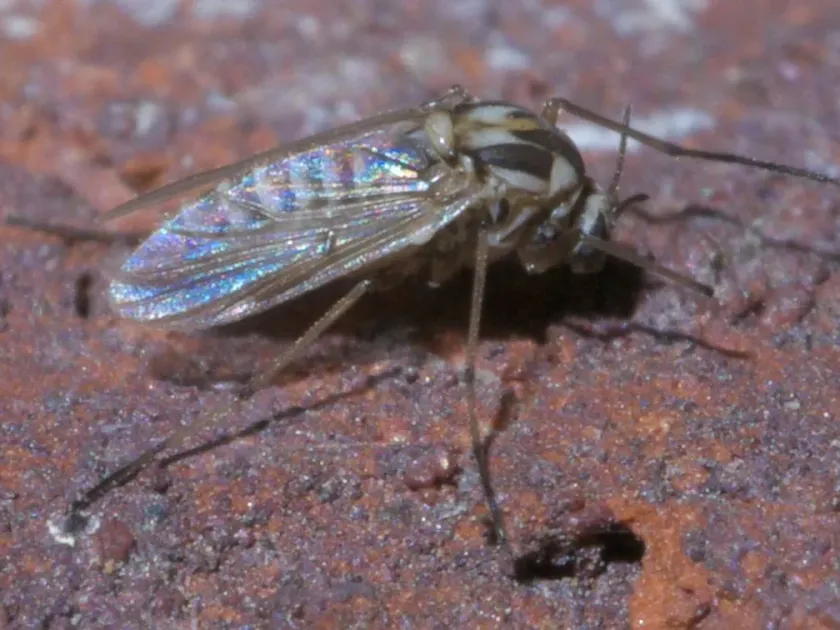
Description
How to identify
Procladius bellus is a species belonging to the Chironomidae family, often referred to as non-biting midges. The adult stage consists of small insects that do not feed and live briefly for reproduction purposes.
The larvae are the primary concern for agronomists, as they reside in aquatic environments. They typically exhibit a reddish or yellowish appearance due to hemoglobin-like pigments in their hemolymph.
Unlike other chironomid larvae, Procladius bellus larvae are predatory and highly active. They possess well-developed, sclerotized mandibles, which allow them to move quickly through sediment and hunt.
This species is a common inhabitant of stagnant or slow-moving water bodies, making it a significant pest in flooded rice systems. The adult midge has a slender body and long legs, typical for the family.
The life cycle is strictly tied to water. Females lay eggs in clusters or strings, which are attached to submerged vegetation or debris on the bottom of the water body.
What it damages
The primary crop damaged by Procladius bellus is rice, specifically during the early stages of growth when the plants are newly germinated or in the seedling phase.
The larvae inhabit the flooded fields and can damage the seeds or the young root systems of the rice plants. Although they are predators, they often resort to feeding on plant tissues when their natural prey is scarce.
The damage results in thin or missing plant stands. When larvae destroy the primary roots of seedlings, the plant often dies, leading to significant yield reduction in affected areas.
Furthermore, their constant movement in the surface layer of the soil disrupts the substrate, which can create an environment susceptible to secondary infections in the rice plants.
In cases of high population density within rice paddies, the damage can be widespread, necessitating urgent management interventions to preserve the crop.
When it appears
The activity of this pest is highly dependent on water temperature. Mass emergence and larval activity typically coincide with the spring flooding of rice fields.
Multiple generations can develop throughout the warm season, provided that the water level remains stable and favorable temperatures are maintained.
The most critical window of vulnerability for rice crops is the seedling stage. During this time, even a moderate population of larvae can cause severe stand density loss.
As water temperatures rise during the summer months, the metabolic rate of the larvae increases, leading to faster development cycles and more aggressive feeding behavior.
With the arrival of autumn and colder temperatures, the larvae retreat deeper into the mud, entering a period of diapause until the next growing season.
Signs of infestation
The first sign of an infestation is uneven plant density across the rice field, often occurring shortly after the initial irrigation or flooding.
Upon examination of the affected seedlings, one can observe mechanical damage to the base of the stem or the complete absence of roots below the soil line.
In infested paddies, murky water spots may appear, caused by the larvae's intensive activity as they churn the bottom sediment in search of food.
Confirmation of the pest can be easily achieved by collecting soil samples from the root zone and using a fine mesh sieve to extract the larvae.
A reduction in overall crop density without signs of fungal or bacterial pathogens often indicates that the damage is caused by soil-borne or aquatic pests like Procladius bellus.
Control measures
Control strategies rely heavily on proper water management, including the ability to drain fields if necessary to interrupt the pest's developmental cycle.
Biological control using entomopathogens has shown promising results in suppressing larval populations within flooded environments without harming the ecosystem.
Chemical control involves the use of insecticides formulated for rice cultivation, which specifically target aquatic larvae while maintaining safety for non-target organisms.
- Monitoring larval density before planting or flooding.
- Treating seeds with protective coatings to defend young seedlings.
- Adjusting flooding schedules to disrupt the larval development timeline.
Effective weed management in irrigation channels is crucial, as these areas often serve as reservoirs where the pest persists and breeds between seasons.
Taxonomy
- Latin name
- Procladius bellus
- Order
- Diptera (flies)
- Family
- Chironomidae
- EPPO code
- PRCLBE
Discussion
No discussions yet — be the first.