
Honeysuckle aphid
Prociphilus xylostei
Description
How to identify
The honeysuckle aphid (Prociphilus xylostei) is a member of the Pemphigidae family. It is a specialized pest that targets various species within the Lonicera genus.
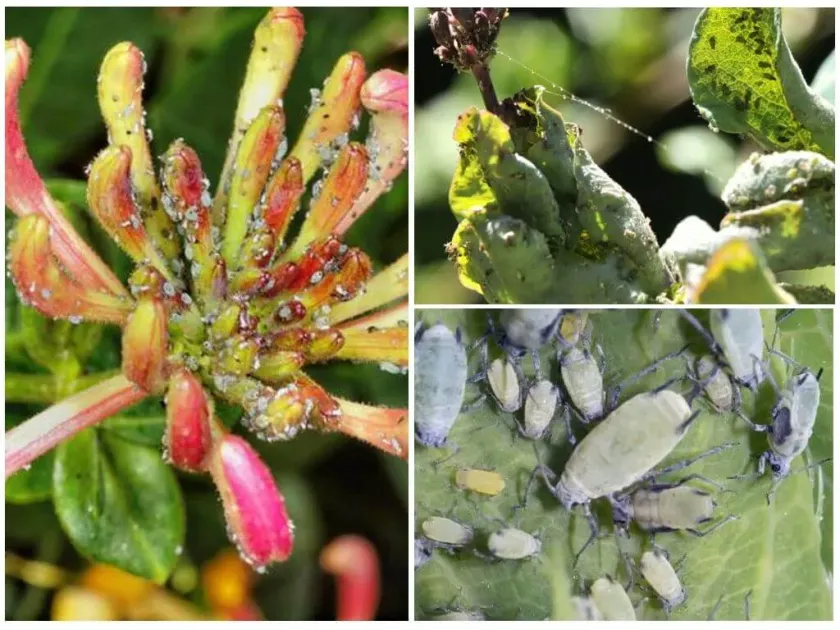
These aphids are small and often covered in a characteristic white waxy secretion, which provides a protective barrier against external factors and predators.
The lifecycle involves a complex alternation of hosts, which is a classic survival strategy for many species within this insect group.
Identifying this pest is mainly done by observing the symptoms they induce, as the insects themselves are often hidden within folded leaves.
Winged forms appear in summer, facilitating the spread of the colony to new plants before the return migration in the autumn.
What it damages
The damage is primarily focused on the terminal growth of the honeysuckle, where young leaves provide the most nutritious sap for the aphids.
As they feed, the aphids remove essential nutrients, causing the leaves to curl, twist, and lose their vibrant green color.
The excessive sap extraction weakens the plant, making it more susceptible to environmental stresses and other secondary diseases.
The excretion of honeydew promotes the growth of sooty mold, which blocks sunlight from reaching the leaf surface, further inhibiting photosynthesis.
In severe cases, the affected shoots stop elongating, leading to stunted plant growth and a significant reduction in fruit yield for the season.
When it appears
The activity begins in early spring when overwintering eggs hatch, and the first nymphs start colonizing the newly opening buds.
Late spring is the period of peak colonization, where the aphids proliferate rapidly under the protection of curled leaf tissues.
Mid-summer is marked by the migration of winged adults to intermediate hosts, which helps them survive unfavorable conditions.
Autumn triggers the return to the primary host, where mating occurs and eggs are laid in bark crevices for winter survival.
Knowledge of these seasonal milestones is vital for choosing the correct timing for horticultural interventions.
Signs of infestation
The most visible symptom is the unnatural curling and distortion of leaves at the tips of the shoots.
Inspecting the underside of these curled leaves will reveal the presence of aphid colonies coated in a white, cottony wax.
The presence of sticky, shiny honeydew on stems and leaves is a clear indicator that a sucking insect colony is active nearby.
A black soot-like coating on leaves confirms the presence of sooty mold, which is a direct consequence of aphid infestation.
- Curled and deformed terminal leaves.
- White waxy secretion on plant shoots.
- Sticky honeydew deposits on foliage.
- Growth of black sooty mold.
- Stunted growth of new shoots.
Control measures
Proper pruning practices are essential to remove heavily infested branches and improve the overall airflow through the plant canopy.
Systemic insecticides applied in early spring are highly effective in eliminating colonies before they cause significant leaf curling.
Encouraging natural predators such as ladybugs and lacewings can provide long-term biological control without the need for chemicals.
Regular monitoring of the garden in early spring is the best way to detect the first signs of infestation and act promptly.
Always ensure that any chemical control methods are applied according to the label instructions to minimize environmental impact.
Taxonomy
- Latin name
- Prociphilus xylostei
- Order
- Hemiptera (bugs, aphids, leafhoppers)
- Family
- Aphididae
- EPPO code
- PROCXY
Discussion
No discussions yet — be the first.