
Pine bark aphid
Prociphilus pini
Description
How to identify
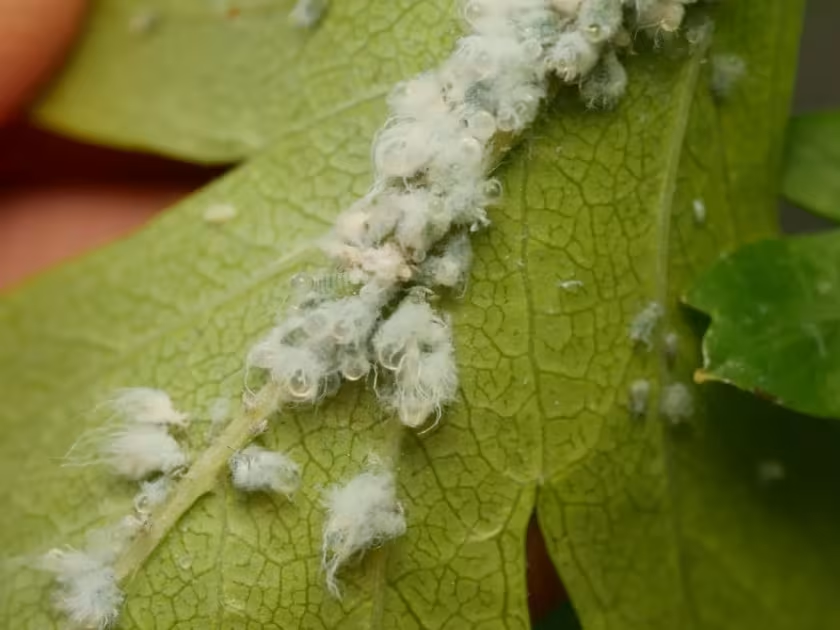
The pine bark aphid (Prociphilus pini) is a member of the family Adelgidae, order Hemiptera. These small insects are notable for their ability to secrete white waxy filaments that resemble cotton or frost covering the tree's needles and bark.
These pests are host-specific to pine species. Their biological life cycle is complex, often involving the migration of different generations across various parts of the host plant throughout the growing season.
Identification is primarily based on the presence of white waxy colonies. Because the insects themselves are very small, they are often overlooked until the white secretion becomes abundant enough to be visible to the naked eye.
As members of the Hemiptera order, they possess piercing-sucking mouthparts. These are highly evolved to penetrate the tough tissues of conifer needles and shoots to feed on sap.
Colonies typically hide on the underside of needles or near the base of needle clusters, providing them with a microenvironment shielded from predators and environmental stressors.
What it damages
This aphid species primarily affects pine stands and seedlings in nurseries. It is a significant pest that can cause stunting and reduced vigor in young trees, compromising their growth and health.
The insects extract nutrients from the plant's vascular system, leading to needle discoloration, premature yellowing, and eventual needle drop. This damage significantly reduces the aesthetic and commercial value of pine trees.
Deformation of new shoots occurs due to the toxic saliva injected by the aphids during feeding. This leads to twisted, stunted growth patterns in the terminal branches.
Severe infestations place the host plant under immense physiological stress. This makes the affected trees susceptible to secondary attacks from bark beetles and wood-boring insects.
If left unmanaged, persistent populations can cause localized dieback, specifically in younger specimens, and in chronic cases, may lead to the death of the entire tree during stressful weather periods.
When it appears
The life cycle of the pine bark aphid is strictly synchronized with the phenology of the host plant. Overwintering occurs in the larval stage, tucked deep into the crevices of the tree bark.
As spring temperatures rise, these larvae emerge, migrate to new growth, and begin active feeding on the sap of developing shoots and needles.
The summer months represent the peak of their population growth. Multiple generations are produced, with adults rapidly colonizing new parts of the pine canopy as they mature.
By autumn, the population transitions into a dormant state. The aphids seek sheltered locations on the bark to survive the winter, effectively resetting the cycle for the following year.
Knowledge of these seasonal milestones is vital for management, particularly for timing chemical interventions to coincide with the most vulnerable stages of the aphid life cycle.
Signs of infestation
The most visible sign of infestation is the accumulation of white, cottony, wax-like material on the needles and stems. This white mass is often the first indicator for foresters and gardeners.
The second sign is the production of honeydew, a sugary waste product. This substance often coats the foliage and encourages the growth of black sooty mold, giving the tree a discolored, dull appearance.
Needle yellowing and curling are classic symptoms. The needles lose their structure and luster, eventually browning and dropping prematurely as the nutrient supply is depleted.
High activity of ants on the branches is another indirect sign, as ants are often attracted to the aphid colonies to harvest the energy-rich honeydew.
A noticeable decrease in annual twig elongation and the formation of weakened buds are indicative of established, long-term colonies within the canopy.
Control measures
Management of the pine bark aphid requires a combination of horticultural practices and targeted chemical interventions to effectively reduce population numbers.
Healthy trees are more resilient, so maintaining proper irrigation and soil fertility is essential. Early detection through regular monitoring allows for targeted removal of infested branches.
- Application of horticultural oils in early spring to smother overwintering larvae before they disperse.
- Use of systemic insecticides, such as neonicotinoids, applied during the active feeding phase for maximum efficacy.
- Conservation of natural predators, including lady beetles (Coccinellidae) and lacewings, which provide significant biological control.
Timely application is critical; once the insects are protected by a thick layer of wax, contact insecticides become significantly less effective, necessitating the use of systemic products.
In nursery settings, it is advisable to maintain spatial separation between new batches of seedlings to prevent the rapid spread of the pest across the entire inventory.
Taxonomy
- Latin name
- Prociphilus pini
- Order
- Hemiptera (bugs, aphids, leafhoppers)
- Family
- Aphididae
- EPPO code
- PROCPI
Discussion
No discussions yet — be the first.