
Ash leaf aphid
Prociphilus fraxinifolii
Description
How to identify
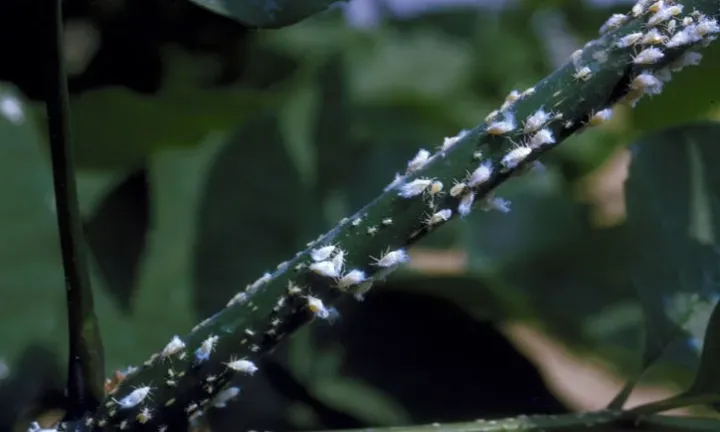
The ash leaf aphid belongs to the order Hemiptera and the family Aphididae. These small insects are notable for producing a dense, white, waxy secretion that covers their colonies.
They exhibit a complex life cycle, typical of many aphid species, which includes moving between different host plants during various stages of their development.
Adults and nymphs possess piercing-sucking mouthparts that allow them to extract sap directly from the phloem of their host plants, specifically ash trees.
Overwintering occurs primarily in the egg stage, with eggs tucked securely into bark crevices or near leaf buds, protected from harsh winter elements.
Spring emergence marks the beginning of rapid population growth, as the founder generations start producing numerous offspring that infest new, tender leaf growth.
What it damages
The primary hosts for this aphid are species within the Fraxinus genus, commonly known as ash trees, which are widely planted in urban and suburban landscapes.
Damage is typically concentrated on new terminal growth, where the succulent tissues provide the easiest access to the essential nutrients the aphids require.
Young trees in nurseries are particularly vulnerable, as heavy infestations can lead to severe stunting, leaf curling, and overall reduction in tree vigor.
Beyond direct feeding damage, the stress caused by these insects can make the host trees more susceptible to secondary environmental or biological stressors.
The aesthetic degradation of the trees, caused by deformed leaves and sooty mold growth, makes this pest a significant concern for ornamental landscape management.
Signs of infestation
The most characteristic sign is the tight curling or twisting of ash leaves, creating protective "gall-like" structures where the aphid colonies reside.
White, woolly, or fluffy material visible inside these curled leaves is a definitive indicator of an ash leaf aphid infestation rather than other leaf rollers.
The presence of honeydew on the foliage often leads to the growth of black sooty mold, which can cover large portions of the canopy, inhibiting photosynthesis.
Increased ant activity on the tree trunks is a strong indicator of aphid presence, as ants often farm the aphids for their sugary honeydew secretions.
Premature leaf drop and generalized wilting of the terminal shoots are common visual symptoms that occur when aphid populations reach high densities.
Control measures
Systemic insecticides are generally the most effective method for managing ash leaf aphids, as they translocate through the tree to reach the sap-feeders.
Early intervention is crucial, so regular monitoring of tree canopies in the late spring is recommended to catch infestations before they spread significantly.
Encouraging natural predators such as lady beetles, lacewings, and syrphid fly larvae can provide sustainable control and keep aphid numbers in check.
Good cultural practices, including adequate watering and avoiding excessive nitrogen fertilization, help keep the trees resilient against pest damage.
- Regular inspection of terminal buds and leaves during the growing season.
- Application of horticultural oils during the dormant season to target overwintering eggs.
- Promotion of biodiversity to support populations of beneficial predatory insects.
Taxonomy
- Latin name
- Prociphilus fraxinifolii
- Order
- Hemiptera (bugs, aphids, leafhoppers)
- Family
- Aphididae
- EPPO code
- PROCFX
Discussion
No discussions yet — be the first.