
Ash root aphid
Prociphilus fraxini
Description
How to identify
The Ash root aphid (Prociphilus fraxini) is a member of the Aphididae family that specifically targets the root system of ash trees (Fraxinus). This insect is known for its cryptic lifestyle, spending most of its life cycle underground or in sheltered areas.
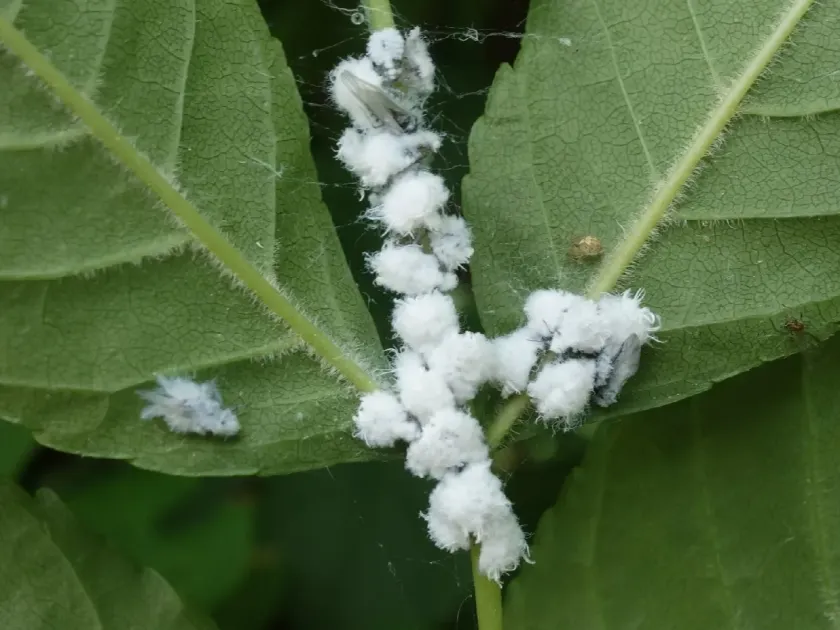
Identification is most commonly achieved by spotting the characteristic white, cottony wax secretions that cover the aphids' bodies. These secretions are often mistaken for fungal growth or mold within the soil profile.
The life cycle involves complex generations, including wingless forms that remain on the roots and winged forms that facilitate dispersal to new hosts. Their morphology is highly adapted for specialized feeding on woody plant roots.
Taxonomically, the species is part of the order Hemiptera. Their ability to survive underground makes them a challenging pest to manage, as they are not immediately visible during routine canopy inspections.
Understanding their association with the host tree's root system is essential for accurate identification. They tend to cluster where root development is most active, often near the root collar.
What it damages
The primary damage caused by Prociphilus fraxini is the depletion of nutrients from the ash tree's root system. By feeding on the phloem sap of young roots, the aphids interfere with the tree's water and nutrient uptake.
This root stress manifests as a decline in tree vigor, characterized by reduced annual growth, smaller leaf size, and early defoliation. In severe infestations, the tree's ability to withstand drought or disease is significantly compromised.
Nursery-grown ash trees are particularly susceptible to economic damage. An infestation can ruin the transplanting potential of the stock and cause high mortality rates among young trees.
Beyond direct sap-sucking, the aphids may inject salivary toxins that cause localized root deformity, further hindering the tree's growth and stability in the soil.
The presence of these aphids often invites secondary complications, such as fungal pathogens that exploit the weakened root structures, ultimately pushing the tree toward premature decline.
When it appears
The activity of the Ash root aphid begins in early spring, synchronized with the onset of the tree's growth. As soil temperatures rise, the overwintering population becomes active and initiates feeding on rootlets.
During the summer months, the population peaks, and winged adults may emerge to spread the infestation to other parts of the root system or neighboring trees. Warm, moist summers typically favor rapid population expansion.
As autumn approaches, the aphids prepare for winter, descending deeper into the soil or retreating into protected crevices around the root collar to survive the cold months.
Environmental monitoring is critical during the peak growing season when the tree's energy requirements are highest. Any disruption to the roots during this time has a magnified effect on the tree's health.
The timing of control measures must coincide with the peak activity periods to ensure that the systemic treatments effectively reach the aphid colonies on the root system.
Signs of infestation
The most reliable sign of an infestation is the presence of white, woolly substances near the base of the ash tree, especially if seen when removing a small layer of soil or mulch around the root collar.
Above-ground symptoms are often subtle indicators of root stress. These include sparse canopy, yellowing foliage (chlorosis), and a general lack of vigor in the tree's overall appearance.
- White waxy tufts at the base of the trunk.
- Increased ant activity near the tree, as they farm aphids for honeydew.
- Significant decline in shoot growth compared to healthy trees.
- Premature leaf drop or "dieback" of canopy branches.
- Stunted root growth observable upon inspection of the root ball.
Ant activity is a very strong clue; ants are known to protect these aphids and help them survive, so a large ant colony near the ash tree base should warrant a deeper inspection for aphids.
Proactive monitoring by checking the soil interface with the root collar is recommended, especially for high-value ornamental ash trees in landscaping or nursery settings.
Control measures
Effective management of Prociphilus fraxini involves systemic insecticide applications, which are delivered to the soil around the root zone. The roots absorb the chemical, making the sap toxic to the aphids.
Cultural practices should emphasize maintaining the tree’s vitality through regular watering and appropriate fertilization, which helps the tree compensate for the loss of root function caused by aphid feeding.
Controlling ant populations is a secondary but vital step, as ants often move aphids to new roots and defend them against natural predators, limiting the effectiveness of biological control agents.
In nursery environments, strict hygiene and quarantine procedures for incoming stock prevent the spread of the pest. Preventive soil drenches may be used in areas with a history of aphid outbreaks.
Integrated pest management (IPM) strategies, which prioritize regular observation and targeted application rather than broad-spectrum spraying, are best suited for maintaining tree health while minimizing environmental impact.
Taxonomy
- Latin name
- Prociphilus fraxini
- Order
- Hemiptera (bugs, aphids, leafhoppers)
- Family
- Aphididae
- EPPO code
- PROCFA
Discussion
No discussions yet — be the first.