
Hawthorn aphid
Prociphilus crataegi
Description
How to identify
The hawthorn aphid (Prociphilus crataegi) is a member of the Aphididae family, known for its complex lifecycle and host alternation.
The aphids are typically oval-shaped, often covered in a characteristic white waxy secretion that makes them look fuzzy.
The species alternates between hawthorn (Crataegus) as the primary host and plants from the Apiaceae family as secondary hosts.
Reproduction is primarily parthenogenetic during the spring and summer, allowing for rapid colonization of host plants.
Adult aphids and nymphs are found protected within the distorted leaf structures, which serve as a nursery for the growing colony.
What it damages
Hawthorn trees are the primary victims, where the aphids cause specific leaf deformation known as galls.
During summer months, the aphids migrate to the roots of secondary host plants, such as various umbrella-type herbs and weeds.
By feeding on plant sap, they drain vital nutrients, which leads to reduced vitality and stunted growth of the host plant.
The feeding process can also cause physiological stress, making the tree more susceptible to other environmental stressors or pathogens.
Heavy infestations reduce the photosynthetic area of the leaves, directly impacting the overall health and vigor of the hawthorn.
When it appears
The lifecycle begins in early spring when eggs overwintering on hawthorn branches hatch into stem mothers.
As the hawthorn buds open, these aphids move to the developing leaves and begin to form colonies.
By early summer, winged individuals develop and migrate to the roots of secondary herbaceous hosts.
In autumn, winged return-migrants fly back to the hawthorn trees to produce the sexual generation.
Eggs are laid in protected crevices on the bark or near buds, ensuring the species survives the winter period.
Signs of infestation
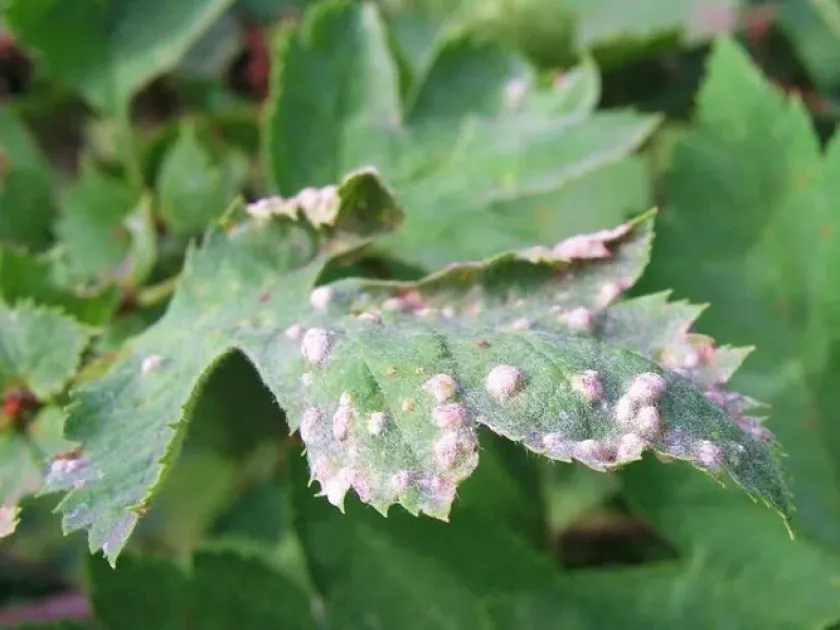
The most distinctive symptom is the severe curling of hawthorn leaves along the midrib, which forms a gall.
These galls often appear swollen, thickened, and may show yellow, orange, or red discoloration.
Inside the curled foliage, one can find clusters of aphids covered in white, woolly waxy secretions.
The presence of honeydew on the leaf surfaces often leads to the growth of sooty mold, appearing as black crusts.
Premature leaf drop is a common sign when the infestation levels have reached a critical point for the tree.
Control measures
Sanitation is key; pruning and destroying affected shoots early in the season can significantly reduce the population size.
Maintaining a weed-free zone around the base of the trees helps eliminate the secondary hosts for summer colonization.
Chemical control is most effective when applied before the leaves have curled, as the galls provide physical protection for the aphids.
- Applying systemic insecticides early in the spring before gall formation.
- Encouraging natural predators such as lady beetles, lacewings, and hoverfly larvae.
Frequent monitoring during the leaf-bud break stage is essential to catch early signs of infestation and prevent widespread damage.
Taxonomy
- Latin name
- Prociphilus crataegi
- Order
- Hemiptera (bugs, aphids, leafhoppers)
- Family
- Aphididae
- EPPO code
- PROCCR
Discussion
No discussions yet — be the first.