
Woolly elm aphid
Prociphilus americanus
Description
How to identify
The woolly elm aphid (Prociphilus americanus) belongs to the order Hemiptera and the family Aphididae. It is recognized by its complex life cycle, which involves alternating between two different host plants.
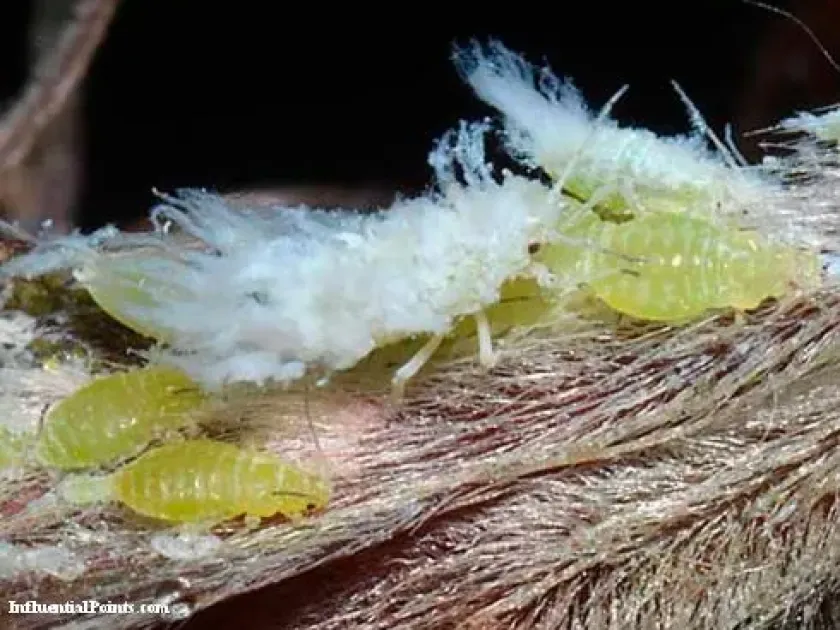
The aphid is famous for its white, waxy, cotton-like secretions. These secretions cover the aphid colonies, providing both physical protection from predators and shelter from environmental stress.
Adult aphids and nymphs feed by inserting their stylets into the plant's vascular tissue. This specialized feeding habit allows them to extract nutrients directly from the host's sap flow.
The species produces winged migratory forms in mid-season. These individuals are responsible for moving from the primary elm host to the secondary coniferous hosts, such as fir trees.
Winter survival is achieved in the egg stage. These eggs are securely tucked into the crevices of elm bark, where they remain until the warmer temperatures of early spring trigger hatching.
What it damages
During the spring, the aphid infests American elm (Ulmus americana). The feeding process causes leaves to curl tightly, creating a protected microenvironment for the developing aphid colony.
By summer, the colony migrates to the roots of conifers, particularly fir trees (Abies). On these roots, they continue to feed and reproduce, which often goes unnoticed until the host tree begins to decline.
Heavy infestations on elms lead to stunted growth and premature leaf drop. While not usually fatal to healthy mature trees, it can significantly weaken smaller or stressed specimens.
The honeydew produced by the aphids serves as a substrate for sooty mold fungi. This black fungal growth inhibits photosynthesis, causing additional stress to the affected elm tree.
Root infestations on firs lead to decreased vigor and overall tree decline. If the population density is high enough, it can interfere with the tree's ability to absorb water and nutrients efficiently.
Signs of infestation
Curled, distorted leaves on elm trees are the most visible signs of an early season infestation. Inside these curls, one will find the characteristic white, waxy masses of aphids.
Sticky honeydew residues covering the foliage and branches below the aphid colony indicate active feeding. This substance often attracts ants and wasps, which feed on the sugary exudate.
Early defoliation is a key diagnostic sign. If elm trees lose a significant portion of their leaves in mid-summer, an aphid infestation is a primary suspect.
In fir trees, signs are more subtle. A general loss of needle color and a gradual thinning of the canopy can indicate that root-feeding insects are sapping the tree's vitality.
The appearance of white, fluffy patches on the bark of elm branches is an unmistakable indicator of the presence of this specific aphid species during the spring months.
Control measures
Systemic insecticides applied during the early spring, just as the buds begin to open, are the most effective way to prevent the establishment of large colonies.
Landscape management plays a crucial role. Minimizing the proximity of elm trees to fir trees reduces the likelihood of the aphid completing its full life cycle in one location.
Encouraging natural predators such as lady beetles, lacewings, and syrphid fly larvae can help keep aphid populations below damaging thresholds in larger gardens or parks.
Pruning out and disposing of heavily infested branches in the spring can significantly reduce the local aphid population and prevent further spread throughout the tree canopy.
Soil drenching with appropriate systemic pesticides can be used to target root-feeding populations on coniferous hosts, ensuring the chemical reaches the root zone effectively.
Taxonomy
- Latin name
- Prociphilus americanus
- Order
- Hemiptera (bugs, aphids, leafhoppers)
- Family
- Aphididae
- EPPO code
- PROCAM
Discussion
No discussions yet — be the first.