
Mushroom gnat of the genus Proceroplatus
Proceroplatus
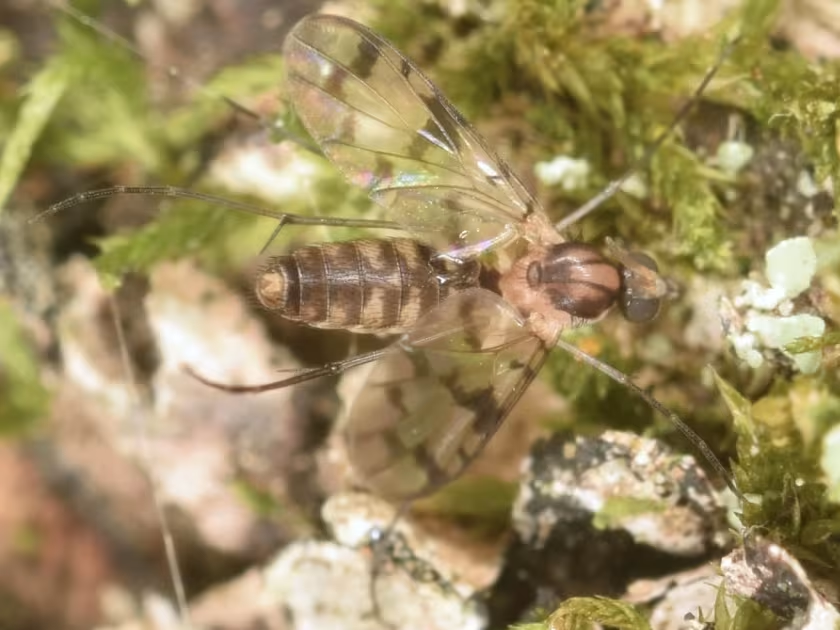
Description
How to identify
The mushroom gnats of the genus Proceroplatus belong to the Keroplatidae family within the order Diptera. These insects possess distinct biological traits, most notably the ability of their larvae to construct silken webs on substrates, which differentiates them from common sciarid gnats.
Adults are small, delicate insects with long legs and wings often decorated with dark spots or patterns. They are predominantly crepuscular, meaning they are active during twilight and prefer humid, shaded environments for their life cycle stages.
Larvae are worm-like, translucent, and possess a clearly visible dark head capsule. Their behavior is unique as they actively spin webs on the surface of soil or fungus, which serves as both protection and a method for capturing nutrients in their habitat.
The life cycle includes four stages: egg, larva, pupa, and imago. In warm greenhouse conditions, the entire development cycle can occur in approximately three to four weeks, allowing for rapid population growth if humidity levels remain high.
Identification often relies on locating these specific micro-habitats where moisture and decaying organic matter are present. These areas serve as the primary breeding grounds for the species, supporting high larval density in controlled agricultural environments.
What it damages
In an agronomic context, these gnats primarily target seedlings in greenhouses and nurseries. The damage is caused by larvae that feed on tender root hairs and the base of the stems, leading to severe stunted growth or plant death.
Crops grown in peat-based or coconut coir substrates are particularly susceptible. Larval feeding damages the root system, which disrupts water and nutrient uptake, causing the plants to lose turgor and exhibit signs of nutritional deficiency.
Beyond direct mechanical damage, larvae act as vectors for various plant pathogens. They can carry spores of fungi like Fusarium or Pythium into the root zone, facilitating the onset of root rot diseases that can devastate young plant populations.
Economic losses are often significant in commercial flower and vegetable production. Plants that survive initial larval attacks are frequently weakened, showing lower vigor and decreased resistance to environmental stresses, which impacts overall yield quality.
High infestation levels are almost always correlated with over-irrigation. Wet substrates provide an ideal food source (fungal mycelium) and shelter for the larvae, maintaining a continuous cycle of pest pressure throughout the growing season.
Signs of infestation
The presence of adult gnats flying around pots or substrate surfaces during irrigation is the most obvious sign of an infestation. These gnats do not typically travel far and remain close to the source of moisture and breeding.
The detection of fine, silken webbing on the surface of the soil or around the plant stem is a diagnostic sign specific to this genus. This web is often overlooked but serves as a clear indicator of Proceroplatus larval activity.
General plant decline, such as yellowing of leaves or wilting, despite adequate moisture levels, often points to subterranean damage. When root function is compromised by larvae, the plant becomes unable to sustain its foliage, leading to chlorosis.
Upon closer inspection of the root zone, one might notice tunnels or necrotic tissue resulting from larval feeding. In advanced stages, larvae may be visible if the root ball is carefully removed from the container and examined under magnification.
The presence of fungal growth on the substrate surface is frequently observed alongside these gnats, as the fungal mycelium is a major food source for the larvae, further promoting their proliferation in the nursery environment.
Control measures
Effective management begins with strict irrigation control. Reducing substrate moisture is the most critical step to prevent the survival of larvae, as they thrive only in consistently waterlogged or overly humid conditions.
Yellow sticky traps are essential for monitoring and suppressing adult populations. By placing these traps near the soil surface, growers can capture flying adults before they have the opportunity to lay eggs, thereby breaking the pest's cycle.
Biological control using entomopathogenic nematodes, such as Steinernema species, is highly recommended. These natural predators are applied via drenching and actively seek out the larvae within the substrate, providing an eco-friendly solution.
Chemical control involving soil-applied systemic insecticides can be used for severe infestations. These treatments should be applied as a drench to ensure direct contact with the larvae residing in the soil, rather than relying on surface sprays.
Preventive measures include the heat sterilization of all growing media and strict hygiene in greenhouse management. Ensuring that new plant material is quarantined and free of larvae helps prevent the introduction and spread of Proceroplatus.
Taxonomy
- Latin name
- Proceroplatus
- Order
- Diptera (flies)
- Family
- Keroplatidae
- EPPO code
- PRCRSP
Discussion
No discussions yet — be the first.