
Lyprauta chacoensis
Lyprauta chacoensis
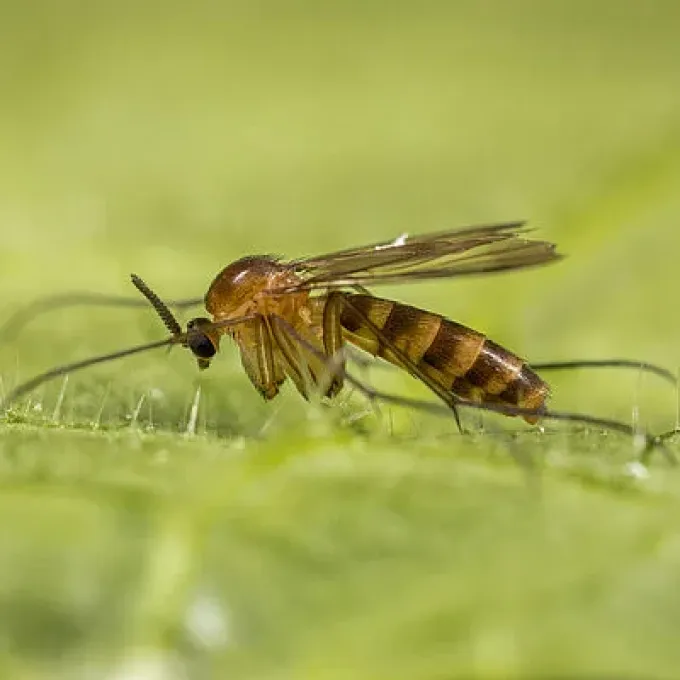
Description
How to identify
Lyprauta chacoensis belongs to the Sciaridae family, which is part of the Diptera order. These insects are commonly known as fungus gnats and possess a delicate body structure with long legs, typical for small gnats.
Adults are small flies that lead a relatively secretive lifestyle. The larvae represent the primary damaging stage; they are characterized by a distinct black head capsule and a translucent body, making them identifiable under microscopic inspection of the growing medium.
The life cycle of this species is closely linked to the presence of moist organic matter in the soil or the root zone of plants. The development consists of the egg, four larval stages, pupa, and the adult stage.
Adults do not cause direct damage to plants as their mouthparts are not adapted for feeding on plant tissues. The main function of the adult stage is to locate a suitable moist environment for oviposition.
The rate of population development is highly dependent on temperature and moisture levels, which dictates the severity of the infestation in agricultural and greenhouse environments.
What it damages
Larvae of this species feed primarily on decaying organic matter, but under high population density or lack of natural food, they actively damage the roots and root collars of cultivated plants.
Young plants with delicate root systems are the most vulnerable. This poses a significant threat to seedlings in greenhouses and nurseries where substrates are rich in organic nutrients.
Damage to the root system disrupts water and nutrient transport, leading to wilting of the aerial parts of the plant even when soil moisture appears sufficient.
Furthermore, larval feeding wounds serve as entry points for secondary infections, including various fungal pathogens (such as Fusarium or Pythium), which lead to root rot.
On a commercial scale, mass reproduction of this pest can lead to poor stand density and a significant reduction in the market quality of the crop.
Signs of infestation
The primary indication of an infestation is the presence of adult flies hovering over the soil surface in greenhouses or around potted plants.
Upon inspecting the root system of affected plants, one may observe characteristic grazing marks, tunnels, or the complete destruction of small feeder roots.
Plants damaged by larvae often show symptoms of stunted growth, chlorosis, and general decline, which are frequently mistaken for nutrient deficiencies.
In severe cases, plants may fall over because the larvae have severed the stem base just below or at the soil surface.
Occasionally, small traces of larval activity or the larvae themselves can be found by carefully examining the upper layer of the substrate near the root base.
Control measures
The foundation of effective control is the regulation of irrigation and the prevention of overwatering, as excess moisture creates ideal conditions for the proliferation of Lyprauta chacoensis.
An effective preventive measure involves using high-quality, sterilized substrates and avoiding the use of uncomposted manure or organic fertilizers.
Yellow sticky traps are widely used for monitoring and capturing adults, providing a reliable way to assess population levels and determine the necessity of treatment.
In cases of high infestation, chemical insecticides (soil-applied) or biological control agents, such as entomopathogenic nematodes, are utilized to effectively eliminate larvae within the soil.
Regular sanitation, the removal of plant debris, and maintaining proper air circulation in growing facilities significantly reduce the risk of this pest becoming established.
Taxonomy
- Latin name
- Lyprauta chacoensis
- Order
- Diptera (flies)
- Family
- Keroplatidae
- EPPO code
- LYPRCH
Discussion
No discussions yet — be the first.