
Walnut root lesion nematode
Pratylenchus vulnus
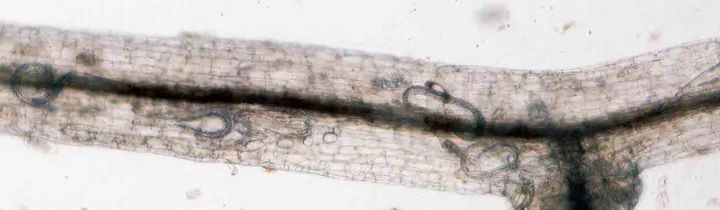
Description
How to identify
The Walnut root lesion nematode (Pratylenchus vulnus) belongs to the order Tylenchida and the family Pratylenchidae. These microscopic roundworms are endoparasitic pests that invade the root cortex of various plant species.
The adults are slender and vermiform, measuring between 0.5 to 0.8 mm in length. They are highly mobile and use their specialized feeding apparatus, called a stylet, to puncture cell walls and feed on plant tissues.
Its biological cycle is strongly influenced by soil temperature and moisture. The nematode can complete its lifecycle in about 30 to 45 days under optimal summer conditions, leading to multiple overlapping generations within a single growing season.
They can survive in the soil for extended periods even when preferred hosts are absent, by migrating into deeper soil layers or slowing their metabolism, making them persistent threats in orchards.
Unlike some other nematode species, Pratylenchus vulnus does not cause visible galls on the roots, which often leads to the misdiagnosis of symptoms as simple nutritional deficiency or drought stress.
What it damages
This nematode has a very broad host range, causing significant economic losses to fruit and nut trees, such as walnut, apple, cherry, and grapevines. It also impacts various ornamental shrubs and nursery crops.
By feeding on the roots, they create necrotic lesions and small cracks. These wounds provide entry points for secondary pathogens like fungi and bacteria, which often accelerate the destruction of the root system.
The damage disrupts the plant's ability to uptake water and nutrients effectively. Consequently, infested plants show reduced vigor, stunted growth, chlorosis, and significantly lower yields over several years.
Young trees are particularly vulnerable to infestation. In nursery settings, heavy nematode populations can severely damage young root systems, leading to high mortality rates or unmarketable, weak seedlings.
The long-term impact on orchards is characterized by a gradual decline in tree health, eventually leading to "replant problems," where new trees fail to thrive when planted in infested soil.
Signs of infestation
The most obvious field signs include patches of stunted, poorly growing trees that do not respond to fertilization or irrigation. These areas often appear irregularly across the orchard or field.
Root examinations typically reveal dark, sunken lesions and the disintegration of fine feeder roots. The overall root system may appear brown, brittle, and significantly reduced in volume compared to healthy plants.
During peak heat in the summer, the canopy of an infested plant may show signs of premature wilting or leaf drop, as the damaged root system cannot satisfy the transpirational water demand of the leaves.
In addition to physical root symptoms, growers may notice an overall reduction in fruit size, quality, and general tree lifespan compared to neighboring non-infested orchards.
For definitive diagnosis, soil and root samples must be sent to a laboratory for extraction and microscopic identification, as visual symptoms alone are often insufficient to distinguish P. vulnus from other soil-borne diseases.
Control measures
The first line of defense is the use of certified, nematode-free nursery stock. Inspecting roots before planting is crucial to avoid introducing the pest into previously clean fields.
Cultural management involves long-term crop rotation with non-host species. Fallowing the soil for several years and intensive weed control can help significantly reduce the population of Pratylenchus vulnus.
Certain cover crops, such as specific varieties of marigolds (Tagetes) or mustard, release bio-fumigant compounds into the soil that can effectively suppress nematode numbers.
In commercial orchards, pre-plant soil sterilization or fumigation may be necessary. These methods are most effective when applied at the correct depth and when soil moisture and temperature conditions are within specific ranges.
Maintaining strong soil health through organic matter enrichment helps plants better tolerate nematode damage. Integrated pest management, including regular monitoring and timely intervention, is essential for sustainable long-term control.
Taxonomy
- Latin name
- Pratylenchus vulnus
- Order
- Nematodes
- Family
- Pratylenchidae
- EPPO code
- PRATVU
Discussion
No discussions yet — be the first.