
Thorne stunt nematode
Pratylenchus thornei
Description
How to identify
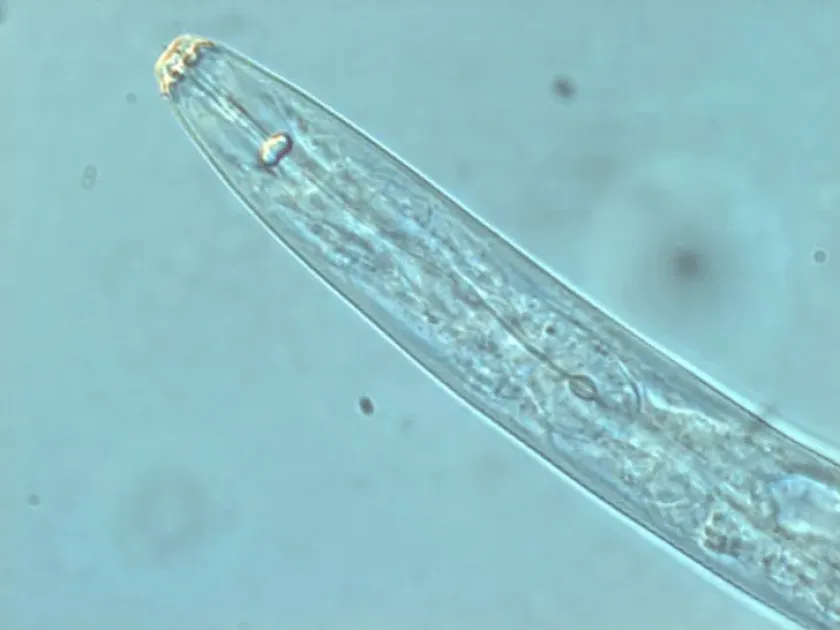
The Thorne stunt nematode, Pratylenchus thornei, is a migratory endoparasitic nematode that significantly impacts crop production globally. It belongs to the family Pratylenchidae and is widely recognized as a serious soil-borne pest.
Adults and juveniles move through the soil, penetrating the roots of host plants. Unlike cyst nematodes, they do not remain stationary, which allows them to damage extensive areas of the root system during their feeding process.
The lifecycle consists of an egg stage followed by four juvenile stages and the adult stage. The nematodes can survive in the soil or within the root tissue, protected from environmental extremes.
Due to their microscopic size and hidden location within the root cortex, they are impossible to identify without specific laboratory diagnostic techniques like soil extraction or root staining.
The persistence of this species in the soil is supported by its ability to undergo a state of cryptobiosis or dormancy when environmental conditions are unfavorable for active development.
What it damages
Pratylenchus thornei has a broad host range, primarily targeting small grains such as wheat, barley, and oats, as well as various legumes like chickpeas and lentils.
The nematodes pierce root cells with their stylets, causing tissue destruction and necrosis. This damage impairs the plant's ability to uptake water and essential nutrients effectively.
Plants affected by this parasite often exhibit stunted growth, reduced tillering, and an overall decrease in biomass, leading to significant yield losses in commercial farming.
Root lesions created by the feeding nematodes serve as entry points for secondary pathogens, such as fungi causing root rot complexes, which exacerbate the damage.
In regions with high nematode densities, the cumulative stress on crops can lead to premature senescence and reduced quality of grain, directly impacting marketability.
Signs of infestation
Visual symptoms in the field often manifest as patches of stunted, chlorotic plants that fail to develop at the same rate as the surrounding healthy vegetation.
When examining the roots, one can often see dark, necrotic lesions, particularly in the cortical tissue. The roots are usually shorter and have fewer root hairs than healthy specimens.
Plants frequently show signs of water stress or nutrient deficiency even in fields with adequate moisture and fertilizer, reflecting the impaired function of the root system.
Uneven germination and patchy stands in the early stages of crop development are common indicators of high soil infestation levels prior to planting.
In severe infestations, the root system is stunted to such an extent that the plant may be easily pulled from the ground, confirming significant mechanical damage.
Control measures
Integrated Pest Management (IPM) is essential for controlling Pratylenchus thornei, as there are no single 'silver bullet' chemical treatments available for field-scale use.
Crop rotation with non-host or resistant crops is the primary strategy. Selecting specific cultivars that do not support the nematode's reproduction is crucial for reducing soil populations.
Maintaining high soil fertility and optimal crop health allows the plants to compensate for the root damage caused by the nematodes, helping to mitigate overall yield reduction.
Sanitation practices, such as thoroughly cleaning farm machinery after working in infested areas, are vital to preventing the spread of the nematode to uninfested fields.
- Regular soil testing and nematode counting to determine infestation severity.
- Use of resistant or tolerant crop varieties tailored to the local environment.
- Effective weed management to prevent the nematode from persisting on alternative hosts.
Taxonomy
- Latin name
- Pratylenchus thornei
- Order
- Nematodes
- Family
- Pratylenchidae
- EPPO code
- PRATTH
Discussion
No discussions yet — be the first.