
Scribner lesion nematode
Pratylenchus scribneri
Description
How to identify
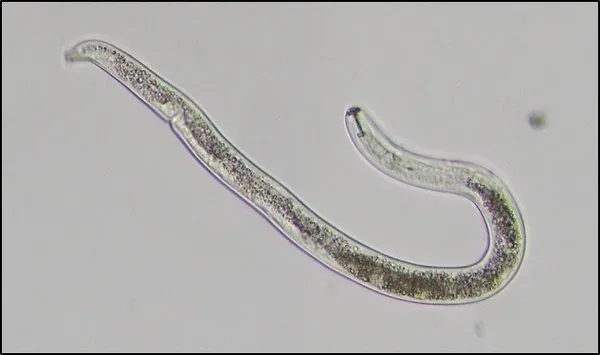
The Scribner lesion nematode (Pratylenchus scribneri) is a microscopic worm within the family Pratylenchidae. As a migratory endoparasite, it spends its lifecycle moving through and feeding upon the cortical tissues of host plant roots.
These nematodes are typically 0.4–0.6 mm long, making them impossible to identify with the naked eye. They possess a small stylet used for puncturing plant cells, which is the primary feature noted during specialized microscopic observation.
Diagnosis requires detailed laboratory procedures, including soil analysis and root tissue extraction. Because they look similar to other species of the genus Pratylenchus, molecular diagnostic tools are often required for precise species identification.
They thrive in moist, well-aerated soils where they can move freely among soil particles. Their mobility allows them to spread across fields through runoff, contaminated machinery, and the movement of infected transplant material.
The biology of this pest involves continuous reproduction in favorable conditions. They deposit eggs individually within root tissues or surrounding soil, ensuring a constant presence throughout the growing season.
What it damages
This nematode has a broad host range, causing significant economic damage to potatoes, corn, soybeans, and various vegetable crops. It is particularly notorious for its impact on underground parts of crops.
Feeding damage involves the mechanical destruction of root cells. This leads to reduced nutrient and water uptake, which manifests as stunting, chlorosis, and general loss of vigor in the infected plants.
The wounds created by the nematode serve as entry points for secondary pathogens, including fungi and bacteria. This often results in complex root rot symptoms, where the nematode is the primary stressor that weakens the plant's natural defenses.
On potato tubers, feeding activity can cause surface lesions, cracks, and discoloration. These imperfections significantly reduce the market value of the crop and increase the likelihood of decay during storage.
Severe infestations result in root systems that are small, stunted, and blackened. In such cases, plants exhibit poor growth response to fertilizers and may fail to produce a harvestable yield under stress conditions.
When it appears
The activity of Pratylenchus scribneri is governed primarily by soil temperature and moisture. Populations become active in early spring when soil temperatures reach approximately 10–12°C.
The peak reproductive period occurs during the summer months when soil temperatures range between 20–25°C. During this time, multiple generations can develop, leading to a rapid increase in nematode density in the root zone.
As soil temperatures drop in the autumn, the nematodes reduce their metabolic activity and enter a survival mode. They remain in the soil or within decaying plant roots as the primary mechanism for winter survival.
They are hardy pests capable of surviving in the field even after the harvest of the host crop. The presence of residual root material in the soil provides them with food, supporting their persistence from one season to the next.
Rainfall and excessive irrigation facilitate the migration of these nematodes, often leading to a patchy distribution of damage within a field, especially in fields with varied soil textures or slopes.
Signs of infestation
Field signs usually appear as patches of stunted or chlorotic plants. These patches often expand annually if susceptible crops are continuously grown in the same location.
Examination of the root system reveals a significant reduction in the volume of fibrous roots. Dark, necrotic spots are frequently present on the larger roots, indicating localized areas of heavy nematode feeding.
Because they do not cause distinct galls or swelling like some other nematodes, growers often mistake the damage for nutritional deficiencies or drought stress. The lack of response to water or fertilizer is a key diagnostic clue.
Laboratory testing of rhizosphere soil samples is the only definitive way to confirm the presence and population density of Pratylenchus scribneri in suspected areas of the field.
Post-harvest symptoms, particularly in potato storage, include rapid breakdown and rotting of the tubers. The compromised skin barrier allows storage pathogens to enter and destroy the stored crop prematurely.
Control measures
Integrated management is essential for controlling this pest. Crop rotation is the most effective cultural practice, utilizing non-host crops to starve the nematode population over several growing seasons.
Sanitation is critical; all equipment used in infested fields should be cleaned before moving to clean areas. Furthermore, the use of certified, nematode-free seed or transplant material is vital for prevention.
Deep plowing and the thorough destruction of crop residues immediately after harvest help expose the nematodes to extreme environmental conditions, reducing their ability to overwinter successfully.
Biological control agents, such as nematode-trapping fungi, can be used to suppress populations. These are most effective when incorporated into a long-term soil health management program.
- Monitor population density with soil sampling before planting.
- Select resistant cultivars whenever available in the market.
- Improve soil drainage to limit movement of the nematodes.
- Apply organic amendments to boost soil suppressiveness.
- Use chemical nematicides only as a last resort according to strict safety protocols.
Taxonomy
- Latin name
- Pratylenchus scribneri
- Order
- Nematodes
- Family
- Pratylenchidae
- EPPO code
- PRATSC
Discussion
No discussions yet — be the first.