
Root-lesion nematode
Pratylenchus penetrans
Description
How to identify
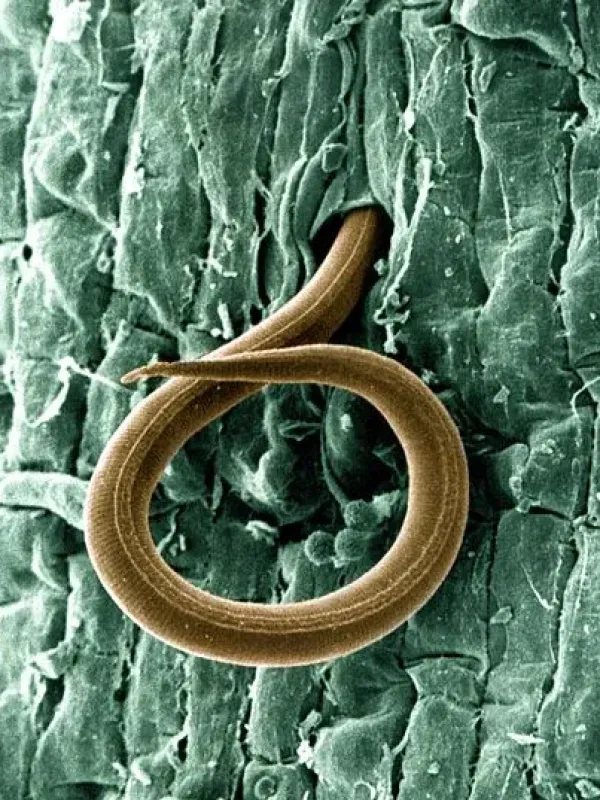
The root-lesion nematode (Pratylenchus penetrans) is a migratory endoparasite belonging to the family Pratylenchidae. It is a microscopic roundworm that continuously moves throughout the root cortex of its host plants.
Adult nematodes are approximately 0.4–0.6 mm in length. Their bodies are transparent and slender, equipped with a sharp stylet used to pierce plant cell walls and extract internal cellular contents.
The life cycle encompasses an egg stage, four larval stages, and the adult stage. Under optimal temperature conditions, a complete generation takes about 30 to 40 days, facilitating rapid population growth during the growing season.
Females deposit eggs either individually or in small clusters within root tissues or the surrounding soil. All motile stages are capable of feeding and damaging root tissue, which contributes to the rapid spread of the infestation.
These nematodes exhibit high environmental adaptability and can survive in the soil for extended periods. When conditions are unfavorable, they may enter an anhydrobiotic state, or persist on a wide range of weed hosts.
What it damages
As a highly polyphagous pest, Pratylenchus penetrans affects over 350 plant species. Crops most susceptible include potatoes, tomatoes, strawberries, carrots, apples, and various ornamental greenhouse plants.
The damage caused by the nematode creates entry points for secondary soil-borne pathogens, such as fungi and bacteria, which often accelerate the decay of the root system and plant death.
Because the pest is not host-specific, it easily cycles through various crops and weeds in a field, making standard crop rotation strategies less effective without additional intensive management.
Severe infestations manifest as stunted growth, reduced nutrient uptake, and significant economic losses in both yield quantity and quality, often rendering produce unmarketable.
In nursery settings, high populations can cause total loss of seedlings, as the young roots are unable to withstand the constant feeding pressure and subsequent pathogen colonization.
Signs of infestation
Symptoms are often non-specific and are frequently mistaken for nutrient deficiencies or environmental stress. Affected plants exhibit yellowing (chlorosis), wilting during hot periods, and reduced vigor.
Inspection of the roots reveals small, necrotic lesions that appear as dark spots. Over time, these lesions coalesce, leading to the browning and destruction of the secondary root system.
The destruction of fine feeder roots significantly compromises the plant's ability to absorb moisture and nutrients, leading to poor development and poor yield performance.
In potato tubers, the nematode causes shallow, necrotic skin lesions, often referred to as "nematode lesions," which degrade the aesthetic and storage quality of the harvested crop.
- Stunted plant growth and chlorotic foliage.
- Poor root development with necrotic lesions.
- Increased sensitivity to drought conditions.
- Uneven crop development within a field.
- Reduced shelf life of harvested tuberous crops.
Control measures
Integrated pest management starts with crop rotation using non-host species. Cover crops, such as oilseed radish or specific mustard varieties, can act as bio-fumigants to reduce nematode numbers in the soil.
The use of clean, certified planting material is essential to prevent the introduction of the pest into non-infested fields. Early detection through soil testing is critical for effective management.
Soil sterilization, such as steam or heat treatment, is highly effective in greenhouse environments. In open fields, long-term fallow with strict weed control is necessary to starve the nematode population.
Chemical nematicides can be utilized in high-infestation scenarios, provided they comply with local environmental regulations and agricultural standards to ensure consumer safety.
Biological control agents, including specific fungi and bacteria, are becoming increasingly vital in organic and sustainable farming programs as they provide suppression without harsh chemical residues.
Taxonomy
- Latin name
- Pratylenchus penetrans
- Order
- Nematodes
- Family
- Pratylenchidae
- EPPO code
- PRATPE
Discussion
No discussions yet — be the first.