
Hippeastrum root lesion nematode
Pratylenchus hippeastri
Description
How to identify
The Hippeastrum root lesion nematode Pratylenchus hippeastri belongs to the family Pratylenchidae within the order Tylenchida. It is a microscopic, soil-borne endoparasite that feeds on the roots of host plants.
This nematode is characterized by its slender, worm-like body, which allows it to navigate through soil pore spaces and the root intercellular matrix with ease.
Unlike some other nematodes, Pratylenchus hippeastri is a migratory endoparasite. This means it constantly moves between host cells, causing mechanical damage while feeding on the plant tissue.
The nematode life cycle consists of egg, larval, and adult stages. They can reproduce rapidly within the root tissue, eventually causing the collapse of the host's vascular system.
Environmental conditions such as warm temperatures and consistent moisture in greenhouse settings provide the ideal environment for the nematode population to multiply quickly.
What it damages
The primary host for this nematode is the Hippeastrum Hippeastrum spp., though other Amaryllidaceae family members are also susceptible. The damage is localized primarily in the roots and the basal plate of the bulb.
The feeding activity of these nematodes causes lesions that interrupt the plant's ability to transport water and essential minerals from the soil to the leaves and flowers.
These feeding wounds create entry points for secondary soil pathogens, including fungi and bacteria, which often lead to bulb rot and systemic infection of the plant.
Infected plants exhibit severe stunting, a lack of flowering, and premature yellowing of foliage due to the compromise of the root system’s integrity.
Left untreated, the destruction of the root system becomes irreversible, leading to the gradual decline and eventual death of the entire bulb.
Signs of infestation
The initial sign of infestation is a general lack of vigor. The plant appears underdeveloped and stressed, failing to respond to fertilizers despite optimal care.
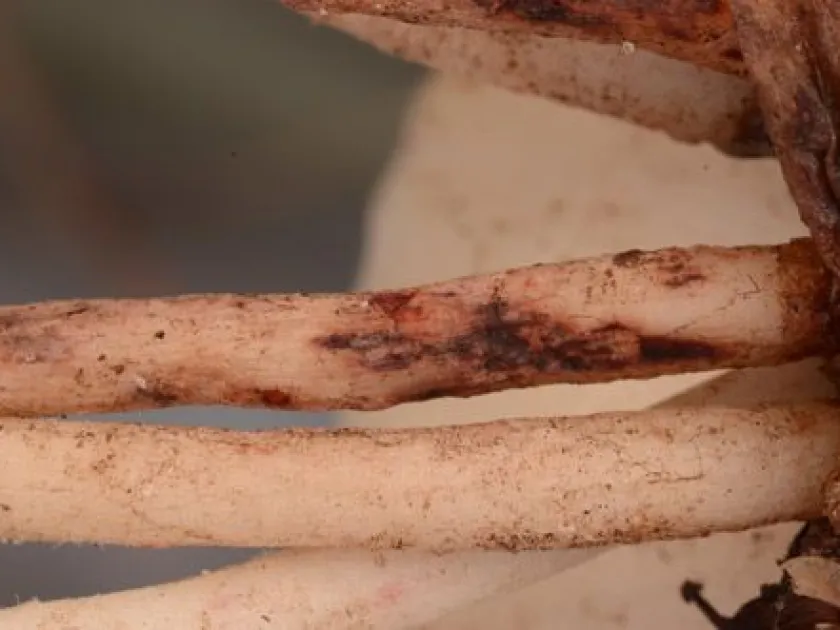
Upon examination of the root system, you will observe brown or black necrotic lesions, indicating areas where the nematodes have fed. Roots often appear stunted or prematurely decayed.
Foliage symptoms may include chlorosis, striping, or wilting, which are direct consequences of the impaired root system's inability to supply nutrients to the plant's canopy.
A cross-section of the bulb's basal plate may reveal localized browning or reddish discoloration, confirming that the nematodes have migrated beyond the roots.
When unpotted, the root mass will typically be very sparse, with dead, dry, or slimy root remnants, indicating a significant infestation level.
Control measures
Prophylaxis is the most effective approach. Always use pasteurized soil and thoroughly inspect bulbs for any signs of damage before planting in your collection.
Hot water treatment can be used to disinfest bulbs, though it must be carefully managed to avoid damaging the plant. Immersing bulbs in 45–48°C water for 30–60 minutes can help reduce nematode populations.
Chemical control involving nematicides or systemic pesticides with nematicidal properties may be applied as a soil drench, though success depends on early intervention.
If a bulb is severely infected, it is often best to dispose of it and the surrounding soil to prevent the spread of the pest through irrigation water to healthy plants.
Strict sanitation measures must be observed, including the disinfection of pots, tools, and work areas, as nematodes are easily transferred via small particles of infected soil.
Taxonomy
- Latin name
- Pratylenchus hippeastri
- Order
- Nematodes
- Family
- Pratylenchidae
- EPPO code
- PRATHI
Discussion
No discussions yet — be the first.