
Lesion nematode
Pratylenchus brachyurus
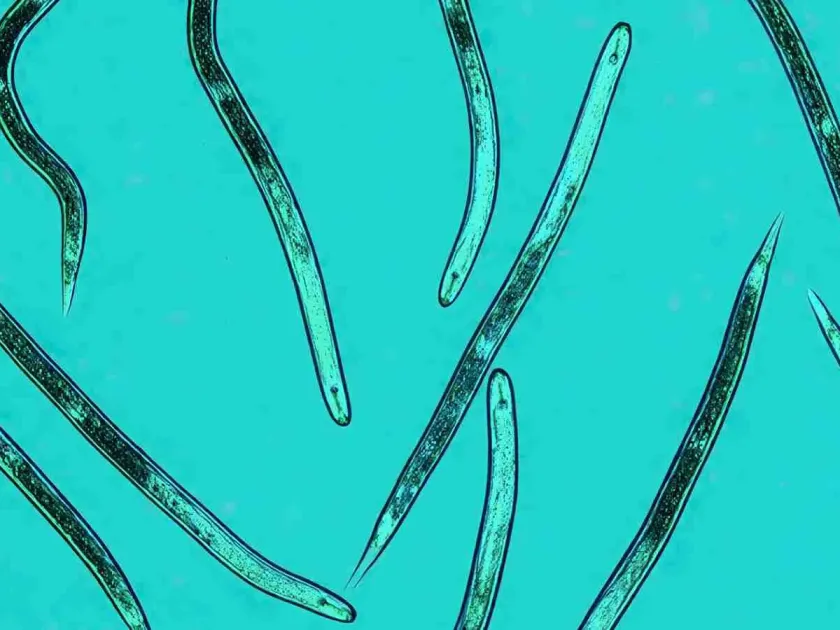
Description
How to identify
The root lesion nematode, Pratylenchus brachyurus, is a significant plant parasitic nematode within the order Tylenchida and the family Pratylenchidae. These microscopic worms are migratory endoparasites that feed within the cortex of plant roots.
Adults are small, worm-like organisms, generally measuring less than 1 mm in length. Due to their minute size and transparent appearance, they remain invisible to the naked eye under field conditions.
They are equipped with a hardened structure known as a stylet. This organ is used to puncture plant cell walls, allowing the nematode to inject enzymes that liquefy the cytoplasm for ingestion.
Their life cycle typically consists of the egg stage, four juvenile stages, and the adult stage. The species can reproduce rapidly in warm, moist soils, leading to high population densities that can severely damage host tissues.
They are known for their ability to survive in the soil and within the roots of various weed species during fallow periods, making them resilient and difficult to eradicate from agricultural fields.
What it damages
Pratylenchus brachyurus has an exceptionally wide host range, attacking key crops such as soybeans, maize, cotton, potatoes, and various horticultural species. It is a major constraint in global agricultural productivity.
As these nematodes migrate through the root cortex, they cause extensive destruction of plant cells. This damage manifests as necrotic lesions, which eventually inhibit the roots' ability to transport water and essential minerals.
The primary mechanical damage caused by the nematodes is often compounded by secondary colonization from soil-borne fungi and bacteria. This complex interaction leads to severe root rot and stunted plant growth.
Infected plants display a reduced root system, often lacking the fine root hairs necessary for efficient nutrient uptake. Consequently, crop yield is significantly reduced both in quantity and quality.
Economic losses are particularly high in crops like potatoes, where the lesions on tubers can lead to market rejection and increased susceptibility to storage diseases.
Signs of infestation
The most visible field symptom is the appearance of patchy growth. Affected areas often show stunted, yellowing plants, which may look like they are suffering from drought or nutrient deficiency.
When roots are examined, they frequently appear dark and necrotic. Unlike cyst nematodes, there are no external cysts visible, which makes visual diagnosis without lab testing difficult.
Plants affected by this nematode often show early senescence. During periods of heat or moisture stress, these plants will wilt much faster than healthy plants because their compromised root systems cannot keep up with water demand.
Stunting and leaf chlorosis are common indicators, especially in young plants, which may struggle to establish properly if the initial population density in the soil is high.
Confirmed diagnosis requires professional laboratory analysis, which involves extracting nematodes from both soil and root samples to identify the species via microscopic examination or molecular tests.
Control measures
Integrated Pest Management (IPM) is essential for controlling Pratylenchus brachyurus. Crop rotation using non-host or resistant crops is the most sustainable approach to reduce soil populations.
The use of certified, clean planting material is vital to prevent the introduction of the nematode into non-infested fields. This is especially important for root crops and tubers.
Chemical control via nematicides is an option, though it is often expensive and subject to environmental regulations. These treatments are typically reserved for high-value crops with significant infestation levels.
Improving soil health through the addition of organic matter and the use of green manures can help promote beneficial organisms that may suppress nematode populations naturally.
- Regular soil sampling for nematode population monitoring.
- Removal of infected crop debris after harvest.
- Sanitation of farm equipment between fields to prevent spread.
Taxonomy
- Latin name
- Pratylenchus brachyurus
- Order
- Nematodes
- Family
- Pratylenchidae
- EPPO code
- PRATBR
Discussion
No discussions yet — be the first.