
Root lesion nematodes
Pratylenchus
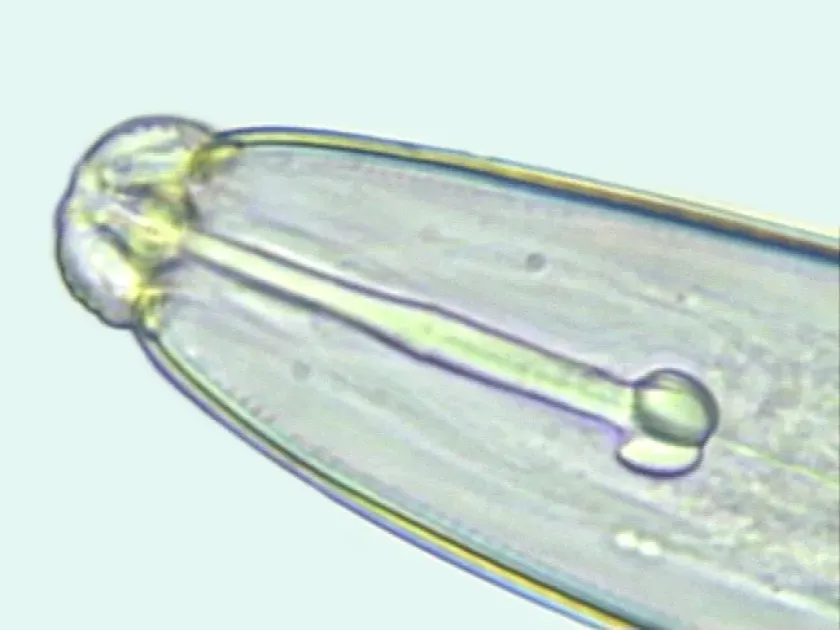
Description
How to identify
Pratylenchus, commonly known as root lesion nematodes, belongs to the family Pratylenchidae and the order Tylenchida. They are microscopic, vermiform parasites that live within the roots of their hosts.
These nematodes possess a strong cephalic stylet, which is a spear-like structure used to penetrate and macerate host root cells during the feeding and migration process.
They are migratory endoparasites, meaning they do not form permanent feeding sites (like gall-forming nematodes) but continuously move through root tissues, destroying cells along their path.
The life cycle encompasses an egg, four larval stages, and an adult form. Reproduction can occur both within the root tissues and in the surrounding soil rhizosphere.
Because they are capable of surviving in soil for extended periods even without a host, they are considered persistent and difficult-to-manage agricultural pests.
What it damages
Root lesion nematodes have an incredibly broad host range, infecting grasses, cereals, legumes, potatoes, fruit trees, and various ornamental plants worldwide.
Direct damage occurs when nematodes penetrate the root cortex, causing mechanical destruction, necrosis, and browning. This severely limits the plant's ability to absorb water and nutrients.
By damaging the root system, Pratylenchus creates open wounds that serve as entry points for soil-borne pathogens, including various species of Fusarium, Verticillium, and Rhizoctonia.
The overall impact on the plant includes stunted growth, reduced biomass, and chlorotic leaves. In severe infestations, seedlings can die, leading to significant stand loss.
Economically, they cause substantial yield losses in major commercial crops by weakening the plant's physiological capacity to reach its potential yield and quality.
When it appears
The activity and reproduction of Pratylenchus are highly dependent on soil temperatures, with optimal levels typically ranging between 15°C and 30°C.
In most regions, peak population densities in roots occur during the active growing season of the crop when root exudates are most abundant.
When environmental conditions become unfavorable or host plants are harvested, nematodes can persist in a quiescent state or as eggs within soil particles and decaying organic matter.
Soil moisture levels also play a critical role; while they thrive in moist conditions, excessive waterlogging may inhibit their migration, though they are generally quite resilient to various soil types.
As the growing season progresses, the population typically increases, resulting in a higher threat level for subsequent crops planted in the same soil.
Signs of infestation
Above-ground symptoms are often non-specific and easily confused with nutrient deficiency or drought stress, characterized by poor foliage development and yellowing.
Below-ground examination is the most reliable way to identify them. Roots often display characteristic dark, elongated lesions or patches that indicate cell destruction and necrosis.
Lateral root systems are frequently stunted, and in some species, the root system may become excessively branched but remain short, showing a "stubby" appearance.
When lesions become necrotic, they can merge, leading to a general browning or rotting appearance of the entire root system, which further hinders growth.
Diagnostic laboratory analysis of soil and root samples is essential, as the symptoms are not distinct enough to distinguish Pratylenchus from other nematode genera without microscopic identification.
Control measures
Crop rotation is a primary management strategy. Selecting non-host or resistant crops can significantly reduce the soil population density of these nematodes over time.
The use of cover crops, particularly those with bio-fumigant properties such as certain Brassicaceae species, can help suppress nematode populations in the soil.
Maintaining optimal soil fertility and irrigation helps plants tolerate nematode damage by ensuring robust root development that can compensate for minor losses.
Sanitation practices, including the removal of infested crop debris and the control of weed hosts, are vital to prevent the carry-over of populations into the next season.
Nematicides are available but are usually reserved for high-value crops due to their cost, environmental impact, and specific application requirements in intensive agriculture.
Taxonomy
- Latin name
- Pratylenchus
- Order
- Nematodes
- Family
- Pratylenchidae
- EPPO code
- PRATSP
Discussion
No discussions yet — be the first.