
New Zealand mud snail
Potamopyrgus antipodarum
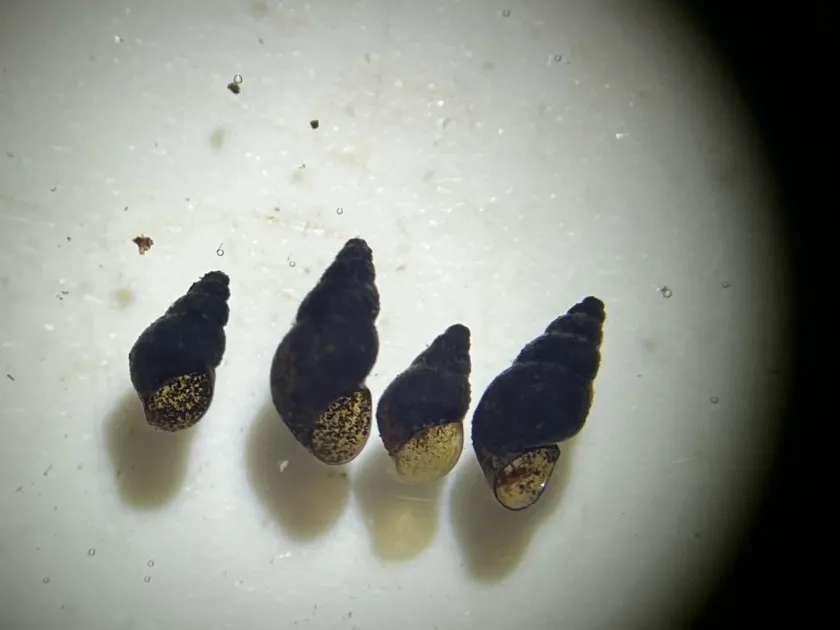
Description
How to identify
The New Zealand mud snail is a tiny freshwater mollusk, typically reaching only 5 to 6 mm in length. Its shell is elongated, tapering to a point, with 5 to 8 whorls that are usually light brown to black in color.
Scientifically, this organism belongs to the order Littorinimorpha, within the family Tateidae. It is a highly resilient species, capable of thriving in diverse aquatic habitats, ranging from slow-moving streams to brackish estuaries.
A distinctive biological trait is its ability to reproduce through parthenogenesis. In most invasive populations, nearly all individuals are females, allowing a single snail to establish a new, rapidly growing colony without needing a mate.
The snails demonstrate remarkable environmental tolerance. They can survive passage through the digestive tracts of fish, withstand short periods of desiccation, and resist common household chemicals, making eradication very difficult.
Once introduced to a new environment, they often become the dominant biomass. Without natural predators to keep their numbers in check, populations can reach densities of over 800,000 individuals per square meter.
What it damages
While not a direct pest to terrestrial crops, the New Zealand mud snail causes severe issues for irrigation infrastructure and fisheries. Massive colonies can physically clog filters, intake pipes, and pumps used in agricultural water delivery systems.
In aquaculture and natural fisheries, they represent a poor food source. When fish ingest large numbers of these snails, they fill their stomachs with indigestible matter, leading to reduced growth rates and poor productivity in commercial fish farming.
The presence of these snails leads to the displacement of native macroinvertebrate populations. By outcompeting local mollusks and insects for food and space, they significantly degrade the stability and diversity of aquatic ecosystems.
The mechanical damage to irrigation equipment is a major economic concern. Frequent cleaning and maintenance of water systems are often required to prevent blockages caused by the accumulation of shells and living snails within the infrastructure.
Their ability to hitchhike on equipment makes them a persistent threat to unaffected watersheds. Spreading through fishing gear, boats, and maintenance machinery, they cause ecological and financial strain across wide geographical areas.
Control measures
Prevention is the most effective form of management. All gear, including boots, nets, and maintenance machinery, must be thoroughly inspected and cleaned after coming into contact with any body of water.
For effective decontamination, soaking equipment in a 2% bleach solution or using specialized molluscicides is recommended. This ensures that any microscopic individuals or clusters attached to gear are eliminated.
Complete drying of gear for at least 48 hours is a proven method to kill the snails, as they are susceptible to desiccation. Alternatively, freezing equipment for several hours will also successfully destroy populations.
In managed aquatic systems, focus should be on physical barriers and regular maintenance. Cleaning pipes and filters during the off-season helps manage the buildup of snails and prevents potential blockages during peak operational periods.
- Thoroughly scrub gear with stiff brushes to remove sediment.
- Use chemical disinfectants to sanitize equipment after use.
- Dry equipment completely before moving to a new water source.
- Monitor irrigation systems regularly for signs of infestation.
- Avoid transporting water or aquatic plants from infested areas.
Taxonomy
- Latin name
- Potamopyrgus antipodarum
- Order
- Molluscs
- Family
- Hydrobiidae
- EPPO code
- POTAAN
Discussion
No discussions yet — be the first.