
Hydrobia ulvae
Hydrobia ulvae
Description
How to identify
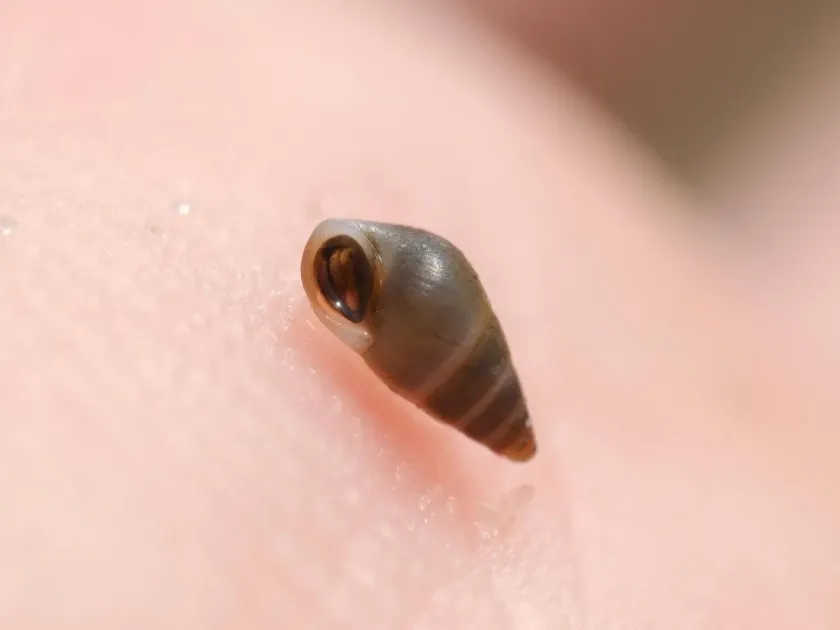
Hydrobia ulvae is a small marine gastropod mollusc belonging to the family Hydrobiidae. The shell is typically conical, measuring between 5 and 6 millimeters in height, and exhibits a brownish or olive color with a relatively smooth surface texture.
This species, classified within the order Littorinimorpha, possesses a sturdy operculum. This anatomical feature allows the snail to seal its shell tightly, providing protection during periods of low water or fluctuating salinity levels in its environment.
The snail is cryptic in nature, often blending in with its surroundings. It is primarily found on the surface of silt or attached to submerged plant parts in estuarine and intertidal areas, moving with the aid of a muscular foot.
The life cycle involves reproduction during warmer months, where eggs are laid in protective capsules on substrates. The species has a planktonic larval stage, facilitating rapid dispersal throughout coastal and estuarine zones.
Identification of this species requires close attention to the habitat context. It is an indicator of brackish or saline environments and can become a pest when agricultural lands are established in proximity to such aquatic systems.
What it damages
The primary damage caused by Hydrobia ulvae involves the grazing of tender tissues on seedlings and young plants grown in saturated or saline soils. Using its radula, the mollusc scrapes away the epidermal layers of leaves and stems.
This pest poses a significant threat to crops cultivated in reclaimed lands or coastal zones where water levels are high. High moisture levels facilitate the mass colonization of these areas by the molluscs.
Feeding injuries weaken the plant, creating entry points for opportunistic fungal and bacterial pathogens. Enzymes released by the snail during feeding further accelerate tissue necrosis, leading to rapid degradation of young shoots.
Mass infestations can result in total crop failure in affected areas. Surviving plants show stunted growth, loss of vigor, and reduced overall quality, which negatively impacts the yield and marketability of the produce.
Additionally, Hydrobia ulvae serves as an intermediate host for various trematode species. This poses a secondary risk, as the presence of these parasites can affect the health of livestock grazing on pastures infested with these molluscs.
When it appears
The biological activity of Hydrobia ulvae is highly dependent on water and soil temperature. Their active phase typically begins in the spring, once temperatures consistently exceed 15 degrees Celsius.
Spring marks a period of intensive reproduction and colonization. During this time, young plants are most vulnerable to grazing, as their tissues are soft and easily accessed by the molluscs.
In the summer, provided there is sufficient moisture, the population density can peak significantly. The snails migrate toward the dampest regions of the field, where they focus their feeding activities on cultivated plants.
Autumn brings a decline in metabolic rates as temperatures drop. The molluscs begin to prepare for winter by burrowing into the silt or seeking refuge under debris, which provides insulation against cold.
Winter is generally spent in a state of diapause. However, in regions with mild winters, a large portion of the population remains viable, allowing for rapid re-emergence and threat to agricultural crops the following spring.
Signs of infestation
The most common sign of infestation is the presence of whitish, streaky feeding marks on the leaf surfaces, caused by the mollusc's radula scraping away the plant tissue.
Visible trails of dried mucus on the soil surface or plant stems are definitive signs of snail activity. These trails appear as shiny, reflective ribbons after the moisture has evaporated.
The discovery of the snails themselves at the base of plants or clinging to submerged stem portions confirms their presence. They often congregate in large groups in moist areas.
Localized wilting and tissue rot at the base of the stem are critical indicators. While the upper parts of the plant might look intact initially, the damage at the stem base disrupts water transport and invites rot.
Inconsistent emergence of seedlings and bare patches in areas bordering water bodies are strong indicators of a pest outbreak. These areas should be inspected thoroughly for the presence of the molluscs.
Control measures
Land reclamation and drainage are the most effective long-term strategies for controlling Hydrobia ulvae. Reducing soil moisture levels decreases the habitat suitability for this gastropod.
Mechanical barriers, such as a layer of gravel or sand placed around planting rows, create a harsh surface that hinders the movement of the snails, effectively protecting the plants.
Chemical control involving molluscicides, such as metaldehyde-based products, can be used but must be applied with extreme caution. Avoiding runoff into aquatic ecosystems is critical to protect local biodiversity.
Effective agrotechnical practices include consistent weed management. Weeds provide the humid microclimate that these snails prefer, so keeping fields clean is essential for population suppression.
- Drainage and soil moisture management.
- Installation of gravel or sand barriers.
- Careful use of targeted molluscicides.
- Elimination of weeds and debris.
Taxonomy
- Latin name
- Hydrobia ulvae
- Order
- Molluscs
- Family
- Hydrobiidae
- EPPO code
- HYBIUL
Discussion
No discussions yet — be the first.