
Ecrobia ventrosa
Ecrobia ventrosa
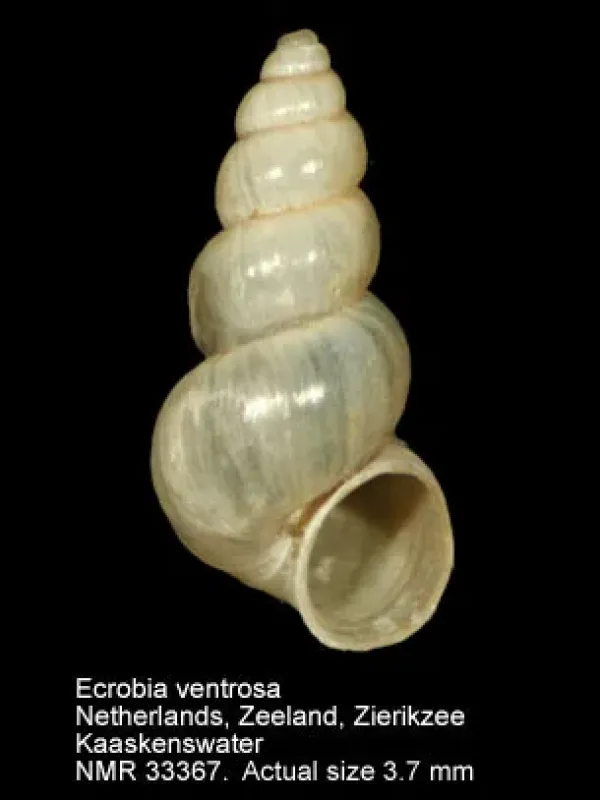
Description
How to identify
Ecrobia ventrosa is a small, brackish-water gastropod mollusk belonging to the Hydrobiidae family within the order Littorinimorpha. Its shell is typically conical, ranging from 3 to 5 millimeters in height, and varies in color from pale to dark brown.
This species is well-adapted to environments with fluctuating salinity, such as estuaries, coastal lagoons, and brackish marshes. Its robust shell provides protection against both physical damage and environmental stress, enabling survival in varied hydrological conditions.
The life cycle involves larval stages that can be easily transported by water currents, facilitating the colonization of new habitats, including agricultural irrigation channels. They are hermaphroditic, which enhances their reproductive capacity in suitable environmental conditions.
Populations of this mollusk can reach extremely high densities, forming extensive clusters on the seabed, aquatic vegetation, and artificial substrates. This proliferation makes them a notable factor in the ecological and functional management of water systems.
Identification in the field requires close inspection of the shell's aperture and spiral structure. Due to their minute size, magnification tools such as hand lenses are often necessary for accurate classification and monitoring of their population dynamics.
What it damages
In an agricultural context, Ecrobia ventrosa acts as a pest, primarily in rice cultivation zones and associated wetland agricultural systems. These snails can consume tender plant tissues, including the roots and young leaves of rice seedlings, causing significant growth retardation.
Beyond direct damage to crops, the snails pose a threat to infrastructure by colonizing irrigation channels and drainage pipes. Their accumulation can significantly reduce the efficiency of water transport, leading to clogged sluices and compromised hydrological systems.
Heavy infestation by these mollusks can result in sparse crop stands, negatively impacting overall yield and quality. The economic losses stem from both reduced crop production and the high cost of maintenance for blocked irrigation network components.
There is also an indirect biological risk, as these snails can serve as intermediate hosts for various trematode parasites. This poses a potential health risk to livestock and poultry that may access water from infested agricultural areas.
The presence of these mollusks often serves as an indicator of nutrient-rich, stagnant water conditions. When population levels become excessive, they disrupt the balance of the agroecosystem and complicate water management practices.
Control measures
The primary control strategy involves agricultural techniques such as systematic draining of irrigation channels and rice paddies between growing seasons. This exposure to dry conditions is highly effective at reducing mollusk populations.
Mechanical maintenance is crucial, involving the regular removal of silt and excessive aquatic vegetation from irrigation canals. By limiting the habitat available for settlement, the reproduction and spread of these snails can be significantly hampered.
While chemical control using molluscicides is possible, it must be performed with extreme caution to protect the surrounding aquatic environment. Copper-based compounds are commonly used but require careful dosage to minimize impact on non-target species.
Biological control methods encourage the presence of natural predators, such as specific fish species and aquatic birds that feed on small mollusks. Maintaining a healthy predator-prey balance can naturally keep snail densities below economically damaging levels.
Regular monitoring using traps within water channels is recommended to detect population increases early. Proactive management and early intervention allow farmers to mitigate potential damage to crops and infrastructure without resorting to large-scale chemical applications.
Taxonomy
- Latin name
- Ecrobia ventrosa
- Order
- Molluscs
- Family
- Hydrobiidae
- EPPO code
- ECROVE
Discussion
No discussions yet — be the first.