
Polietes
Polietes
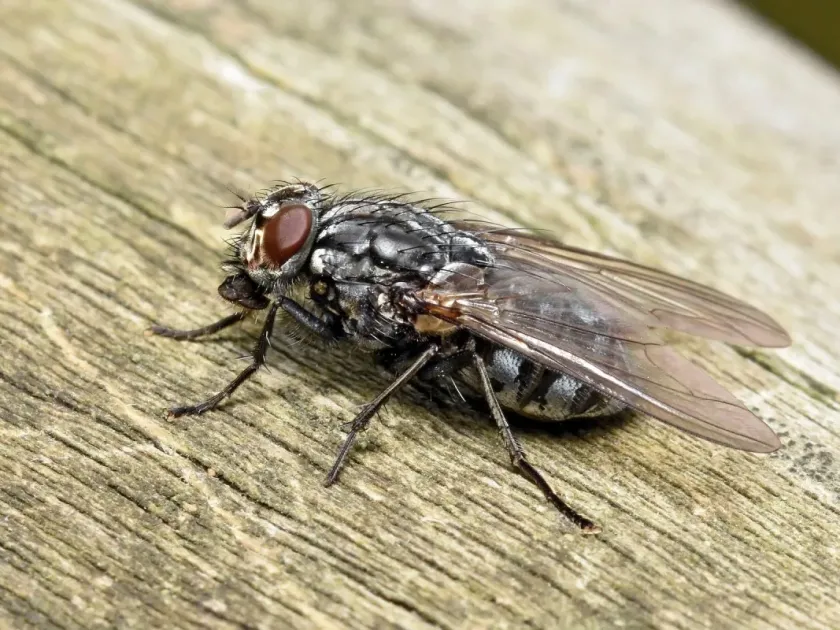
Description
How to identify
The genus Polietes belongs to the Muscidae family within the order Diptera. These are medium-sized flies that resemble the common house fly but possess specific morphological features related to wing venation and thoracic bristles.
Adults typically have a dark body, often with a metallic sheen. They have movable heads with large compound eyes, and their mouthparts are adapted for liquid feeding, although the larvae develop in organic substrates.
Species identification within the genus is complex and requires microscopic examination of the male genitalia. The primary distribution range covers the Palearctic region, where they are found in forests as well as agricultural landscapes.
The life cycle involves complete metamorphosis: egg, larva, pupa, and adult. Adults often congregate near sources of decaying organic matter and livestock facilities.
It is important to distinguish between synanthropic species that may carry pathogens and species whose larvae may indirectly impact plant root systems during the decomposition of organic matter in the soil.
What it damages
Members of the Polietes genus are not considered primary plant pests; however, their larvae can damage the roots and stems of weakened plants while processing organic fertilizers.
The primary damage occurs in vegetable and grain crops grown in fields with excessive application of uncomposted manure or organic waste, which attracts flies for oviposition.
Damage manifests as secondary infections penetrating through micro-injuries caused by larvae feeding on organic residues in the root zone.
The larvae pose the greatest threat to young seedlings in the two-to-three leaf stage, when the root system is not yet established and remains vulnerable to soil-dwelling insects.
In addition to direct impact, adult flies can act as mechanical vectors for fungal and bacterial pathogens, spreading them between plants while feeding on plant exudates.
When it appears
The flight of Polietes flies begins in late spring when the average daily soil temperature reaches 10-12 degrees Celsius, triggering the emergence of adults from diapause.
Population peaks typically occur in June and July, when conditions are most favorable for reproduction and larval development in the soil.
Several generations may develop throughout the season, depending on regional climatic conditions and the availability of organic food sources.
In autumn, as temperatures drop, adult activity decreases significantly, and the flies enter a state of diapause in protected locations such as the upper soil layers or leaf litter.
Monitoring for this pest is recommended during periods of high humidity and moderate temperatures, which create ideal conditions for insect metamorphosis.
Signs of infestation
A sign of Polietes presence is the sudden wilting of individual plants despite sufficient irrigation, indicating damage to the root collar.
Inspection of the root system of affected plants may reveal white or cream-colored larvae residing directly within decomposing root tissues.
An indirect sign is the presence of large numbers of adult flies near compost heaps or manure pits located in close proximity to the crops.
The presence of specific tunnels in the stems of vegetable crops near the soil surface may also indicate the presence of Muscidae fly larvae.
Secondary rot development on damaged root areas is often accompanied by an unpleasant odor, which serves as evidence of larval activity.
Control measures
Effective protection against Polietes is based on strict agricultural practices and proper fertilizer management. The golden rule is to use only well-decomposed compost.
- Use mineral fertilizers instead of fresh organic matter to minimize attracting females for egg-laying.
- Deep autumn plowing of the soil to destroy overwintering pupal stages.
- Adhere to crop rotation to prevent the accumulation of soil pests in one area.
- Application of biopesticides based on entomopathogenic fungi to target larvae in the soil.
- Use of yellow sticky traps for monitoring and reducing adult populations in greenhouses and hotbeds.
Taxonomy
- Latin name
- Polietes
- Order
- Diptera (flies)
- Family
- Muscidae
- EPPO code
- PLIESP
Discussion
No discussions yet — be the first.