
Willow fuzzy aphid
Plocamaphis flocculosa
Description
How to identify
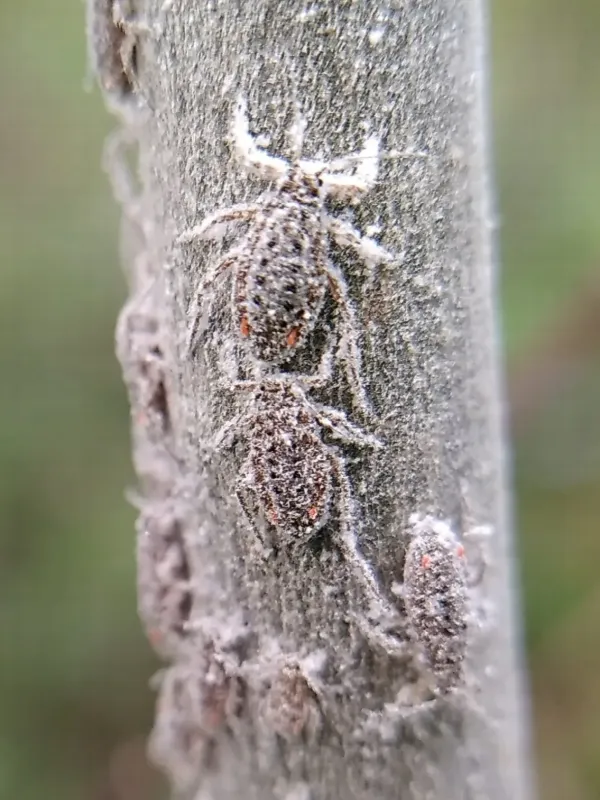
The Willow fuzzy aphid (Plocamaphis flocculosa) is a specialized insect species within the family Aphididae, order Hemiptera, frequently associated with willow plantations.
These aphids are easily recognized by the dense, white, cotton-like waxy secretions that cover their bodies, providing them with a distinct fuzzy appearance.
As true bugs, they possess a piercing-sucking mouthpart specifically adapted for extracting nutrient-rich sap directly from the phloem of their host plants.
Their life cycle involves polymorphism, meaning they can appear as both apterous (wingless) and alate (winged) individuals, which facilitates both local colonization and dispersion.
This species is highly host-specific, completing its entire biological cycle primarily on various species within the Salix genus.
What it damages
The primary hosts for this pest are willow trees, including species grown for timber, basketry, biomass, and landscape architecture.
Colonies primarily inhabit the undersides of leaves, petioles, and young succulent stems, where they cluster in high densities to feed continuously.
Feeding activities cause significant stress to the host, resulting in stunted growth of new shoots, deformation of young leaves, and general lack of vigor in nursery stock.
The withdrawal of sap and the injection of salivary toxins lead to chlorosis and can eventually cause the premature shedding of foliage during the summer months.
Additionally, the honeydew secreted by the aphids serves as a substrate for sooty mold growth, which further impairs photosynthesis and reduces the aesthetic value of the trees.
When it appears
The life cycle initiates in early spring when the fundatrix generation emerges from overwintering eggs deposited on the willow bark.
Throughout the spring and summer, the population grows through several generations, with peak activity typically observed during warm and dry periods.
Winged forms appear in mid-summer, allowing the species to migrate to adjacent hosts and rapidly spread across larger plantations.
As temperatures drop in autumn, sexual reproduction occurs, leading to the deposition of overwintering eggs, which remain dormant until the following spring.
Environmental factors, particularly humidity and temperature fluctuations, play a critical role in determining the severity of aphid outbreaks in any given season.
Signs of infestation
The most reliable sign of an infestation is the visible white, cottony residue on the undersides of leaves and on growing stems.
The presence of sticky honeydew on foliage and branches is a clear indicator that a colony is active and feeding nearby.
Increased ant activity on the tree trunks and branches often points toward the existence of an aphid colony, as ants cultivate aphids for their honeydew.
Leaves affected by the feeding tend to curl, crinkle, or develop pale yellow spots due to localized damage and the removal of nutrients.
On closer inspection, the fuzzy appearance of the aphids themselves against the green foliage makes them relatively easy to spot during manual scouting.
Control measures
Integrated Pest Management (IPM) for this species begins with regular monitoring and the physical pruning of infested shoots when the colony size is small.
Encouraging natural predators, such as ladybird beetles (Coccinellidae) and lacewings, is an effective strategy for maintaining the aphid population below the economic threshold.
For severe infestations, the application of targeted insecticides, particularly systemic products, provides effective control by reaching the aphids through plant fluids.
Good horticultural practices, including proper irrigation and soil management, help trees maintain high vigor and resilience against aphid-induced physiological stress.
- Scout for symptoms starting at the time of bud burst.
- Use insecticidal soaps or oils for early, localized infestations to protect beneficial insects.
- Ensure adequate tree nutrition to prevent overly succulent growth, which aphids prefer.
Taxonomy
- Latin name
- Plocamaphis flocculosa
- Order
- Hemiptera (bugs, aphids, leafhoppers)
- Family
- Aphididae
- EPPO code
- PLOAFL
Discussion
No discussions yet — be the first.