
Plocamaphis
Plocamaphis
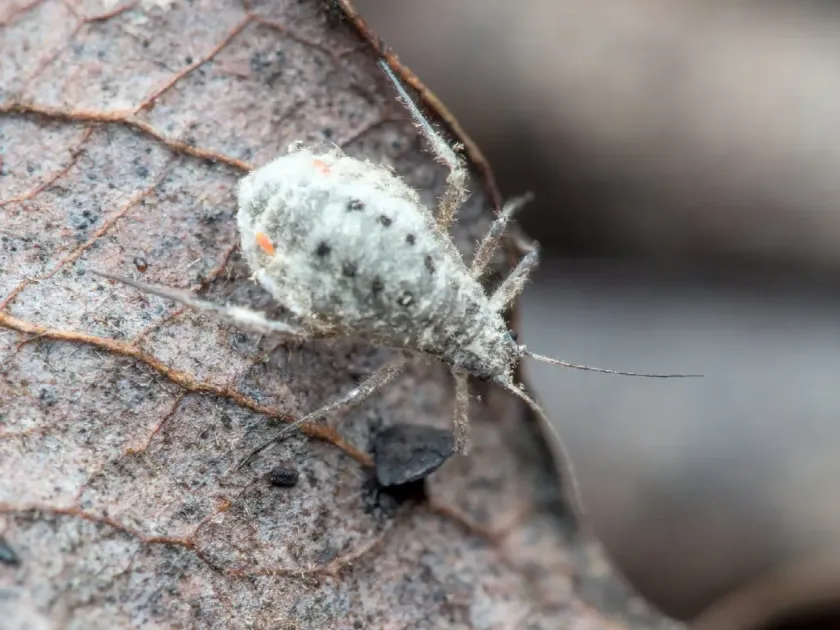
Description
How to identify
Plocamaphis is a genus of aphids belonging to the Aphididae family of the order Hemiptera. These insects have evolved specific morphological traits adapted for feeding on the sap of woody plants.
Adult specimens typically display an oval body shape, ranging from 2 to 4 millimeters in length, with coloration varying from greenish to brownish. Important diagnostic features include relatively short antennae and a distinct structure of the siphunculi.
Biologically, this genus is closely associated with willow trees (Salix), where they establish large colonies. During their development, the insects pass through several stages, including wingless and winged individuals, which facilitates their spread across the tree canopy.
Reproduction occurs both parthenogenetically (viviparity) and sexually in the autumn, allowing the species to overwinter effectively in the egg stage on the bark of trees. Their resilience to temperature fluctuations makes them highly persistent.
These insects are highly specialized pests, and their life activity is directly dependent on the phenophase of the host plant, which is a critical factor for monitoring populations in nurseries and forestry.
What it damages
The primary crops affected by Plocamaphis are species of the genus Salix (willow). They are found on both wild species and ornamental forms used in landscape design.
The pest attacks young shoots, leaves, and branches, extracting cell sap. This leads to significant weakening of the plant and a reduction in growth during the spring and summer periods.
The damage is exacerbated by the secretion of honeydew—a sugary waste product that becomes a substrate for sooty mold growth, which inhibits leaf photosynthesis.
In cases of heavy infestation, Plocamaphis causes premature leaf curling and deformation of young shoots, which significantly degrades the aesthetic value of willow plantings.
A serious risk is the transmission of phytopathogenic viruses, which can be spread by aphids during the puncturing of plant tissues, leading to secondary plant diseases.
When it appears
The life cycle of Plocamaphis begins in early spring, when larvae emerge from overwintering eggs on the bark and start feeding on developing willow buds.
Several generations of the pest develop during the summer. The peak of colony density usually occurs in June and July when weather conditions are most favorable for rapid reproduction.
In autumn, sexual generation individuals appear. Females lay eggs in bark crevices or near buds, where they remain until the next season.
Plocamaphis activity is strongly influenced by climatic factors: moderately warm and humid weather promotes outbreaks, while heavy rainfall can partially wash colonies off the branches.
Monitoring for the pest should begin as soon as stable positive temperatures are established and sap flow starts in willow trees.
Signs of infestation
The first sign of infestation is the presence of clusters of small insects on the underside of leaves and around young willow shoots.
The second characteristic symptom is the appearance of a sticky substance (honeydew) on the leaves, which eventually turns black due to the growth of sooty mold, making the canopy appear stunted.
The third sign is the curling of leaf blades and their gradual yellowing, which is a direct consequence of mechanical damage to the plant's vascular system.
The fourth marker is the active presence of ants on willow trees, which feed on the honeydew and protect the aphid colonies from natural predators.
The fifth symptom manifests as premature leaf drop and the cessation of terminal shoot development when the tree is heavily infested with insects.
Control measures
Mechanical control involves pruning severely damaged shoots at the beginning of the season, which allows for a sharp reduction in the primary population within the garden.
The biological method consists of attracting entomophages: ladybugs, lacewings, and hoverflies, which are natural predators of Plocamaphis.
Chemical control is applied when the economic threshold of damage is exceeded and involves the use of systemic insecticides that penetrate the plant sap.
Agricultural practices, such as balanced fertilization, help boost the willow's immunity, making the plants less attractive to mass infestation by these pests.
- Use of insecticides based on pyrethroids and neonicotinoids according to the instructions.
- Regular inspection of the leaf undersides and young growth during the spring.
- Removal of weeds around trees to reduce local humidity levels.
Taxonomy
- Latin name
- Plocamaphis
- Order
- Hemiptera (bugs, aphids, leafhoppers)
- Family
- Aphididae
- EPPO code
- PLOASP
Discussion
No discussions yet — be the first.