
Pleotrichophorus
Pleotrichophorus
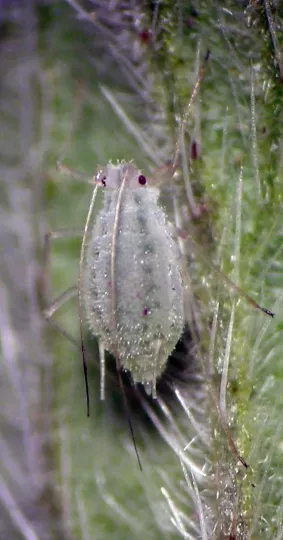
Description
How to identify
Pleotrichophorus is a genus of aphids belonging to the family Aphididae within the order Hemiptera. These insects are characterized by their distinct appearance, often featuring club-shaped hairs covering their bodies, which is a key diagnostic feature for entomological identification.
Adult aphids typically range from 1.5 to 2.5 mm in length. Their coloration can vary from pale yellow and light green to brownish, providing an effective camouflage against the host plants they inhabit.
The life cycle of this pest involves both wingless and winged forms. Winged individuals are critical for the dispersal of the population to new host plants during the warmer seasons of the year.
Unlike many generalist aphids, the genus Pleotrichophorus exhibits a high degree of host specificity, primarily targeting plants within the Asteraceae family, which limits their host range.
Accurate identification of specific species within the genus requires professional microscopic examination of morphological traits, such as the siphunculi, cauda, and body setae.
What it damages
This pest primarily attacks plants belonging to the family Asteraceae, including ornamental species like chrysanthemums, as well as various weeds like wormwood and yarrow.
In commercial greenhouse environments, Pleotrichophorus can cause significant economic damage by feeding on the sap of young leaves, flower buds, and stems, leading to severe plant deformation.
Beyond direct feeding damage, these aphids are recognized vectors of several plant viruses, which can lead to mosaic patterns, necrosis, and overall reduced plant vigor.
Large colonies can severely stunt the growth of ornamental plants, leading to bud drop and a drastic reduction in the marketability of the flower crop due to cosmetic damage.
Both nymphs and adults contribute to the damage by aggregating on the underside of leaves or within floral clusters, where they remain sheltered from environmental factors and manual inspection.
When it appears
The seasonal activity of this pest begins in early spring, as temperatures rise and host plants initiate their vegetative growth cycles, providing the necessary nutrients for the aphids.
The peak population density usually occurs during the summer months, when climatic conditions are most favorable for rapid reproduction and multiple generations per season.
In greenhouse settings, Pleotrichophorus can maintain continuous breeding cycles year-round, posing a persistent threat that requires constant monitoring and proactive management strategies.
As autumn approaches, populations in open fields may shift behavior, moving toward overwintering stages or entering diapause in response to changing photoperiod and temperatures.
Under optimal conditions, with temperatures around 20-25 degrees Celsius, the development time from nymph to adult can be as short as 7 to 10 days, facilitating rapid population explosions.
Signs of infestation
The earliest sign of infestation is the curling and yellowing of young leaves, which lose their turgidity due to the constant withdrawal of sap by the aphid colonies.
Leaves often become coated with honeydew, a sticky substance excreted by the aphids, which subsequently promotes the growth of sooty mold, further degrading the plant's health.
A high density of white, cast-off skins (exuviae) left on the foliage is a clear indication of a thriving aphid colony that has gone through multiple molting cycles.
The presence of ants on the plant is a strong indicator of aphid activity, as ants cultivate these colonies to feed on the honeydew, often protecting the aphids from predators.
Bud development issues, such as uneven growth, twisted flower stalks, or failure to bloom, are classic indicators of severe infestation and the injection of toxic salivary secretions by the pests.
Control measures
Effective control requires an Integrated Pest Management (IPM) approach, utilizing systemic insecticides when economic thresholds are exceeded to manage severe outbreaks.
Biological control agents, such as lady beetles (Coccinellidae), lacewings (Chrysopidae), and aphid midges (Aphidoletes), can be highly effective in reducing aphid numbers in both greenhouses and gardens.
Good agricultural practices, such as removing host weeds (Asteraceae) from the vicinity of cultivation areas, are essential to reduce primary infestation sources in the spring.
The use of yellow sticky traps is a recommended monitoring technique, helping growers detect the arrival of winged aphids and intervene before the population becomes established.
Strict quarantine and sanitation protocols for new plant material, alongside regular inspections, are critical to preventing the introduction of this pest into pristine growing environments.
Taxonomy
- Latin name
- Pleotrichophorus
- Order
- Hemiptera (bugs, aphids, leafhoppers)
- Family
- Aphididae
- EPPO code
- PLETSP
Discussion
No discussions yet — be the first.