
Onion bulb fly
Platystoma umbrarum
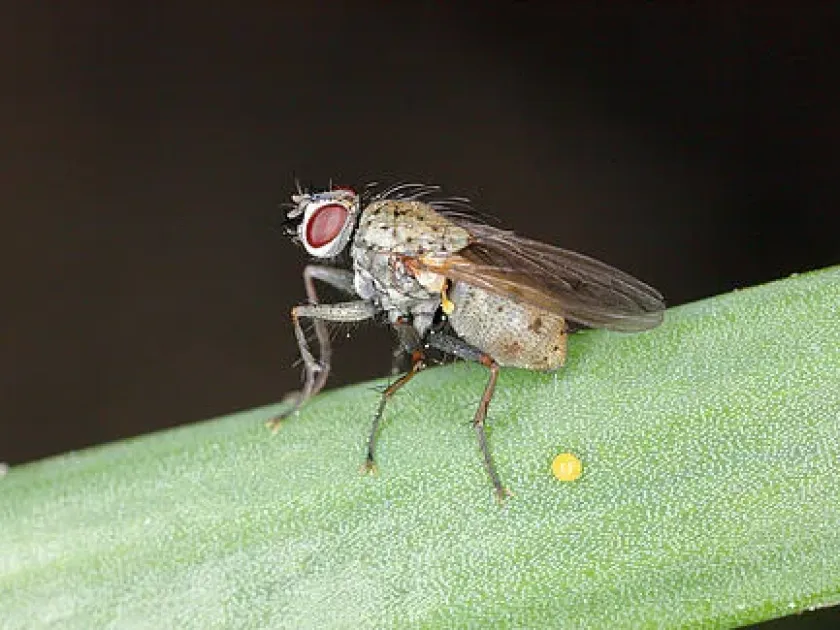
Description
How to identify
The onion bulb fly (Platystoma umbrarum) belongs to the Platystomatidae family and is known to occasionally impact bulbous vegetable crops.
Adult flies are identified by their dark body coloration and distinct mottled or spotted patterns on their wings, which are characteristic of this species.
Larvae are legless, whitish or yellowish maggots that typically thrive in moist, decomposing organic material within damaged vegetable tissues.
The insect undergoes a complete metamorphosis, including egg, larval, pupal, and adult stages, allowing for rapid generations during the summer months.
While often acting as a secondary pest, it is essential to distinguish this fly from other more aggressive onion pests like the onion maggot.
What it damages
This pest primarily attacks onion, garlic, and other bulbous crops, especially those that have already sustained injuries or are undergoing initial decay.
Larvae consume the internal tissues of the bulbs, turning them into a mushy, foul-smelling substance that renders the produce completely unsalable.
The damage caused by the larvae exacerbates the spread of bacterial and fungal infections, often leading to total plant collapse.
While the fly often favors already weakened bulbs, a high population density can cause them to attack healthier plants if conditions are suitable.
Economic losses occur both in the field, reducing overall yield, and during storage, where a single infested bulb can contaminate the entire batch.
When it appears
Adult fly activity typically begins in late spring and continues throughout the summer, peaking when temperatures are optimal for reproduction.
Larval infestation is most severe during the months of June and July, coinciding with the active bulb development phase of onion crops.
Generational speed is highly dependent on humidity levels; wet seasons often lead to explosive outbreaks of the population.
As autumn approaches, the adults become less active, and the pest transitions to its overwintering phase in the soil or in crop residues.
Monitoring the flight periods is crucial for timing effective chemical interventions, as the flies are most vulnerable before they lay their eggs.
Signs of infestation
Initial signs of infestation include wilting and yellowing leaves, which often start from the tips and eventually affect the entire plant canopy.
Plants affected by the pest can be easily pulled from the soil, revealing a destroyed root system and soft, rotting bulb tissue.
A foul, putrid odor often accompanies the infestation, serving as a clear indicator of extensive larval feeding and bacterial decay.
Upon closer inspection of the bulb, one may find galleries or tunnels created by the maggots, often filled with dark, decomposing material.
Under severe pressure, the base of the plant may completely liquefy, resulting in the plant detaching from its root system entirely.
Control measures
Effective crop rotation is the primary strategy, preventing the build-up of the pest population by moving bulb crops to different fields each season.
Sanitation practices, such as removing and destroying all infested bulbs and crop debris immediately after harvest, are vital to reducing the overwintering population.
Proper irrigation management is essential to prevent waterlogged soil, which creates the moist conditions preferred by the onion bulb fly larvae.
The application of approved insecticides during the adult flight period can significantly reduce egg-laying activities and protect the developing crop.
Using high-quality, disease-free planting material and promoting vigorous plant growth can help crops withstand minor pest pressure more effectively.
Taxonomy
- Latin name
- Platystoma umbrarum
- Order
- Diptera (flies)
- Family
- Platystomatidae
- EPPO code
- PLZMUM
Discussion
No discussions yet — be the first.