
Beet lace bug
Piesma
Description
How to identify
The beet lace bug (Piesma quadratum) is a small, specialized hemipteran insect belonging to the family Piesmidae.
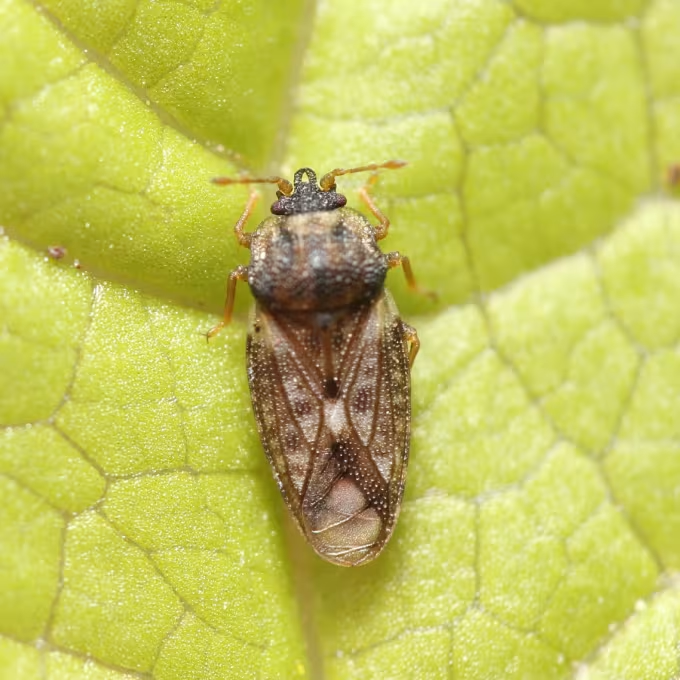
The adult insect is approximately 3.5 mm long, characterized by a distinct net-like (reticulated) pattern on its wings, which gives it the "lace bug" name.
Their body color ranges from brownish-grey to yellow, providing excellent camouflage against soil and plant surfaces during the day.
These pests overwinter as adults, finding shelter in leaf litter, debris, dry stalks, and forest edges near agricultural fields.
Adults possess functional wings, enabling them to migrate over long distances to reach suitable host plants early in the spring.
What it damages
Sugar beets, table beets, and fodder beets are the primary hosts, though the insect also feeds on Chenopodium and Atriplex species.
Both adults and nymphs cause damage by piercing leaf tissues and extracting plant sap with their specialized mouthparts.
The species is notorious for transmitting the curly-top virus in sugar beets, which significantly hinders normal plant development.
Direct damage includes tissue necrosis, while indirect damage from viral infection leads to severe crop losses and diminished root quality.
In cases of high population density, fields can show widespread signs of stunted growth, directly impacting total agricultural yield.
When it appears
Beet lace bugs emerge from hibernation in early spring as soon as soil temperatures warm up to approximately 8-10 degrees Celsius.
The spring migration phase is critical, as adults settle on emerging beet seedlings during the most vulnerable early growth stages.
The life cycle from egg to adult takes about 30-45 days, depending significantly on environmental heat and moisture levels.
A second generation often develops during mid-to-late summer, increasing the overall infestation pressure on the crop.
By autumn, adults seek out protective overwintering sites, remaining dormant throughout the winter until the next growing season.
Signs of infestation
The earliest symptom is the chlorosis and yellowing of the leaf edges, which gradually begin to curl and deform.
Infested plants show clear signs of growth retardation compared to healthy crops in the same field during the early stages.
Leaf curling combined with a mosaic pattern on the foliage often points to secondary viral infections carried by the bugs.
Close inspection of the underside of the leaves usually reveals the presence of nymphs or adults and tiny feeding puncture marks.
- Yellowing of leaf margins.
- Upward curling of leaf blades.
- Stunted development of young beets.
- Distorted, mosaic-patterned foliage.
Control measures
Effective weed management, especially the elimination of Chenopodium and other weed hosts, is essential to deprive the pest of food.
Cultural practices such as deep autumn plowing help to destroy overwintering sites, significantly reducing the initial spring population.
Spatial isolation between new beet fields and areas used for beet cultivation in previous years is a highly recommended preventive measure.
Seed treatment with systemic insecticides provides a necessary layer of protection for young seedlings during the early establishment phase.
If population thresholds are exceeded during the growing season, timely application of foliar insecticides remains the primary chemical control method.
Taxonomy
- Latin name
- Piesma
- Order
- Hemiptera (bugs, aphids, leafhoppers)
- Family
- Piesmatidae
- EPPO code
- PIESSP
Discussion
No discussions yet — be the first.