
Beet lace bug
Parapiesma quadratum
Description
How to identify
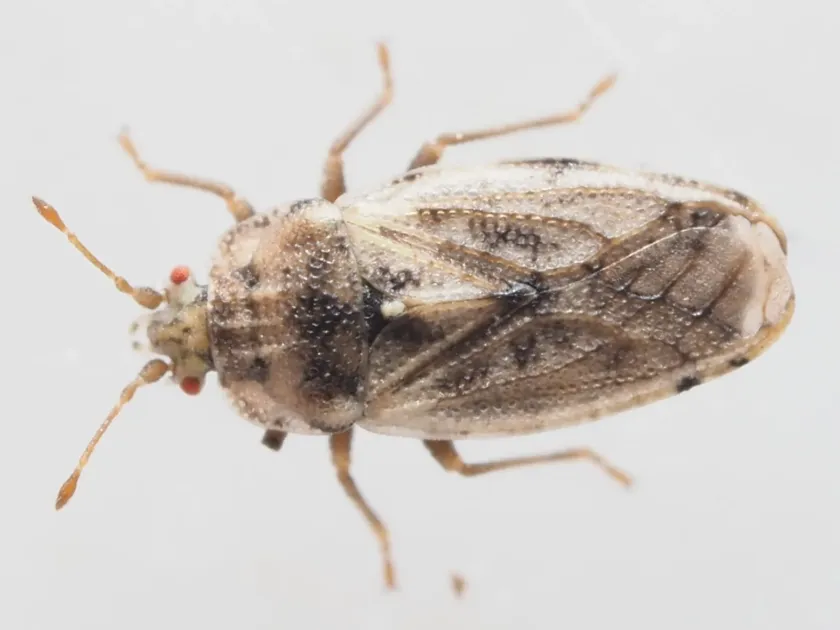
The beet lace bug (Parapiesma quadratum) is a small insect belonging to the Tingidae family, characterized by its intricate, net-like wing structure resembling lace.
Adults typically measure between 3 and 3.5 mm in length and exhibit a brownish or grayish coloration that allows them to blend into soil and plant debris seamlessly.
These insects overwinter in leaf litter, hedgerows, or soil cracks, emerging in early spring to locate suitable host plants for feeding and reproduction.
The life cycle encompasses the egg stage, five nymphal instars, and the adult stage, with the number of generations per year dependent on regional temperature conditions.
Warm and arid weather conditions are highly favorable for this species, leading to faster development cycles and significant increases in population density.
What it damages
The beet lace bug primarily infests sugar beet, fodder beet, and red beet crops, although it can also persist on various weeds within the Amaranthaceae family.
Both adults and nymphs feed by sucking plant sap, which disrupts the photosynthetic process and physiological development of the young plants.
The most critical window for crop damage occurs during the seedling stage, where feeding can lead to stunted growth, reduced leaf area, and even plant mortality.
Persistent infestations in mature plants reduce the overall biomass of the roots and decrease sugar accumulation, negatively impacting the total harvest yield.
Furthermore, the species acts as a vector for the curly top virus, which causes severe structural damage to the foliage and ruins the quality of the sugar beet crop.
Signs of infestation
Early symptoms include pale, stippled spots on the leaves, which gradually coalesce into larger chlorotic areas, eventually causing the leaf tissue to yellow and deform.
A classic sign of infestation is the downward curling and thickening of leaf edges, which gives the plant a distinct "crinkled" or stunted appearance.
Field inspection usually reveals colonies of the bugs on the underside of leaves, particularly along the field margins adjacent to overwintering sites.
Affected plants often show inhibited apical growth, leading to the formation of dense, rosette-like structures as the leaves fail to expand properly.
In cases of severe outbreaks, field scouting will reveal patches of discolored, withered seedlings that contrast sharply with the healthy portions of the crop.
Control measures
Effective management begins with rigorous weed control, specifically targeting Chenopodium and other wild amaranth weeds that serve as alternative hosts for the bug.
Crop rotation and maintaining adequate spatial distance between current beet fields and previous year’s host sites are essential preventative measures.
When the economic threshold is exceeded, the application of systemic or contact insecticides is necessary to suppress the population before significant damage occurs.
Early planting dates are recommended to ensure that beet plants establish a robust root and leaf system before the peak activity period of the overwintered adults.
- Apply registered insecticides according to local agricultural guidelines and safety regulations.
- Implement deep autumn plowing to bury crop residues and reduce successful overwintering populations.
- Monitor field edges closely during the early seedling emergence phase to detect initial infestations.
Taxonomy
- Latin name
- Parapiesma quadratum
- Order
- Hemiptera (bugs, aphids, leafhoppers)
- Family
- Piesmatidae
- EPPO code
- PIESQU
Discussion
No discussions yet — be the first.