
Linden velvet mite
Phytoptus nalepi
Description
How to identify
The Linden velvet mite (Phytoptus nalepi) is a microscopic pest belonging to the Eriophyidae family. Because of their tiny size, these mites are invisible to the naked eye.
The mites have a characteristic worm-like, elongated body structure. Being part of the Eriophyidae family, they possess only two pairs of legs situated at the anterior end of their body.
The lifecycle of the mite is deeply connected to the seasonal development of the linden tree (Tilia species). Fertilized females overwinter in bark crevices, bud scales, and other protected areas.
In spring, as temperatures rise, the mites emerge from their wintering sites and migrate to the young, unfolding leaves to feed and begin the cycle of reproduction.
These mites reproduce continuously throughout the growing season, which allows for multiple generations to develop on a single tree.
What it damages
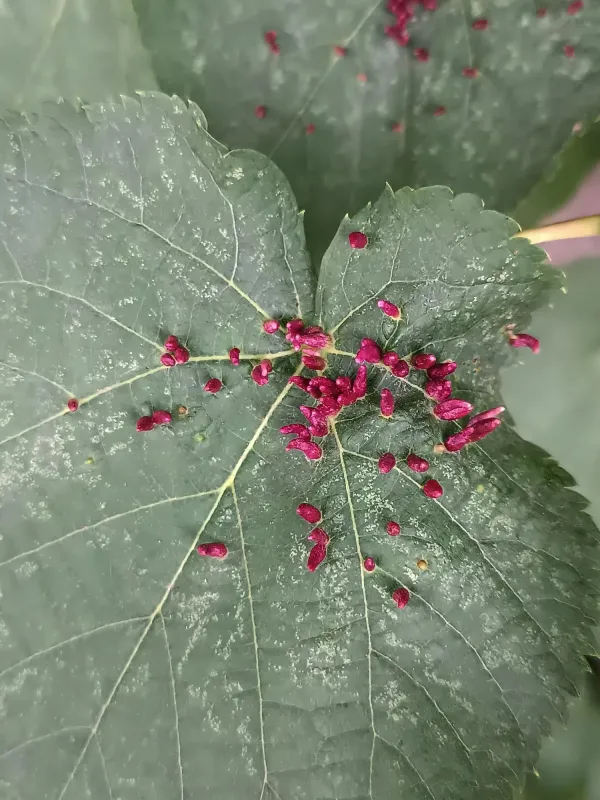
This mite is a specialized pest primarily affecting linden trees. Its feeding activity causes the tree to develop abnormal tissue growth, known as galls, on the leaf surface.
These galls interfere with the tree's natural photosynthetic processes, as the energy usually intended for leaf development is diverted into forming these abnormal structures.
While the mite generally does not kill mature, healthy trees, it can significantly weaken young or already stressed plants, making them more susceptible to other diseases.
The presence of large numbers of galls severely impacts the aesthetic value of urban street trees, parks, and decorative gardens, leading to a ragged appearance.
Long-term infestation can result in reduced tree vigor, premature leaf drop, and decreased hardiness, which is particularly concerning in cooler climates.
When it appears
Activity begins in early spring, synchronized with the bud burst phase of the linden tree, as mites move from their overwintering locations to the fresh leaves.
During the summer, the mite population expands rapidly. Hot and dry weather conditions are known to accelerate the development cycles of these pests.
The mites form colonies within the galls, where they remain sheltered from predators and environmental fluctuations for the majority of their lifecycle.
As autumn approaches and temperatures drop, the adult mites migrate away from the leaves and seek out safe hiding spots for hibernation.
Winter survival is crucial for the population, so the mites congregate in large numbers within the protection of the bark to endure the cold season.
Signs of infestation
The most visible symptom of an infestation is the formation of leaf galls on the upper side of the leaves, which initially appear as small bumps.
On the underside of the leaves, these galls are associated with patches of thick, velvet-like hairs, which provide a protected environment for the mites.
As the galls mature, they often turn from green to a distinct reddish or brownish color, making the infestation very obvious during the mid-summer period.
In cases of heavy infestation, the leaves may become severely distorted, curled, and brittle, leading to poor tree performance.
- Raised gall structures on the upper leaf surface.
- Velvety hair patches on the underside of leaves.
- Color change of galls to red or brown.
- Leaf curling and deformation.
- Premature yellowing and leaf abscission.
Control measures
Controlling the Linden velvet mite is challenging because the mites live inside the galls, which protects them from direct contact with pesticides.
Effective management requires applying acaricides during the brief window when mites are migrating from their overwintering sites to the new leaves.
Early season spraying at the bud-burst stage is the most critical intervention to prevent the establishment of initial gall colonies.
Promoting tree health through proper fertilization, adequate watering, and removing heavily infested branches can help the tree cope with the stress of infestation.
Integrated Pest Management (IPM) practices, such as encouraging natural predatory mites, can also help keep the population in check without heavy chemical use.
Taxonomy
- Latin name
- Phytoptus nalepi
- Order
- Mites
- Family
- Phytoptidae
- EPPO code
- PHTPNA
Discussion
No discussions yet — be the first.