
Linden velvet mite
Phytoptus canestrinii
Description
How to identify
The linden velvet mite (Phytoptus canestrinii) is a microscopic pest belonging to the Eriophyidae family. These mites are incredibly small, typically measuring around 0.2 mm, and cannot be detected with the naked eye.
Their bodies are elongated and worm-like, often appearing translucent or pale yellow. A defining characteristic of this family is the presence of only two pairs of legs, located at the anterior end of the body.
The life cycle involves overwintering females hiding in bark crevices or buds. As temperatures rise in spring, they migrate to developing leaves to feed and begin their reproductive phase.
Multiple generations can occur throughout the growing season. The mite thrives in warm and humid conditions, which facilitate rapid population expansion within the tree canopy.
Dispersal is primarily passive, facilitated by wind currents. They can also be transferred between trees by insects, birds, or human maintenance activities, leading to infestations of entire groves.
What it damages
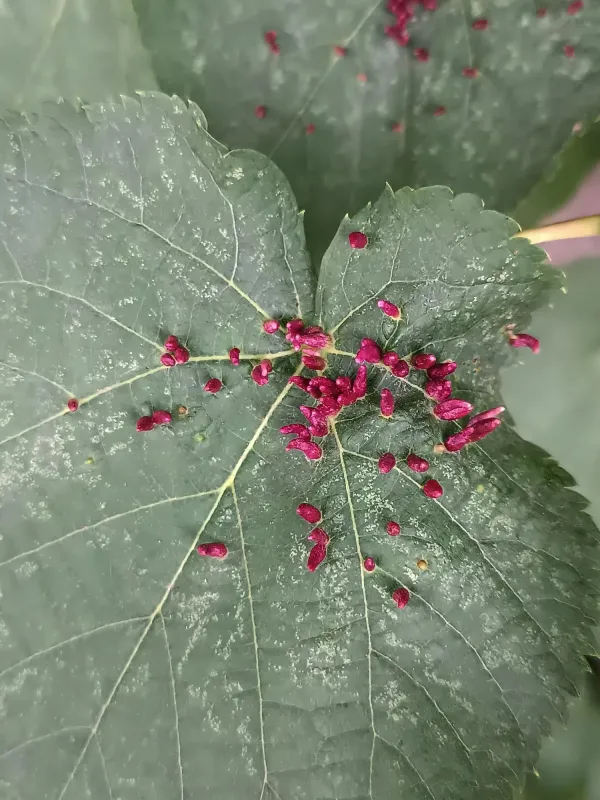
These mites specifically target lime trees (Tilia species). By feeding on the leaf tissues, they induce the formation of galls, which appear as characteristic felt-like patches on the leaf surface.
The feeding activity disrupts normal leaf growth, causing the formation of abnormal tissue structures. This reduces the photosynthetic efficiency of the leaves, putting the plant under physiological stress.
While an infestation is rarely fatal to a mature tree, it severely impacts the aesthetic value of the foliage. Heavy infestations can lead to premature leaf drop during mid-summer.
Infested trees often become more vulnerable to secondary pests and various pathogens. This is particularly concerning for urban plantings where trees are already subjected to environmental stressors.
The severity of the damage is often cumulative, meaning that trees affected year after year may show significant reductions in vigor and annual growth compared to healthy trees.
Signs of infestation
The most prominent sign is the development of leaf galls. Initially, these appear as small, light-colored, felt-like patches on the underside of the leaf, matching the texture of velvet.
Over time, these galls transition in color to various shades of red, brown, or dark tan. In severe cases, large portions of the leaf surface may be completely covered by these growths.
Leaves often become distorted, wrinkled, or curled. The growth pattern of the leaf is inhibited in the affected areas, leading to asymmetrical development and stunted leaf size.
A closer inspection with a hand lens will reveal the presence of mite colonies nestled within the gall hairs. This confirms the biological origin of the symptoms rather than a fungal pathogen.
The overall appearance of the canopy becomes dull and lackluster. In the summer months, the contrast between healthy, green leaves and the discolored, gall-ridden foliage becomes very noticeable.
Control measures
Effective management begins with timely acaricide applications. The most critical window for treatment is early spring, just as the buds are opening and the overwintering females emerge.
Sulfur-based treatments are known to be effective against eriophyid mites. Ensuring thorough coverage of the entire leaf surface, especially the underside, is vital for a successful treatment.
If the infestation is localized to a few branches, pruning and removing the affected plant material can significantly reduce the pest population. Always dispose of clippings away from healthy trees.
Maintaining the overall health of the lime tree through adequate irrigation and balanced fertilization helps the tree withstand the mite pressure and recover more effectively from damage.
Protecting natural predators, such as predatory mites and lady beetles, is essential. Avoid broad-spectrum insecticides that could inadvertently kill these beneficial organisms and trigger a mite outbreak.
Taxonomy
- Latin name
- Phytoptus canestrinii
- Order
- Mites
- Family
- Phytoptidae
- EPPO code
- PHTPCA
Discussion
No discussions yet — be the first.