
Clematis leaf miner
Phytomyza vitalbae
Description
How to identify
The clematis leaf miner (Phytomyza vitalbae) belongs to the Agromyzidae family of flies. These small insects are highly specialized, targeting plants within the Clematis genus.
Adult flies are typically tiny, measuring only a few millimeters in length, and are often dark or brownish in color. Their presence is easily overlooked until damage appears.
The larval stage is the primary destructive phase. Larvae are legless, maggot-like, and develop exclusively within the leaf parenchyma, where they consume plant tissues.
The life cycle is influenced by climatic conditions, with several generations potentially occurring during the growing season. The development from egg to adult is rapid in favorable summer weather.
Pupation typically occurs either inside the leaf tissue or in the soil, which complicates control efforts, as the pest has multiple life stages hidden within the environment.
What it damages
Clematis plants, including wild species and ornamental hybrids, are the primary hosts. The larvae feed by mining between the upper and lower epidermal layers of the leaves.
This feeding activity disrupts photosynthesis, as the green tissue is destroyed. Consequently, the plant experiences reduced vigor, slowed growth, and weakened overall health.
The damaged areas often become necrotic, which can facilitate secondary infections by bacteria or fungi, leading to further decay of the leaf tissue.
In severe infestations, the cumulative damage leads to heavy leaf drop, which ruins the visual appeal of the plants and stresses the plant before the dormant winter season.
For nursery production, even minor infestations are a significant concern, as the visible mines diminish the aesthetic quality and commercial value of the plants.
Signs of infestation
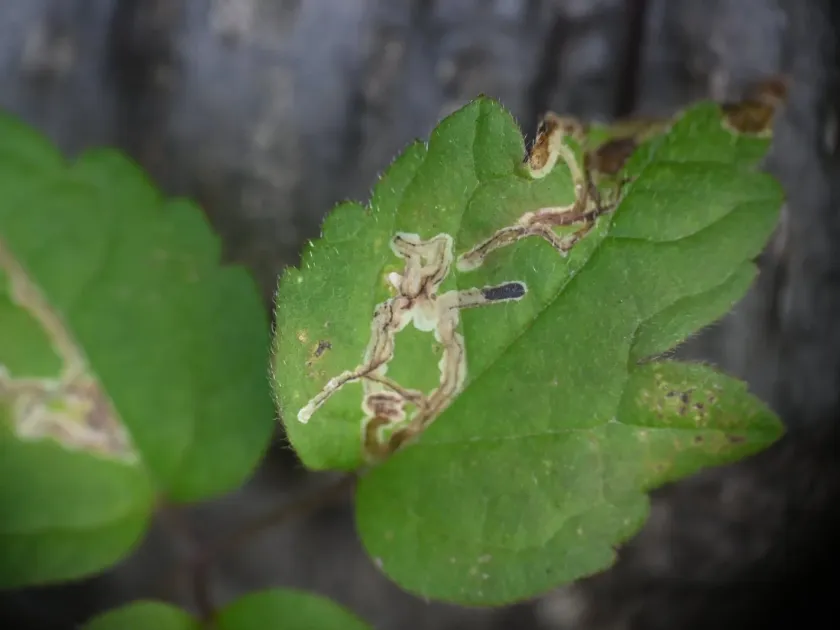
The most distinctive symptom is the presence of winding, serpentine, or blotch-like mines on the leaf surface. These tracks are initially light or whitish in color.
As the larva grows, the mine becomes wider. Dark deposits, which are the larval frass (excrement), are usually visible as a line within the clear mine trail.
Heavily mined leaves may yellow, curl, or crinkle. If multiple larvae occupy the same leaf, the mines can merge, causing the leaf to wither and dry out prematurely.
Close inspection often reveals the tiny exit holes left by adult flies after they have emerged from the pupal stage within the leaf tissue.
- Winding white trails on the leaf surface.
- Dark granular spots (frass) inside the leaf tunnels.
- Yellowing and distortion of affected foliage.
- Premature dropping of leaves during the growing season.
Control measures
Sanitation is a critical first step. Carefully hand-picking and destroying infested leaves at the earliest sign of damage can effectively reduce the population.
Maintaining a clean garden environment by removing fallen leaves and debris around the base of clematis plants prevents the buildup of overwintering pupae.
Applying systemic insecticides is necessary for heavy infestations. Since the larvae are protected inside the leaf, contact-only sprays are rarely effective.
Tilling or turning over the top few centimeters of soil around the plants in late autumn can expose overwintering pupae to predators and adverse weather conditions.
Monitoring adult fly activity with yellow sticky cards can help time chemical treatments accurately, ensuring maximum efficacy while minimizing unnecessary pesticide use.
Taxonomy
- Latin name
- Phytomyza vitalbae
- Order
- Diptera (flies)
- Family
- Agromyzidae
- EPPO code
- PHYYVI
Discussion
No discussions yet — be the first.