
Four-row leaf miner
Phytomyza tetrasticha
Description
How to identify
The four-row leaf miner (Phytomyza tetrasticha) is a member of the Diptera order and the Agromyzidae family. These insects are known for the specialized larval stage that consumes leaf tissue internally.
The adult fly is small, typically dark-colored, and possesses translucent wings. Their activity is generally observed during the warmer months of the growing season.
The lifecycle includes complete metamorphosis: egg, larva, pupa, and adult. The larval stage is the primary cause of concern for agronomists due to its leaf-mining behavior.
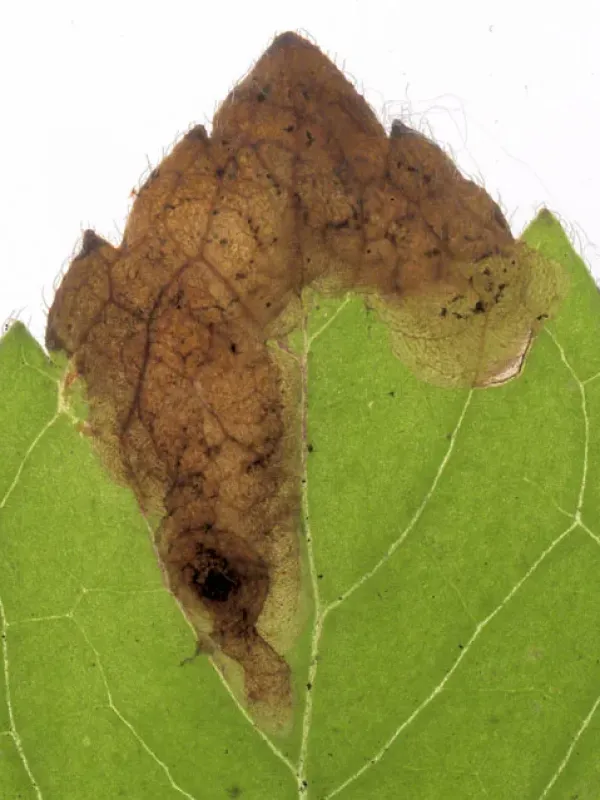
Identification is often based on the specific shape of the mines left on the foliage and the morphological characteristics of the adult insect, which typically require magnification.
The species prefers host plants within the Asteraceae family, making them a common sight in wild and cultivated areas containing these plants.
What it damages
Larvae consume the mesophyll (parenchyma) of the leaves, creating distinct serpentine or blotch-shaped mines that interfere with photosynthesis.
The affected leaves become chlorotic and necrotic, eventually dying off if the infestation is severe enough to overwhelm the plant's nutrient transport.
The pest causes stress to the host, reducing the overall biomass and potentially compromising the yield of crops where the foliage is the primary product.
Adult flies cause additional damage by puncturing the leaf epidermis to feed on plant sap, creating small dots that may serve as entry points for pathogens.
Severe infestations often result in premature leaf senescence and abscission, which weakens the plant significantly before the end of the growth cycle.
Signs of infestation
The most prominent sign is the appearance of winding, pale, thread-like lines on the leaf surface, which correspond to the larval feeding tunnels.
Inside these tunnels, one can often see dark deposits of frass (larval excrement) arranged in a characteristic pattern, which helps distinguish this pest from other leaf miners.
Tiny white spots on the leaf surface indicate feeding punctures made by adult females to obtain sap and test the quality of the host tissue.
As the larvae mature, the mines become larger and may occupy a significant portion of the leaf area, leading to visible wilting or curling.
Pupae may be observed embedded within the leaf tissue or attached to the surface, signaling the final stage of development before the emergence of the new adult generation.
Control measures
Sanitation is a critical control measure, involving the removal and destruction of infested foliage to prevent the completion of the insect's life cycle.
Cultural practices such as deep autumn plowing are highly recommended to bury pupae and prevent their emergence in the following spring.
Yellow sticky traps are an effective tool for monitoring adult fly populations, allowing for better timing of targeted control interventions.
Biological control using parasitoid wasps that specifically target Agromyzidae larvae can effectively maintain low pest pressure in natural environments.
Systemic insecticides should be applied when early signs of mining are detected to ensure the active ingredient reaches the larvae inside the leaf tissue effectively.
Taxonomy
- Latin name
- Phytomyza tetrasticha
- Order
- Diptera (flies)
- Family
- Agromyzidae
- EPPO code
- PHYYTE
Discussion
No discussions yet — be the first.