
Cabbage leaf miner
Phytomyza rufipes
Description
How to identify
The cabbage leaf miner (lat. Phytomyza rufipes) is a small fly belonging to the Agromyzidae family. Adult flies are approximately 3 mm long, characterized by their dark bodies and yellowish legs.
The life cycle involves egg, larva, pupa, and adult stages. Females use their ovipositors to lay eggs into the plant tissue, often selecting the leaves of various brassica crops for their progeny.
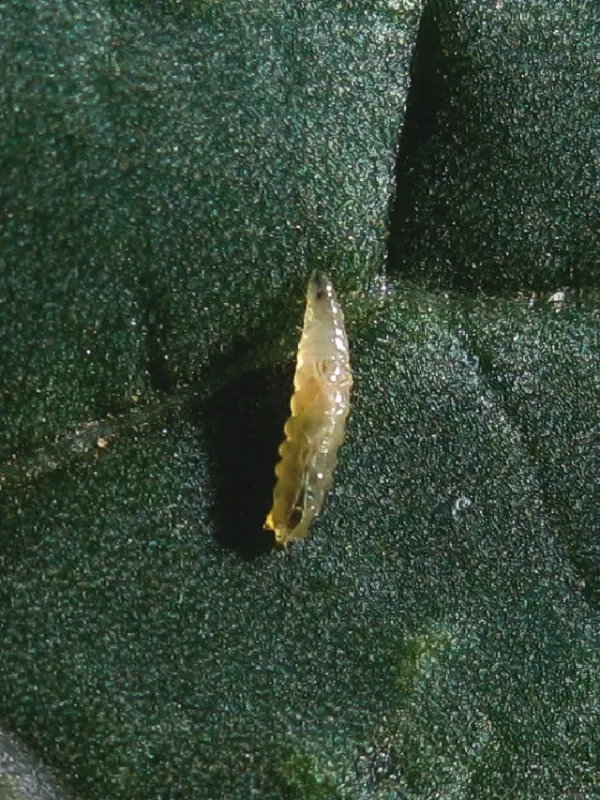
Larvae are typically legless and creamy-white, developing inside the leaves or petioles. They possess mouthparts capable of consuming plant tissues, which results in the formation of tunnels known as mines.
Pupation often takes place within the larval mines or in the soil near the base of the plant. This allows the insect to remain sheltered during periods of extreme temperature or dormancy.
The pest can complete several generations within a single season, with the number of cycles being heavily influenced by temperature and the availability of suitable host plants.
What it damages
The species primarily infests plants in the Brassicaceae family, including cabbage, broccoli, Brussels sprouts, kale, radishes, and turnips. It can also colonize certain cruciferous weeds.
Damage is caused by larvae that feed within the leaf blades and stalks. Their tunneling destroys the parenchyma, which reduces the plant's photosynthetic capacity and weakens its overall structure.
Infested petioles may become soft or shriveled, and in severe cases, the entire leaf may wilt and die. This is particularly problematic for young seedlings or leafy greens where cosmetic quality is paramount.
The destruction of leaf tissue makes the plant more susceptible to fungal pathogens and bacterial rots, which often enter the plant through the damaged areas.
For commercial growers, heavy infestations result in significant yield losses and lower market value due to damaged, unsightly leaves that are unacceptable to consumers.
Signs of infestation
The first indicator of infestation is the presence of small, white stippling marks on the leaf surface, created by the feeding activities of adult females.
As larvae develop, distinct serpentine-shaped mines appear. These trails are initially faint but become more pronounced and whitish or brownish as the larvae grow larger.
Careful inspection of the underside of the leaves often reveals the larvae themselves or their dark-colored frass (excrement) deposited within the tunnels.
Severely infested plants may exhibit stunted growth, yellowing of the foliage, and premature leaf drop, which often mimics signs of nutritional deficiency or drought stress.
During warm weather, adult flies can be observed flying around the crop, particularly near the top of the leaves, indicating active oviposition.
Control measures
Cultural practices are the first line of defense. This includes the thorough removal and destruction of crop residues after harvest to eliminate pupation sites and prevent the next generation.
Crop rotation is essential. By avoiding the cultivation of cruciferous plants in the same area for multiple seasons, growers can break the lifecycle of the pest.
Physical barriers such as fine-mesh insect netting can be highly effective in protecting small-scale or high-value crops from adult fly access during the egg-laying period.
Chemical control should be targeted and based on threshold monitoring. Systemic insecticides are often more effective than contact sprays because they reach the larvae protected within the leaf tissue.
Biological control methods involve supporting or introducing natural enemies, such as parasitic wasps, which are known to prey on the larvae within their mines, providing a natural regulatory mechanism.
Taxonomy
- Latin name
- Phytomyza rufipes
- Order
- Diptera (flies)
- Family
- Agromyzidae
- EPPO code
- PHYYRU
Discussion
No discussions yet — be the first.