
Broomrape fly
Phytomyza orobanchia
Description
How to identify
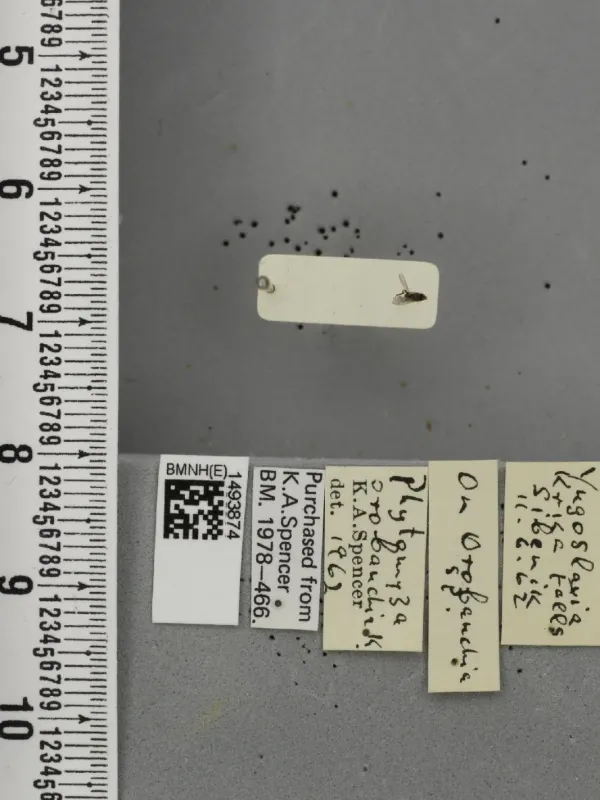
The broomrape fly (Phytomyza orobanchia) is a dipteran insect belonging to the family Agromyzidae. The adult fly is quite small, typically measuring 2–3 mm in length, with a grayish-black coloration.
This species is a highly specialized monophagous insect that feeds exclusively on various species of the parasitic weed Orobanche. It acts as a biological control agent against this harmful parasite.
The larval stage is internal; larvae tunnel through the stems and floral buds of the broomrape, making them elusive to most predators and environmental stressors.
Pupation occurs inside the stems of the host plant. The pupae are brown, barrel-shaped, and are typically found within the tissues of the dried-out broomrape stalks.
The fly overwinters primarily as a pupa, either inside the remains of the host plant or in the soil, ensuring the survival of the population through the winter season.
What it damages
The broomrape fly is considered a beneficial organism in fields where Orobanche parasitize sunflower or other host crops. It does not damage the crops themselves.
By consuming the internal tissues of the broomrape, the larvae effectively destroy the reproductive capacity of the parasite, preventing it from producing seeds.
When infestation levels are high, the fly can cause widespread wilting and death of broomrape shoots, significantly reducing the parasitic burden on the sunflower crop.
The tunnels created by the larvae disrupt the vascular system of the weed, causing the floral buds to dry out or fail to develop normally.
Therefore, its primary economic impact is the reduction of the broomrape seed bank in the soil, which helps manage the weed population sustainably over time.
When it appears
The adult fly emerges in synchronization with the appearance of the broomrape flower stalks on the soil surface, typically during the flowering phase of the host sunflower crop.
The species may complete two or three generations during a single growing season, depending on local climate conditions and the availability of host plants.
The development cycle is rapid during warm summer months, allowing the fly to exploit fresh broomrape shoots as they emerge throughout the season.
Adult flies require nectar from surrounding flowers for survival and energy before they mate and begin the process of egg-laying in the stems of the broomrape.
As the season ends and host plants senesce, the final generation enters the pupal stage, preparing to overwinter and wait for the next season's growth.
Signs of infestation
Infected broomrape plants often display clear signs of damage, such as wilting, browning, or stunted growth compared to healthy parasitic shoots.
Close inspection of the stems will reveal small puncture marks or holes through which the larvae entered or adults emerged from the interior.
The most reliable sign of activity is the presence of internal tunnels or cavities within the stem when the plant is split open.
- Stunted or deformed broomrape stalks.
- Presence of exit holes on the stem surface.
- Discolored and hollowed-out internal tissue.
- Reduced or absent seed production in the capsules.
In heavily infested areas, one may observe adults resting on the flowers or stems of the broomrape during the early morning or late afternoon.
Control measures
The best practice for managing this beneficial insect is to avoid the indiscriminate use of broad-spectrum insecticides, which would harm the fly population.
Maintaining a balanced agricultural ecosystem is essential to allow this natural enemy to thrive and effectively keep the broomrape population in check.
In some regions, integrated pest management (IPM) strategies include the augmentation and release of laboratory-reared broomrape flies to control heavy outbreaks.
Agronomic practices, such as careful residue management, are important to ensure that overwintering pupae are not destroyed or buried too deeply during field operations.
By fostering the broomrape fly, farmers can rely on a self-sustaining biological method to mitigate the yield losses caused by the Orobanche parasite.
Taxonomy
- Latin name
- Phytomyza orobanchia
- Order
- Diptera (flies)
- Family
- Agromyzidae
- EPPO code
- PHYYOR
Discussion
No discussions yet — be the first.