
Solanaceous leafminer
Phytomyza obscurella
Description
How to identify
The Solanaceous leafminer, scientifically known as Phytomyza obscurella, belongs to the Diptera order and the Agromyzidae family. These are small flies that cause significant agricultural damage.
The insect undergoes a complete metamorphosis, including egg, larval, pupal, and adult stages. The larval stage is responsible for the characteristic damage to the foliage.
The life cycle is heavily influenced by climate, with warmer temperatures and high humidity significantly accelerating the reproduction and development of new generations.
Overwintering typically occurs in the pupal stage, usually within the soil or on plant debris, allowing the pest to survive even harsh winter conditions.
Adult flies are mobile and can easily infest new areas, while the movement of infested seedlings remains a primary factor in the spread of the pest across different farms.
What it damages
The pest primarily targets plants within the Solanaceae family. Its hosts include essential economic crops such as potatoes, tomatoes, eggplants, and peppers.
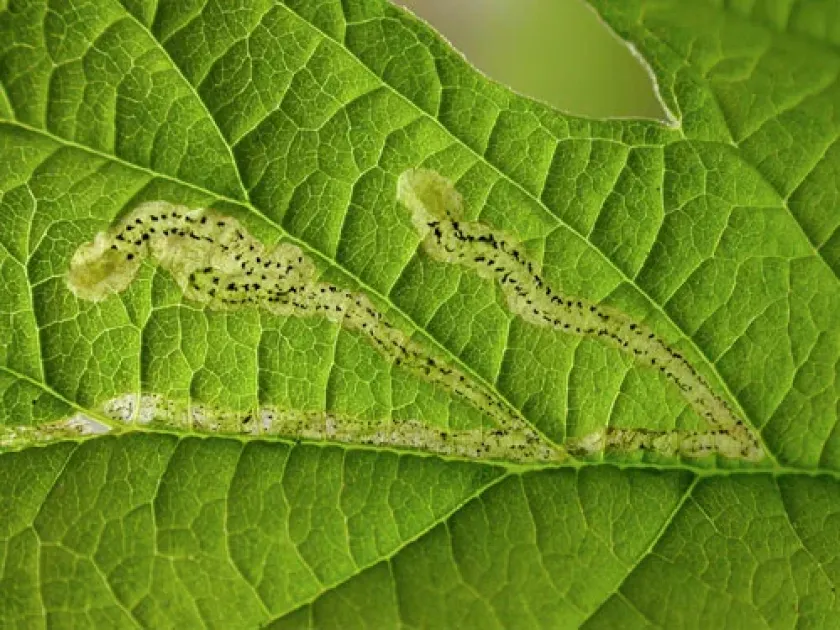
Leafminer larvae feed inside the leaf tissue, specifically the mesophyll, creating distinctive tunnels known as mines. This feeding behavior disrupts the plant's photosynthetic capacity.
Severe infestations result in extensive leaf discoloration, wilting, and premature senescence. The loss of functional foliage directly correlates with a decrease in yield quality and quantity.
The damaged areas of the leaves become entry points for secondary pathogens, such as bacteria and fungi, which can exacerbate the stress placed on the host plant.
Economic damage is most pronounced when infestation occurs early in the growth stage, potentially stunting the development of the entire plant and reducing fruit set.
Signs of infestation
The most recognizable symptom of a leafminer attack is the presence of winding, light-colored tracks or tunnels appearing on the surface of the leaves.
These mines begin as thin, hair-like lines and gradually expand as the larva grows, often creating complex patterns that cover large portions of the leaf blade.
Discoloration is a common indicator, as the destruction of chlorophyll cells causes the leaves to lose their healthy green appearance and develop a pale or yellow tint.
Careful observation, especially when holding leaves against the light, allows one to identify the larvae situated at the end of the tunnels.
- Winding, serpentine patterns on foliage
- Yellowing and drying of lower leaves
- Reduced plant vigor and photosynthesis
- Presence of small larvae inside the leaf tissue
Control measures
Implementing a crop rotation strategy is essential to prevent the pest from becoming established and to break the cycle of infestation in a specific area.
Proper sanitation, including the thorough destruction of weeds and crop residues from the Solanaceae family, is critical to reducing the population overwintering in the soil.
Yellow sticky traps are a highly effective monitoring and control tool, particularly in greenhouse settings, as they capture adult flies before they can lay eggs.
Chemical control focuses on the use of systemic insecticides. These chemicals penetrate the leaf tissue, effectively targeting the larvae protected within the mines.
Biological control, involving the introduction of parasitoid wasps that attack leafminer larvae, can provide a sustainable way to manage populations without relying solely on pesticides.
Taxonomy
- Latin name
- Phytomyza obscurella
- Order
- Diptera (flies)
- Family
- Agromyzidae
- EPPO code
- PHYYAB
Discussion
No discussions yet — be the first.